
It’s where Parisian romance meets Italian flair—a place cradled by the Alps and cloaked in baroque splendour. Strolling Turin’s moody streets is like flipping through an art house film: royal palazzi shimmering like forgotten treasures, sprawling gardens chiselling their way into eternity, and bookstores that feel like literary labyrinths. It’s seductive without trying too hard. And then there’s the food— ah, the food! The birthplace of vermouth, grissini, and espresso, Turin doesn’t flaunt its culinary prowess; it lets you discover it. Slow food reigns supreme, and even tiny trattorias serve wine with the kind of depth that makes you swear off supermarket bottles forever.
ELEGANCE WITH SOULFUL GRIT
Turin feels like the kind of place Hemingway would have adored, a city with grit, heart, and fewer airs. It’s not polished to perfection; it’s lived in, loved, and quietly magnificent in its authenticity. History and modernity rub shoulders here, creating the kind of charm that sneaks up on you, I had gone to attend the annual World’s 50 Best Restaurants awards ceremony and the city left me wondering why I didn’t come sooner. In the heart of the Roman Quadrilatero district stands the NH Collection Torino Santo Stefano, a striking slice of architecture that’s as modern as it is steeped in history. Wrapped in an elegant staircase that seems to spiral endlessly, the hotel feels like it’s cocooning you in the folds of Turin’s story. From the top floor, ancient Roman ruins mingle with Turin’s skyline, framed by the jagged peaks of the Alps—easily one of the most cinematic views in all of Italy.
Inside, the rooms are whisper-quiet sanctuaries of soundproofed intimacy, offering just the right mix of sleek comfort and understated luxury. And then there’s ‘La Pista Bistrot’, the hotel’s restaurant, where Piedmontese flavours are practically written into poetry on the plate. The desserts? The Monviso cake will ruin you for anything else—a sweet taste of victory for Turin’s underrated culinary genius ; a rich hazelnut creation paying homage to Piedmont’s towering “King of Stone,” Mount Monviso—the peak that births the Po River and seems to watch over the region’s cultural soul. It is a masterclass in blending tradition with modernity., Then there’s the hotel’s private patio, a secret garden tucked into the urban heart, perfect for sipping cocktails under spring blooms or hosting chic summer soirées. It’s less a stay, more a stylish retreat into Turin’s quiet elegance.
MINIMALISM MEETS CULINARY MASTERY
Tucked away on Via Sant’Antonio da Padova, just steps from the serene Sanctuary it’s named after, ‘Opera’ is where Turin’s charm whispers at every turn. The street itself is pure postcard—early 20th-century facades and Art Nouveau details harmonizing like a quiet duet with Renzo Piano’s modern skyscraper in the distance. Life here feels measured, effortless, and it’s in this rhythm that ‘Opera’ thrives, less a restaurant and more a performance of precision and restraint. From the moment you arrive, you’re met with the hum of craftsmanship.
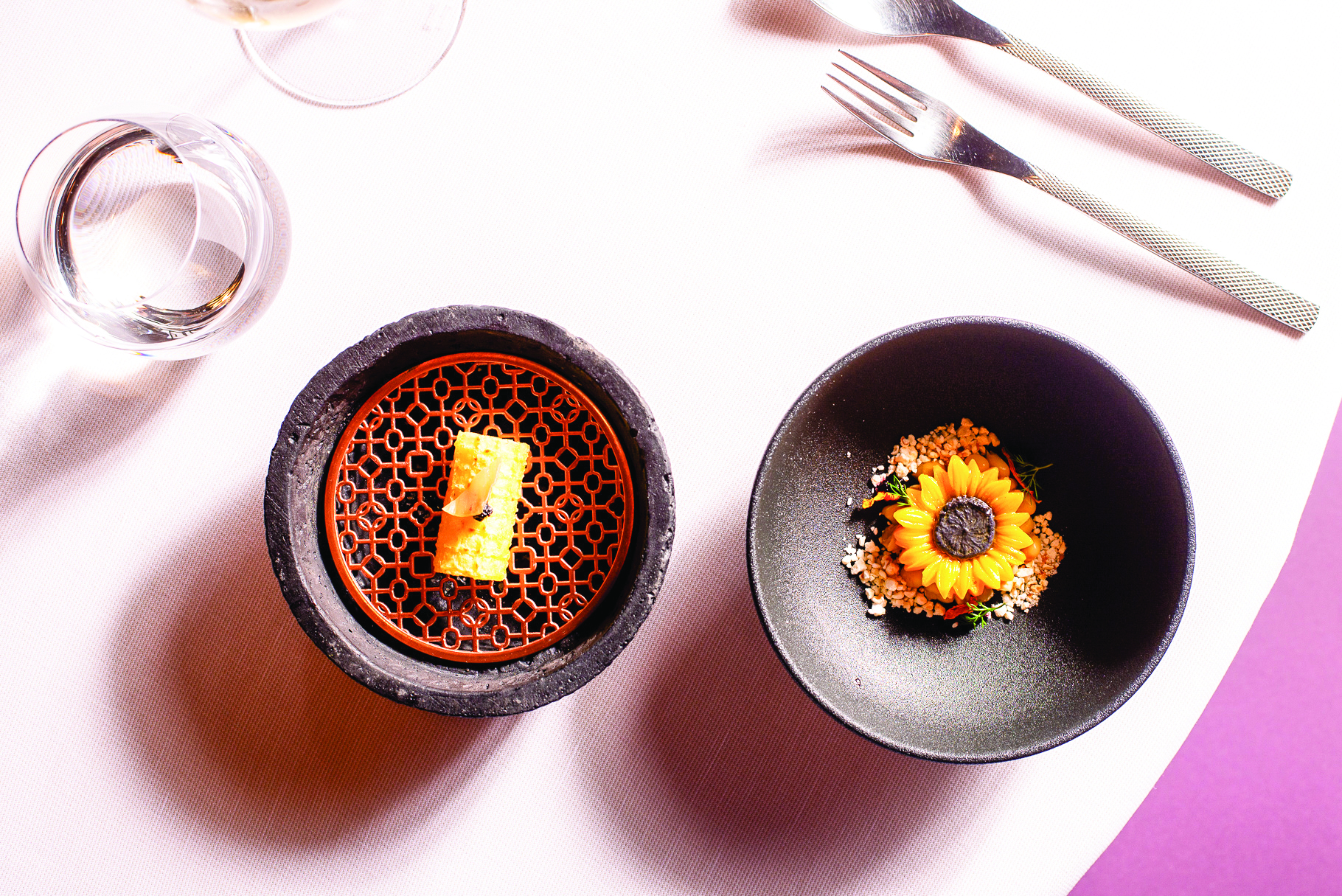
A glass partition frames the kitchen like a stage, revealing Chef Stefano Sforza and his team in perpetual motion, simmering, searing, creating. Below vaulted ceilings and stripped-back brick walls, the past meets a hint of industry chic, a setting that perfectly mirrors the menu itself. Sforza, with his unwavering nod to Gualtiero Marchesi’s mantra of “less is more,” crafts a cuisine of elegant minimalism. Seasonal vegetables, either from the Cometto family farm or trusted local producers, are given their moment, each dish pared down to its essence. It’s an ode to Piedmont, yes, but also to discipline. Here, every plate is a deliberate thought, a quiet rebellion against the unnecessary, a Turin sonnet, told bite by bite.
ICONIC MUST HAVES
Massimiliano Prete doesn’t just make pizza, he conducts edible symphonies. At his new outpost on Via Stampatori, near Via Barbaroux, Prete serves up dough with the kind of reverence you’d expect at a cathedral of carbs. His experimental approach to fermentations and flours is on full display, particularly in the Italian Pride tasting menu. The line-up? A quirky parade of Pizz’Otto, Croccante, FaCroc, and ultra-chic Emozioni a Spicchi, think brioche crowned lavishly with foie gras or lobster. Sure, the ‘pizza tasting menu’ might feel like a stylish gimmick, but when the Pulled Pork on barley flour crust lands on your plate, you won’t care. It’s brilliant pizza reimagined.
If Turin had a heartbeat, it might just be the ‘Bicerin’. Invented in 1763 and still served in the shadows of the Consolata church at the legendary ‘Caffè al Bicerin’, this isn’t your average caffeinated pick-me-up—it’s an artful layering of espresso, velvety chocolate (neither too thick, nor too thin), and frothy whole milk. The delicate construction makes glass mugs mandatory; seeing the strata is part of the experience. Don’t even ‘think’ of stirring. True aficionados wield a spoon like a sculptor, carving out perfect bites of each layer. At ‘al Bicerin’, coffee isn’t just a drink, it’s sweet, caffeinated theatre.
WHERE HISTORY LIVES
Turin wears its history like a velvet cloak, sweeping you into its opulent folds the moment you arrive. At the Museo Egizio, the past looms magnificently, rivalling even the British Museum. Four expansive floors brim with ancient Egyptian treasures, but the Tomb of Kha steals the show, so beautifully preserved it feels like you’re staring straight through time’s veil. It’s not just a display; it’s a pause button on history. Switch eras and head to the Balon Flea Market, where gritty charm mingles with nostalgia. Every second Sunday, Porta Palazzo becomes a labyrinth of vintage wonders, lace, ceramics, retro furniture, forgotten cameras. I went to browse but left clutching a leather-bound notebook old enough to tell its own story. It felt like winning treasure on cobblestones.
Then there’s Palazzo Madama’s marble staircase, Juvarra’s Baroque ode to elegance. Or the Mole Antonelliana, a skyline-piercing icon born as a synagogue but reborn as the Museo Nazionale del Cinema. Inside, it’s a cinephile’s playground of projectors and history, though for me, the drama lay in its 167-meter-high viewing deck. Pro tip: go early—the weekend lines test even saintly patience.
Parco del Valentino stretches along the Po River like an open-air love letter, with villas, botanical gardens, and a whimsical medieval Borgo. Its Fontana dei 12 Mesi erupts in marble theatrics, statues coming alive in a symphony of water. Further afield, Basilica di Superga crowns the city, offering panoramic views and poignant royal tombs, while Palazzo Reale whispers regal secrets through frescoed halls. Turin’s history dazzles unapologetically—and leaves you spellbound.
Akanksha Dean is an independent food & travel columnist, a chef and a catalyst and is a specialist with Chefs TV.




