
Fearless like warriors, journalists too must confront threats to truth and integrity.
New Delhi: A famous song from the classic film Mughal-e-Azam says, “Pyaar kiya to darna kya”—if you love, why fear? Society often echoes this sentiment: whether it is love or war, fear has no place. This also applies to professions such as medicine and journalism. Just like surgeons must not fear when performing an operation, journalists cannot afford fear when reporting facts or presenting opinions.
When a soldier is posted on the heights of Kargil or in the deserts of Rajasthan, he doesn’t ask for extra safety arrangements—he simply fulfills his duty. I believe the same ideal applies to media professionals: working without fear and being prepared to take risks when necessary is part of the job.
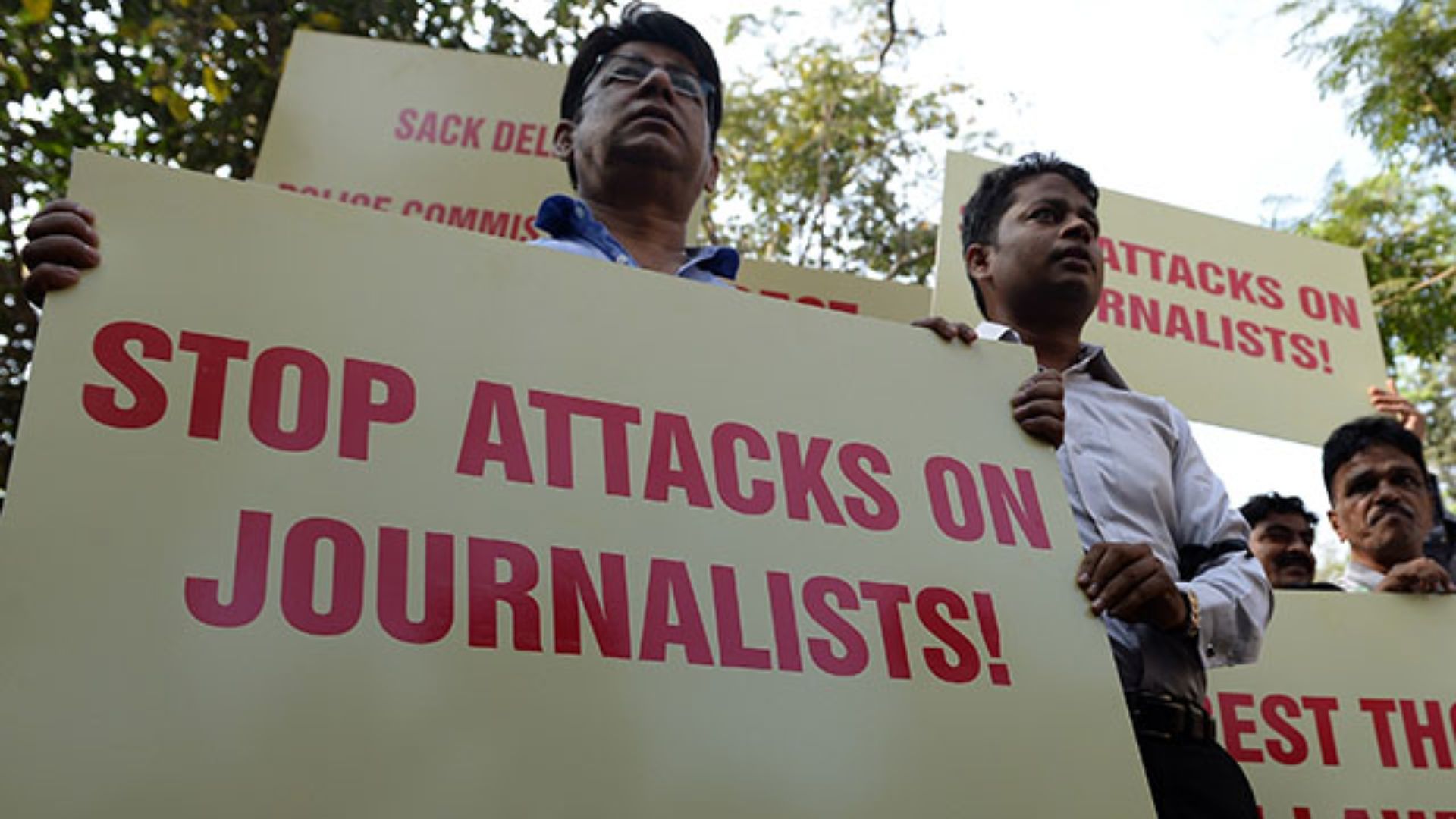
Recently, there has been uproar in some Indian states where journalists, cartoonists, independent writers, and activists have faced legal action by local administrations. Some foreign organizations have exaggerated the situation, suggesting that India is experiencing such pressure on media for the first time.
However, this is far from the truth. Over the decades, both the print and electronic media have faced legal actions, political threats, and even physical intimidation. The records of the Press Council of India, the Editors Guild, journalist unions, and courts are filled with such incidents.
Of course, it is condemnable to intimidate journalists or file false cases against them or attack media houses. Such actions must be restrained and punished. At the same time, the Supreme Court has clarified that misuse of freedom of expression is also unacceptable. In recent cases, the court has ruled against police action, proving that even today, it’s possible to do factual, critical journalism in India.
In this context, I’d like to share some of my personal experiences from my career. These days, there’s much discussion about attempts to intimidate the media in Bihar. Coincidentally, from 1988 to 1991, I served as the Resident Editor of Navbharat Times in Patna, and later edited other major national publications with a large readership in Bihar. During those years, under three Congress Chief Ministers and then under the Janata Dal (later RJD), I was not just a witness but a victim of media suppression.
For instance, in Dhanbad (then part of undivided Bihar), our correspondent Ashok Verma was brutally beaten by police for reporting the truth. The issue gained national attention, and the Editors Guild of India sent a senior team to investigate. The newspaper or the reporter didn’t blame the state or central governments directly, instead expecting the administration and judiciary to act on the findings.
Once, a Congress MLA from Ara-Buxar called me to demand the removal of our local reporter Rameshwar Upadhyay. I didn’t even know this MLA personally. I refused, stating that no reporter writing fact-based news would be removed under political pressure. Soon after, I learned the MLA had filed a false police report accusing me of planning a robbery in his village. He even raised the issue in the state assembly. A dismissed employee of our paper printed this baseless claim in his pamphlet-style paper. We didn’t create a fuss; while the FIR was filed, no action was taken. We continued our reporting and published stories about that MLA’s misdeeds.
Another example: we reported, with verified documents, on financial irregularities involving Tapeshwar Singh, a powerful Congress leader and cooperative chief. One evening, a relative of his arrived at our office visibly agitated. He asked for my home address, and a colleague warned me on the phone that the man appeared armed. I told my colleague to give him the address, as he would find it anyway. The man arrived at my home during dinner, refused food, and angrily objected to the article—threatening consequences. Calmly, I explained that the documents had been printed in the story itself and invited a rebuttal or legal challenge. Realizing we had no political bias and held solid proof, he left. We continued publishing stories about him and his organization without fear.
In 1990, when Lalu Prasad Yadav became Chief Minister, a whistleblower handed over nearly an entire file showing how crores were siphoned off in the name of distributing cattle to the poor. The documents bore Lalu’s own signatures. I published the report along with the documents. After two days, his party supporters protested outside our office and attacked our printing press, even trying to set it on fire. Thankfully, it was daytime and major damage was avoided. We didn’t sensationalize the incident but did write an editorial. Lalu later visited the office with senior officers, denying involvement. We told him calmly that his administration knew who the attackers were. With clear proof, he couldn’t take any action. We continued reporting on the scam, and eventually, Lalu and his associates were jailed in the infamous fodder scam.
Similar incidents occurred in other states like Uttar Pradesh, Madhya Pradesh, and Haryana. During Mulayam Singh Yadav’s tenure as UP Chief Minister, the infamous Hallabol campaign targeted media directly. His supporters attacked newspapers, even newspaper hawkers. The Editors Guild sent a three-member team—including myself, Inder Malhotra, and Ajit Bhattacharjee. We collected evidence, interviewed witnesses, and heard the Chief Minister’s side too. Mulayam claimed that some reports were false and that a certain publication had blackmailed the government. As a result, our report included both strong condemnation of the attacks and documentation of unethical media practices.
That’s journalism: truth without personal or political bias. When facts are clear and supported, legal protection follows. But it is also true that in every era, media has had to face threats and challenges. And it must rise to them—fearlessly.




