
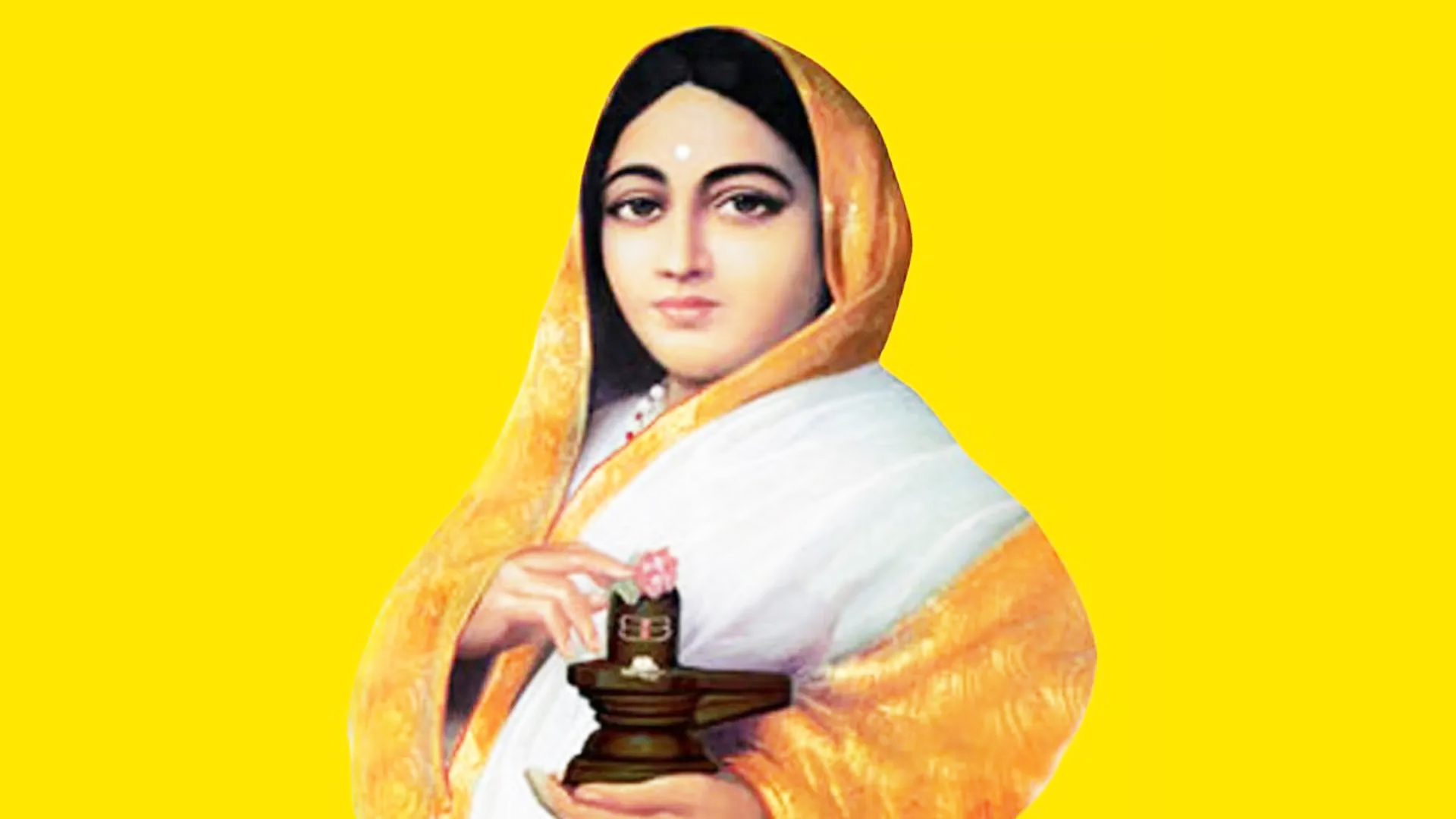
In a land with no dearth of freedom fighters, saints, and reformers, it is a startling historical injustice that Ahilyabai Holkar, a warrior, administrator, social reformer, and queen of the people, remains a marginal presence in our textbooks. Her name surfaces occasionally, often tied to her architectural contributions, like rebuilding the Kashi Vishwanath temple. But such shorthand obscures the remarkable reality: Ahilyabai was, in every sense, a sovereign far ahead of her time.
Her rule in 18th century Malwa was marked not just by political stability or cultural revival, but by an ethical model of governance rooted in justice, compassion, and a strikingly modern commitment to public welfare. Ahilyabai Holkar did not govern to glorify herself. She saw her position not as a seat of dominance but as a responsibility entrusted by God and answerable to the people. In her words, “Her duty would be the welfare of her people. She would be responsible for her every action. For whatever she did for the welfare of the community, she would be answerable to God.” That oath, taken during a puja at the Maheshwar palace, captures the very essence of her reign: a sacred pledge to serve, not rule.
A QUEEN UNLIKE ANY OTHER
Born in 1724 in a modest village in Maharashtra, Ahilyabai was not supposed to become queen. She was neither of royal blood nor raised for power. But her destiny was carved by a remarkable intellect, indomitable spirit, and the rare support of her father-in-law, Malhar Rao Holkar, who saw in her not just a daughter-in-law, but the very “son” the divine had gifted him. Her husband’s death in battle could have consigned her to the margins of royal life. Instead, it became the beginning of a historic journey. At a time when women were denied agency in even private spaces, Ahilyabai governed a kingdom. And not merely governed, the kingdom flourished under her leadership. For 30 years (1765-1795), Malwa was a haven of prosperity, security, and justice.
While many male rulers of her time faltered under the weight of corruption and court intrigues, Ahilyabai’s court was marked by discipline and moral rigour. One telling incident captures the seriousness with which she approached her role. When her husband overstepped his financial allowance from the state, she refused him additional funds, insisting that personal conduct must fall within the bounds of accountability. She did not flinch, even when those close to her tested her resolve. She knew the map of India by heart, kept close tabs on trade routes, prioritized agricultural and water infrastructure, and ensured that state funds were never diverted from the people’s needs. Her instructions to accountants during times of war were simple: soldiers must be paid on time. State expenditure was not for display, but a sacred duty.
WELFARE GOVERNANCE BEFORE THE TERM WAS BORN
Ahilyabai Holkar practised what today’s policymakers call “welfare governance,” but without the bureaucracy, and two centuries before the term and concept emerged. Her administration did not merely respond to crisis but was anticipating and preventing it. Farmers in drought-hit regions received direct assistance. Widows were not cast out or stripped of property. In fact, Ahilyabai banned the appropriation of widowed women’s assets by the state, an act that even later reformers hesitated to institutionalize. She dissuaded the practice of sati well before it became part of official reform movements. Women were encouraged to remarry and resume life with dignity. Her governance model refused to see subjects as subordinates.
She saw them as equals, as people entrusted to her care. She did not “appoint commissions” to delegate and avoid responsibility. Instead, she went out and held daily darbar, meeting people, listening to their grievances, and resolving them with clarity and swiftness. Her reign was marked by direct access, administrative empathy, and deeply personalised justice. Her ideas of justice were not Western imports but were rooted in her reading of Dharma. She did not practise the Dharma in its rigid, ritualistic sense but as a moral and civic philosophy. She believed rulers were not above their people but below the weight of their needs. Her kingdom’s wellbeing was not a statistical measure but a spiritual obligation.
A FEMINISM THAT WAS ROOTED, NOT IMPORTED
Ahilyabai Holkar’s feminism did not come from Paris salons or suffrage movements. It originated from her reflections on Indian society, her lived reality, and her sharp ethical compass. She broke caste barriers, performed the kanyadaan of her own daughter despite being a woman and a widow, and married her daughter into a family without heeding to their caste or social status. Such acts would be considered surprising even today, but her character imbibed these principles as typical behaviour of the ruler. She dined with people of all communities. She welcomed scholars, artisans, and musicians from across castes and regions into her court.
She refused to reduce women to property or symbols of honour, as was customary at the time and, tragically so, still remains even today in many parts of the country. Yet, her feminism was never antagonistic. She did not believe men had to be cast out for women to rise. She believed in a model of society where all, regardless of gender or caste, should flourish. Her rule was not about women’s supremacy but human harmony. That is why her model is so deeply Bharatiya, one that is rooted in accommodation, not alienation. Yet, thinking of her as merely a moral reformer would be a mistake.
She was also a warrior and military strategist who understood the politics of the time with sharp foresight. She commissioned a cannon factory in Gwalior, recognizing the growing use of artillery by British in India. She supervised its operations, ensured timely delivery of arms, and created employment for hundreds. This was not an outsourced kingdom. For Ahilyabai was involved in every detail, from military logistics to temple restorations. Maheshwar, under her, became a cultural capital. The famous Maheshwari sari tradition owes its genesis to her patronage.
Roads, temples, trade hubs, schools, ghats, her vision manifested not in palatial grandeur but in public utility. Temples she rebuilt like the Kashi Vishwanath in Varanasi, were not just religious acts, but symbolic reclamations of cultural pride after centuries of desecration. Yet she never enforced religion. Her spirituality was personal, not political. An episode captures her humility: when a poet sang praises of her greatness in court, she interrupted him and told him to redirect his art toward God. His verses, she said, should not be wasted on mortals like her. She later ordered that the poem be immersed in the Narmada River because she believed that poetry should be written about divine not rulers who come and go.
WHY HER LEGACY MATTERS MORE THAN EVER
In the noise of today’s politics, Ahilyabai’s model of leadership offers clarity. She ruled without spectacle, governed without excess, and led without pride. Her sense of responsibility was not driven by ideology or election cycles but by Dharma. She represents a model where duty triumphs over entitlement, and service over status. She defies every stereotype modern India inherited from colonial and patriarchal readings of history. A female ruler in the 18th century, enforcing justice, breaking caste norms, governing wisely, and still being spiritually grounded?
That doesn’t fit the lazy binaries of tradition versus progress. Which is perhaps why mainstream historical discourse has not fully embraced her. But now, more than ever, we need to. We need to tell our daughters not just about feminist icons from the West, but also about Ahilyabai, who did all that was required to be done, in her own quiet way. We must speak of a queen who did not rule for power or legacy but because she believed it was her Dharma. She saw herself as a humble servant to her people, not their master. She ruled through responsibility, not force. And she governed by the light of duty, not the shadows of ambition. Ahilyabai Holkar was not just the People’s Queen but a visionary leader India still needs to learn from.
Prof. Santishree Dhulipudi Pandit is the Vice Chancellor of JNU.




