
New bill brings all sports bodies under law, including the powerful cricket board BCCI.
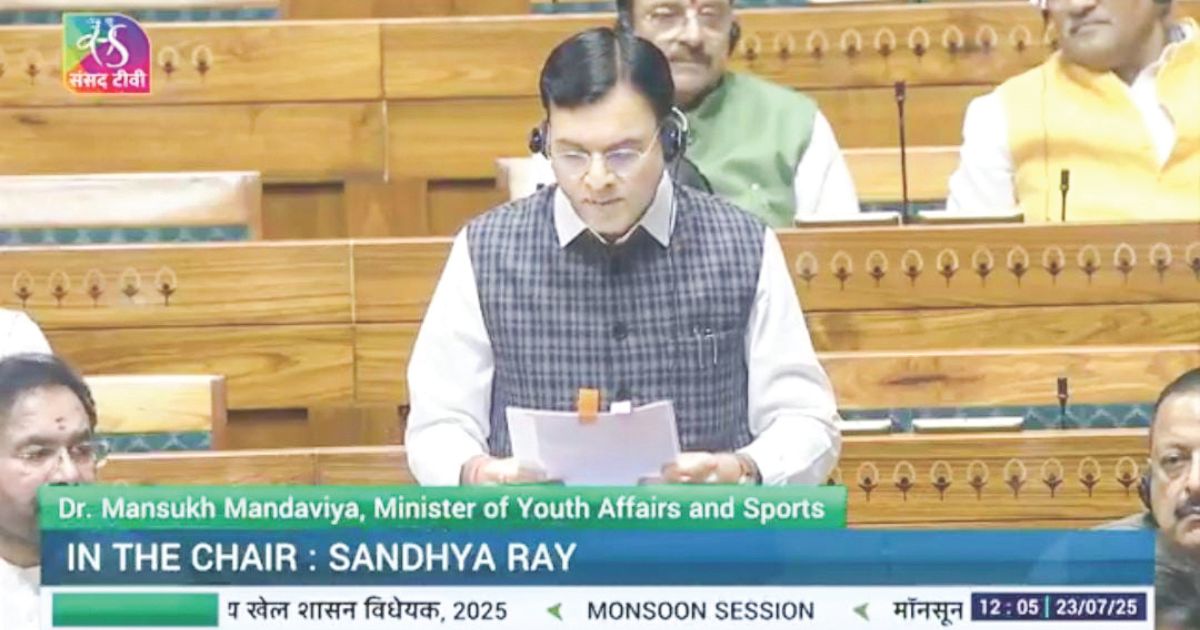
New Delhi: When it comes to sports, people usually look toward the stadium. But now, all eyes are on the temple of democracy—Parliament. On Wednesday, 23 July 2025, Union Youth Affairs and Sports Minister Dr. Mansukh Mandaviya introduced the National Sports Governance Bill 2025 in the Lok Sabha.
For the first time since independence, such a bill has been brought forth to bring all sports organizations—including the powerful Board of Control for Cricket in India (BCCI)—under a unified legal framework.
This legislative “bouncer” from the Sports Ministry could strike a significant blow to the BCCI’s long-held claim of autonomy.
Until now, all national sports federations in India are expected to follow government regulations. However, the BCCI has long operated outside this ambit, positioning itself as an autonomous body.
Dr. Mandaviya told The Sunday Guardian that the National Sports Governance Bill would promote transparency, accountability, and athlete-centric administration in Indian sports. The bill aims to ensure better governance, fair elections, and effective mechanisms for resolving grievances and disputes in the sports ecosystem.
Once the bill becomes law—after clearance from both houses of Parliament—even the BCCI will be legally bound to follow Indian laws just like every other sports federation.
However, the government insists that it will not assume full control over any sports federation. The role of the government will be limited to that of a regulator and facilitator. The BCCI will retain its autonomy, but any disputes involving it will be addressed by a proposed Sports Tribunal.
A key provision mandates that the BCCI, like all federations, must secure recognition from a newly formed National Sports Board.
Significantly, cricket’s T20 format has now been included in the 2028 Los Angeles Olympic Games, effectively aligning BCCI with Olympic governance standards. Sports Code vs. Sports Bill: What Has Changed?
Here’s how the new National Sports Governance Bill 2025 differs from the 2011 Sports Code:
Legal Authority:
The 2011 Sports Code was merely a set of executive guidelines issued by the Sports Ministry. The new bill, once passed, will be a formal law, enforceable through statutory mechanisms.
Age Limit:
While the 2011 code capped the age of office bearers at 70 years, the new bill allows candidates below 70 at the time of filing nominations to serve their full term. This aligns with international sports federation standards. For example, current BCCI President Roger Binny could benefit from a 5-year relaxation provision.
Term Limits:
Under the Sports Code, a president could serve three terms, with a mandatory cooling-off period after two. The new bill allows three consecutive terms (up to 12 years) for the positions of President, General Secretary, and Treasurer, followed by a mandatory break before potential re-election.
Gender and Athlete Representation:
The Sports Code had no mandatory quotas for gender or player representation. The new bill mandates at least four women and two athletes of outstanding merit in the Executive Committee of every National Sports Federation (NSF), enhancing inclusion and ensuring athlete voices are heard.
Key Institutions to Be Created
After the bill becomes law, three new statutory bodies will be formed:
-
National Sports Board:
Will regulate and supervise the operations of all National Sports Federations. -
National Sports Tribunal:
Will adjudicate governance and athlete-related disputes in the sports domain. -
National Sports Election Panel:
Will oversee fair and transparent elections across all sports bodies.
All recognized sports organisations will also fall under the purview of the Right to Information Act (RTI), 2005, ensuring public transparency in their operations.
According to sources, an eight-hour debate on the bill is likely to take place in Parliament starting 4 August 2025.
If passed, the National Sports Governance Bill 2025 could fundamentally alter the landscape of Indian sports governance—making it more transparent, inclusive, and legally accountable while marking a historic shift in the regulatory treatment of India’s most powerful sports body, the BCCI.




