
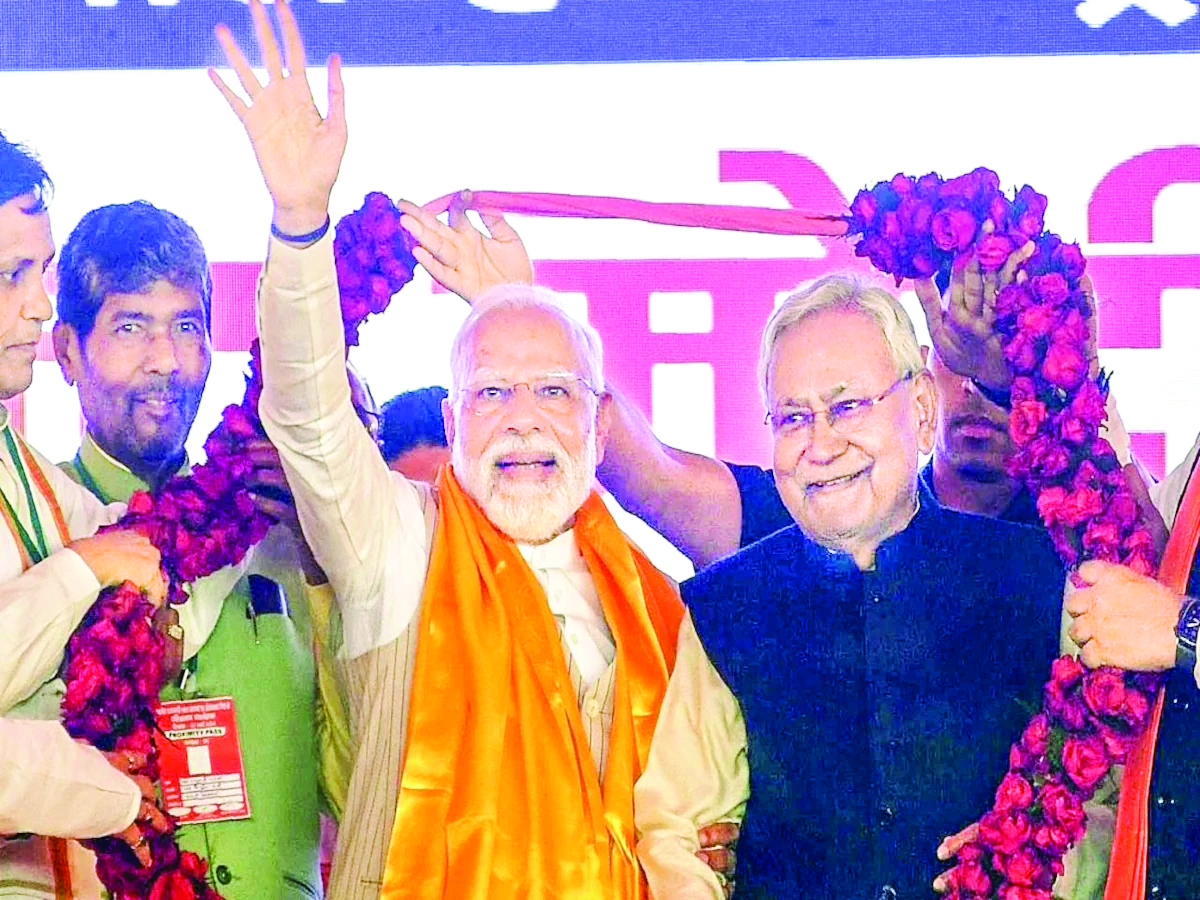
New Delhi: Prime Minister Narendra Modi’s scheduled visit to Gayaji on 22 August will mark his sixth trip to Bihar in 2025, underscoring not only the political importance of the state—whose election results will shape the upcoming internal dynamics within the BJP—but also the crucial organizational role such visits play.
A loss in Bihar for the BJP would have far-reaching implications at the national level, party leaders noted.
The Sunday Guardian spoke to state-level and district party leaders involved in managing past and upcoming visits on how the Prime Minister’s trips impact the organization, apart from creating a pro-BJP sentiment among the electorate.
These leaders said that Modi’s presence in any state ahead of elections is never routine—it is a calculated intervention aimed at recalibrating the party machinery, energizing ground-level workers, and synchronizing local narratives with the central campaign direction.
In the days leading up to such visits, BJP units typically escalate activity at the booth level. These activities not only build visibility but also project discipline, unity, and presence on the ground. The campaigns act as both outreach and mobilization drills, sharpening the cadre’s readiness while amplifying the party’s presence in districts where voter engagement may otherwise be thin.
At the core of these visits is the Prime Minister’s deployment of development as a political message. By inaugurating projects or laying foundation stones—such as the Rs 7,200 crore worth of schemes unveiled in Motihari in July—Modi reinforces the BJP’s narrative of performance-based governance.
These announcements, often tied to Central schemes or long-pending demands, are meant to shift the voter’s attention toward delivery and governance and away from identity-based or anti-incumbency debates.
Once the PM leaves, these announcements serve as guiding points—a pole around which party workers structure their people-to-people interactions in the run-up to the polls.
These visits also serve a crucial function in alliance optics and internal consolidation. In Bihar, state leaders said one of the primary reasons for their confidence in doing extremely well in the coming polls is the level of coordination between the BJP and the JD(U).
In all his recent visits, Modi has ensured that prominent voices from the JD(U) are given space on stage alongside state BJP leaders—something that party workers from both sides notice and appreciate.
According to a party functionary, during his visits, Modi meets—even if only briefly—with party workers and district presidents who otherwise wouldn’t have the opportunity to go to Delhi and meet him. These few minutes of interaction energize not just the concerned individual but also their colleagues, supporters, and local networks—ultimately benefiting the BJP during polling.
In places where the recall value of state leaders is weak or non-existent—challenges that local workers struggle to overcome—Modi’s visits help reframe the party’s image. His speeches become statewide media events, carried live, clipped for digital circulation, and used by local units to strengthen visibility.
As per these leaders, Modi focuses on areas where the BJP’s infrastructure is weak, using his personal appeal to compensate for local gaps. In Bihar’s context, where the BJP faces both entrenched caste-based parties and shifting loyalties in rural belts, such visibility has in the past acted as a corrective force—reasserting narrative dominance and presenting the BJP as the party of governance and stability.
The presence of the Prime Minister serves as both a morale boost and a checkpoint: party units know the national lens is on them, pushing them toward a state of organizational alertness that few other events can induce.
Modi’s sixth visit, like those in the past, is not ceremonial—it is strategic electoral engineering at work.




