
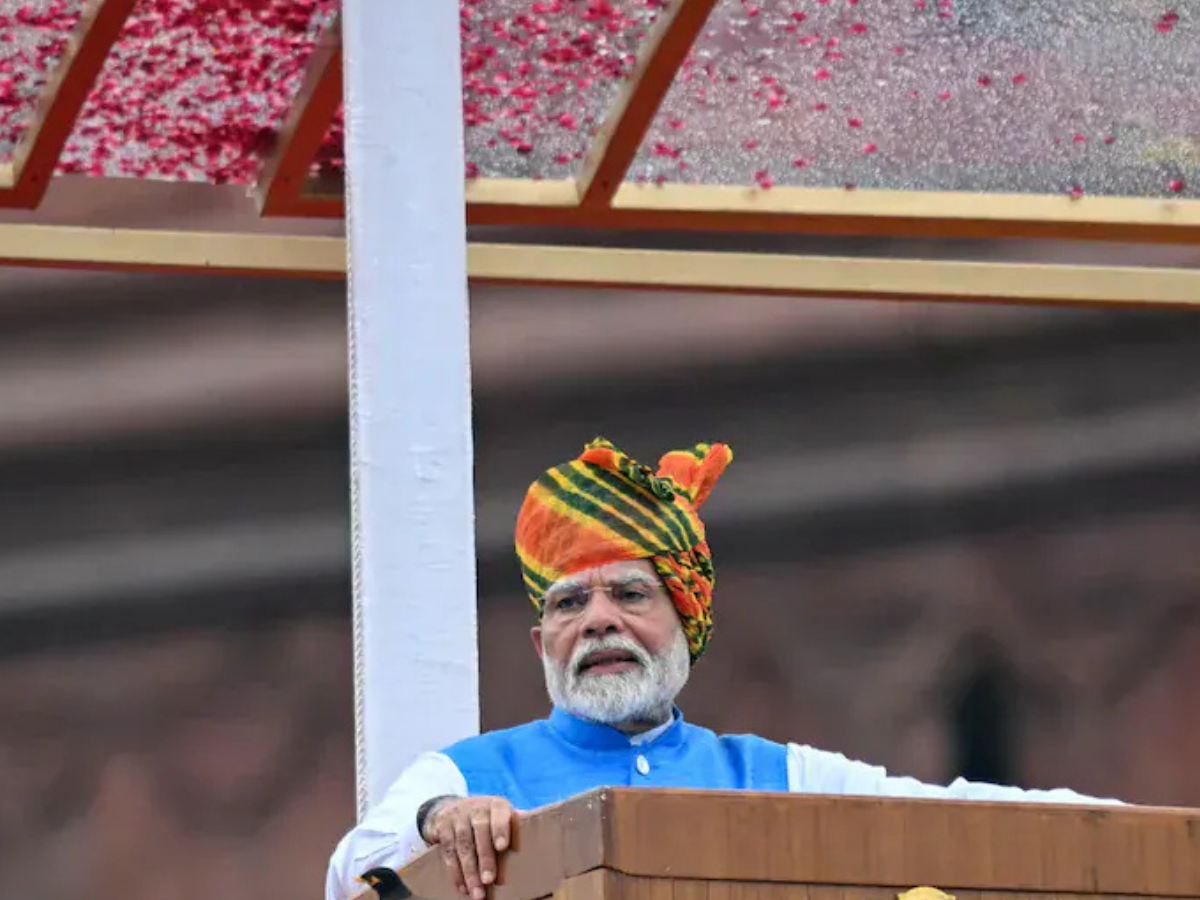
New Delhi: From the iconic Red Fort on the 79th Independence Day, Prime Minister Narendra Modi delivered arguably one of his most forward-looking speeches, outlining a series of strategic commitments which he said would anchor India’s transformation into a Viksit Bharat (developed nation) by the centenary of independence in 2047.
Marking his 12th Independence Day address — the most by any Indian Prime Minister — the 105-minute speech, the longest he has delivered from this platform, laid out concrete deliverables with measurable timelines and long-term structural impact.
Recounting how earlier attempts to set up semiconductor plants had been “killed at birth” decades ago while other nations surged ahead, the Prime Minister announced that India was now in mission mode to bridge this critical technological gap. By the end of this year, he said, the country will roll out its first Made in India chip, insulating its industries from the supply chain disruptions and shortages that have crippled manufacturing elsewhere.
On energy security, Modi unveiled plans for a tenfold increase in nuclear power generation capacity by 2047, with work already underway on 10 new reactors. He coupled this with the launch of the National Deepwater Exploration Mission, aimed at tapping ocean resources, while also expanding domestic capacity in solar, hydrogen, hydro and nuclear power to cut dependence on imported petrol, diesel and gas — a drain he described as a persistent burden on the national budget.
Economic reforms took centre stage with the announcement of next-generation GST measures to be rolled out on Diwali in October, reducing taxes on essential goods and providing relief to MSMEs, local vendors and consumers.
These, he said, would be accompanied by a deeper structural push through a newly formed Task Force for Next-Generation Reforms. The body will evaluate all current laws, rules and procedures tied to economic activity, with a fixed timeline to deliver changes that cut compliance costs for startups, MSMEs and entrepreneurs, provide freedom from the fear of arbitrary legal action, and streamline laws to improve the ease of doing business.
Modi said these reforms would create a supportive ecosystem for innovation, entrepreneurship and sustained economic growth, preparing Bharat for the demands of a $10 trillion economy by 2047.
Employment generation formed another pillar of the speech, with the launch of the Rs 1 lakh crore PM Viksit Bharat Rozgar Yojana. Under this scheme, newly employed youth will receive Rs 15,000 per month, with a target of reaching three crore beneficiaries.
In a significant announcement with strong strategic undertones, Modi called on India’s scientists, engineers, and youth to take up the challenge of building a fully indigenous jet engine. Drawing parallels to India’s rapid development of COVID vaccines and the creation of UPI for digital payments, he said the same resolve must now be directed towards high-end defence technology. The aim, he emphasised, is to ensure that the engines powering India’s skies are entirely home-grown — a decisive step toward strategic self-reliance.
In a related move focused on national security and demographic stability, Modi announced the launch of a High-Powered Demography Mission to tackle the risks posed by illegal migration and demographic imbalances in border areas. He said the mission would protect the unity, integrity, and rights of India’s citizens, while addressing infiltration concerns in a systematic and sustained manner. This comes even as the Election Commission of India is engaged in an exercise to clean its electoral rolls to ensure non-citizens are not able to vote.




