
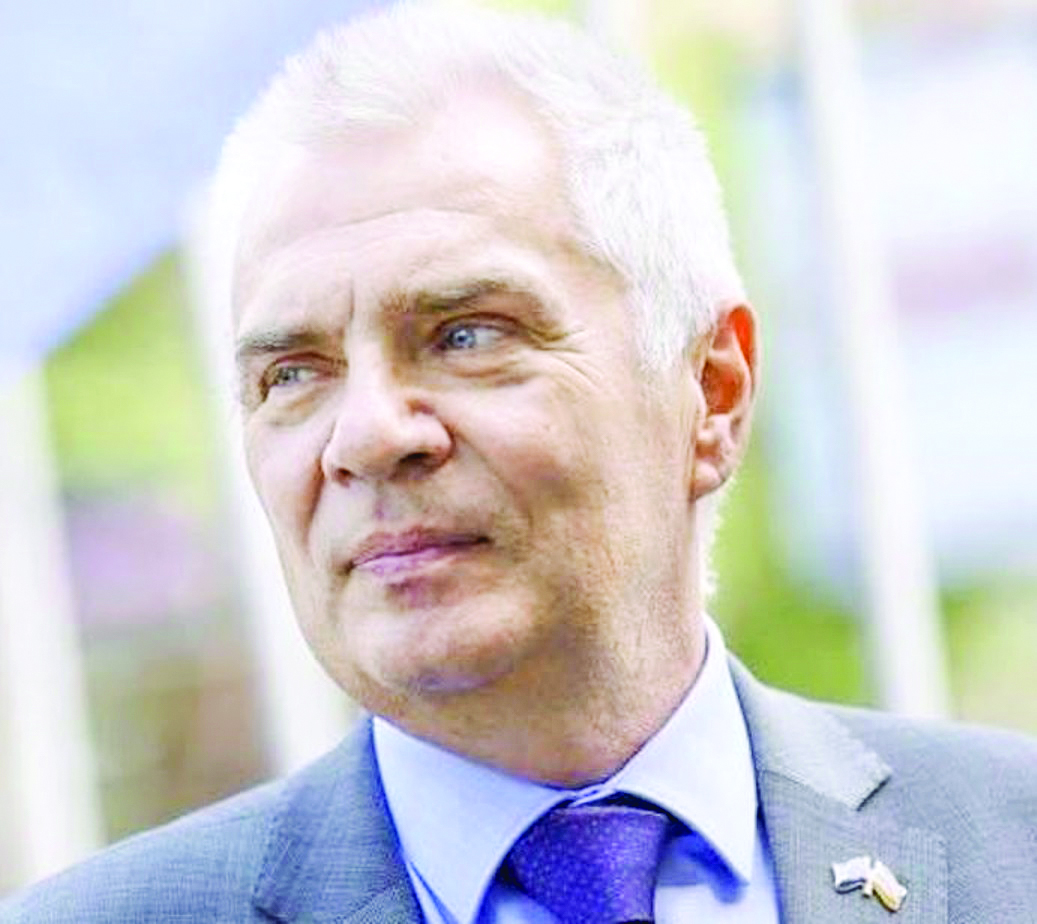
Dr. Piotr Antoni Switalski, Poland’s Head of Mission in India, is a seasoned Polish diplomat and historian. Holding a Ph.D. in historical sciences, he has, over a distinguished career, held prominent roles including Ambassador and Permanent Representative of Poland to the Council of Europe, EU Ambassador to Armenia, Undersecretary of State at the Polish Ministry of Foreign Affairs (Deputy Foreign Minister), and Titular Ambassador, Director of the Asia-Pacific Department at the Ministry of Foreign Affairs of Poland.
It is with the same breadth of global experience and strategic vision that Dr. Switalski, reflected on the transformative phase in Indo-Polish relations. In an exclusive conversation with The Sunday Guardian, he underscored how Prime Minister Narendra Modi’s landmark visit to Warsaw last year—the first Indian Prime Minister to do so in four decades—has opened “a new chapter” in bilateral ties—propelling cooperation in defence, economy, education, technology, and culture into sharper focus.
The visit was more than a diplomatic call. It was a defining moment that elevated the Indo-Polish relationship to the status of a strategic partnership, one that promises to reshape the contours of cooperation in defence, economy, culture, education, and technology. “The visit of Prime Minister Modi provided important stimuli to all dimensions of our partnership. We are now working on practical steps to fill this framework with concrete substance, developing it in a sustainable way,” said Dr. Piotr Antoni Switalski.
However, the Indo-Polish cultural story is not new—it stretches back to Stephen Norblin’s Indo-European artistic fusion, the refuge of Polish children in Jamnagar during World War II, and even a square in Wrocław named after poet Harivansh Rai Bachchan, father of Amitabh Bachchan. Also, the legendary reputation of the Polish Film Schools and the popularity of filmmakers like Krzysztof Kieslowski and Krzysztof Zanussi in India add a cultural flourish to this academic exchange. “India has a magnetic force as a civilization, as a culture. At the same time, Poland’s literature, music, films, and art can enrich Indian audiences. We must preserve this legacy while also thinking about new initiatives for younger generations,” Dr. Switalski emphasized. Geopolitics has given Poland a frontline role in European security.
With Warsaw committing almost 5% of its GDP on defence, it now fields the second-strongest land forces in NATO. This, according to Dr. Switalski, opens avenues for meaningful cooperation with India. “Some of our defence systems have been tested in real combat conditions, and we believe they can be of interest to India. Beyond procurement, there is scope for joint experience sharing, direct contact between armed forces, and even naval exchanges,” he noted.
Poland’s role in the EU’s new SAFE project—a €150 billion joint procurement initiative for defence equipment—offers further prospects for Indian participation. Bilateral trade has crossed USD 6 billion, but both sides agree this is far below potential. “If you take into account the size of our economies, the current trade volume is an encouraging sign that both Indian and Polish companies are eager to invest in each other’s markets,” Dr. Switalski stressed.
From green hydrogen and maglev-based transport to automotive batteries and infrastructure, Polish companies are exploring multibillion-dollar joint ventures in India. Meanwhile, Indian firms see Poland as a springboard to the European market. The direct air links between Delhi, Mumbai, and Warsaw are expected to accelerate this momentum. The human dimension of this partnership is equally promising. With over 5,000 Indian students already in Poland, academic exchange is becoming a vibrant pillar of bilateral ties. “We want to encourage our universities to work more with foreign students, providing not simply diplomas, but quality education. Poland offers a top-level European education in fields like medicine, engineering, and economics,”
Dr. Switalski said. Poland today is the fastest growing economy in Europe and the Indian economy continues to march globally. Both countries are deeply committed to security, innovation, and global problem-solving. “It is not possible to think about global or regional challenges without India’s perspective, and Poland, as a key EU member and an active global player, brings valuable insights to the table,” Dr. Switalski observed. The cultural ties are being actively nurtured by the Polish Institute in New Delhi, led by Małgorzata Wejsis-Gołebiak. From film festivals to literature events, the Institute has expanded Poland’s presence in India. “With Mrs. Małgorzata, we can expect increased activity and new initiatives. Upcoming visits by Nobel laureates, new literary translations into Indian languages, and collaborative film projects are set to deepen this vibrant exchange,” Dr. Świtalsk revealed.
As India and Poland chart this new chapter, the narrative is not just about bilateral cooperation but about two civilizational powers finding new relevance in a rapidly changing world order. From Norblin’s canvases to joint defence projects, from student exchanges to green energy ventures—the Indo-Polish story is now one of strategic depth, cultural warmth, and shared aspirations for the future.




