
NEW DELHI: “16 August was a black day in the history of India”, wrote Maulana Abul Kalam Azad. “Mob violence unprecedented in the history of India plunged the great city of Calcutta into an orgy of bloodshed, murder and terror. Hundreds of lives were lost… Processions were taken out by the League which began to loot and commit acts of arson.” Maulana Azad was the Congress president for seven years from 1939 to 1946 before handing over the mantle to Nehru. He also was the first Education Minister in the Nehru cabinet. As Congress president, Maulana had negotiated with the Cabinet Mission and was successful in making Jinnah-led Muslim League to agree on a federal system without creating two nations.
Sadly, Maulana’s chosen successor Jawaharlal Nehru stated that “Congress would be free to modify the Cabinet Mission Plan”, which gave an opportunity to Jinnah to withdraw “from the League’s early acceptance of the Cabinet Mission Plan.” When the Cabinet Mission Plan failed, Muslim League Council, at the end of July, decided to resort to direct action and authorised Jinnah to take appropriate steps so as to press for a separate Muslim homeland. Jinnah had declared August 16 as the Direct Action Day.
No programme was fixed but in Calcutta, Maulana had observed “that a strange situation was developing…..In Calcutta, I found a general feeling that on 16 August the Muslim League would attack Congressmen and loot Congress property… There was a general sense of anxiety in Calcutta which was heightened by the fact that the Government was under the control of the Muslim League and Mr H.S. Suhrawardy was the Chief Minister.” The Muslim League had been preparing for the Direct Action Day in Calcutta for some time.
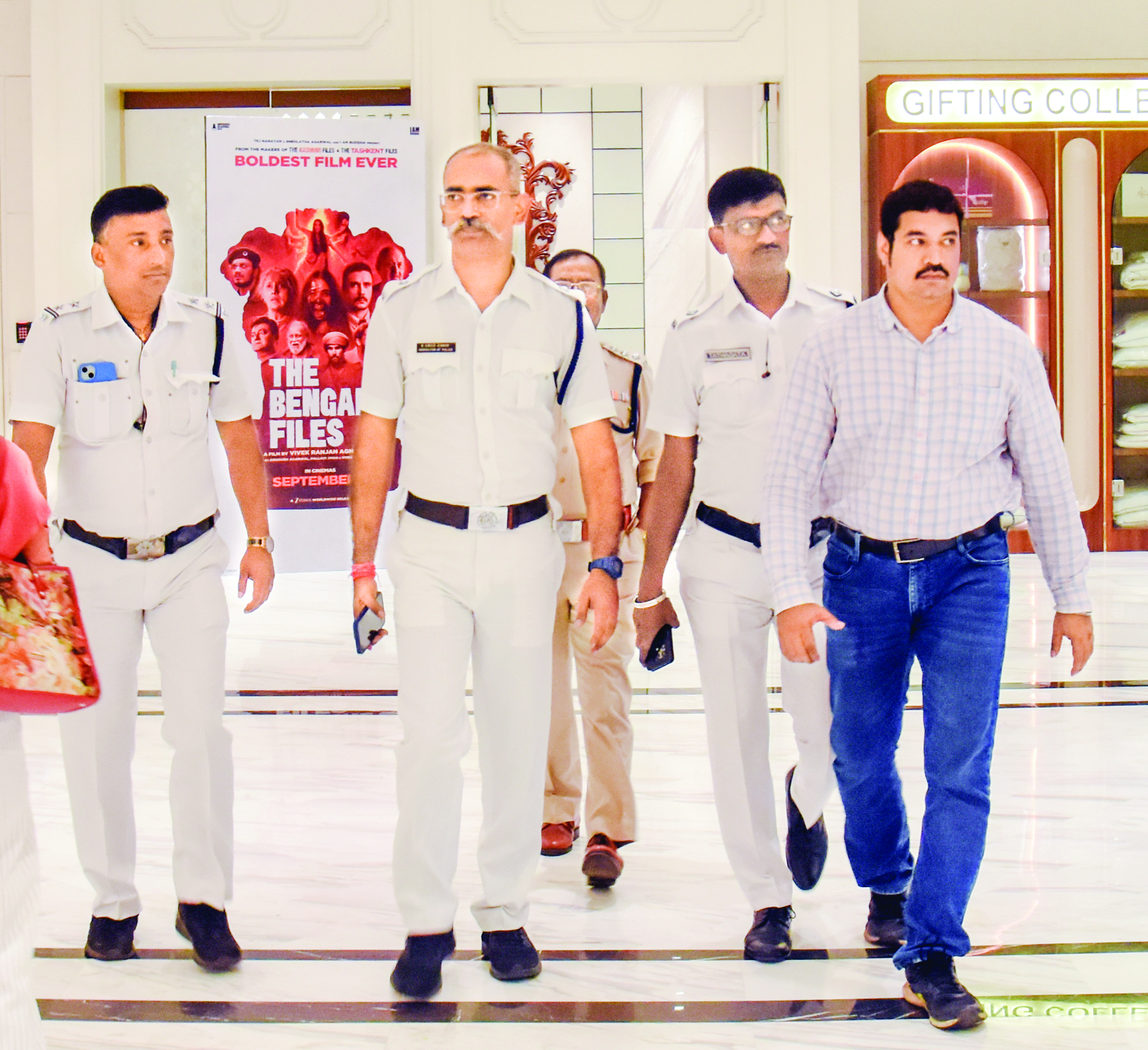
The city’s mayor, Muhamad Osman, who was also the district president of the League, released pamphlets exhorting Muslims to come out in support on the day. He said, “It is by the will of Allah that the All India Muslim League has decided to start Jehad for attainment of Pakistan in the month of Ramzan.” These are all recorded history, which perhaps found place in the soon to be released movie by Vivek Agnihotri, “The Bengal Files.” Curiously, a debate has started in West Bengal on the historicity of the movie. The state administration had taken unprecedented policing to stop release of the trailer of the movie.
Even some actors who featured in the movie expressed their innocence over the plot of the movie, with one prominent Bengali actor saying that he thought the movie was on incidents in Delhi and was called Delhi Files initially. There were several reasons why the Direct Action Day, with all its vehemence was played in Calcutta. Undivided Bengal was a Muslim majority state where Muslim League had come to power after the March 1946 election. Also, Calcutta was then the largest business centre, port and city in the country. It was presumed that action in Calcutta would clearly send a message on the Muslim League’s seriousness over creating a Muslim majority country. Jinnah wanted Calcutta to be part of Pakistan and even had told Mountbatten, “What is the use of Bengal without Calcutta?” Also Congress had been divided and weak in Bengal as was seen during the World War II when two famines—one for food and the other for clothes—broke out in the state.
Mahatma Gandhi never raised a finger on the plight of poor Bengalis. It was apparent Congress leaders would not jump in against the Direct Action in Calcutta. The cunning Suhrawardy used this opportunity. On 16 August 1946 Hindus of Calcutta were sitting ducks to marauding Muslim mobs. A military report on the Calcutta riot mentioned: “There is hardly a person in Calcutta who has a good word for Suhrawardy, respectable Muslims included. For years he has been known as ‘The King of the goondas’ … he fully anticipated what was going to happen… There were corpses all over North Calcutta, they were in the river, canals, side lanes, in fact everywhere.”
Governor General Frederick Wavell said, “I have always had the impression that Suhrawardy was one of the most inefficient, conceited and crooked politicians in India.” When the issue came up for discussion in the state assembly Jyoti Basu, the communist member blamed Suhrawardy for failing to control the riot. Maulana Azad and Sarat Bose were scheduled to attend the meeting of the Congress Working Committee in Delhi on 17 August. The Bengal Governor had promised to provide military escort to them to reach the airport. None came, Maulana travelled on his own.
He noticed, “The streets were deserted and the city had the appearance of death… Throughout Calcutta, the military and the police were standing but remained inactive while innocent men and women were being killed.” The sitting duck Hindus had to take up their own guard. The non-Bengali milkmen, workers, chowkidars (guards) assembled to protect themselves. Gopal Mukherjee, a small time businessman, led able-bodied Bengalis to resist the onslaught.
They had no other option since Police Commissioner Hardwick responded to prominent Hindus that they could ask Congress for help instead of British police. When Hindus started retaliation, the one-sided arson and killing by the Muslims was reversed. British military report had estimated that death toll of both the communities evened out after the Hindu retaliation, though property damage was more for the Hindus. These are in the official records. Yet the present day West Bengal administration has been painting the events portrayed in Agnihotri’s yet to be released movie as unhistorical.
Even those who pretend to be intellectual have come out in the open to criticise the movie. Strange is the obsession for denial mode in West Bengal.
That Bengali Hindus had suffered due to the partition with nearly the entire Hindu community from the East Bengal (now Bangladesh) were uprooted is a fact no amount of storytelling can hide. It seems the political elements in the state do not want the present generation to recall the horrific incidence of the Direct Action Day. Question is, will suppression of historical fact act as a balm to the heinous incident?
Sugato Hazra is a political analyst.




