
1.9K
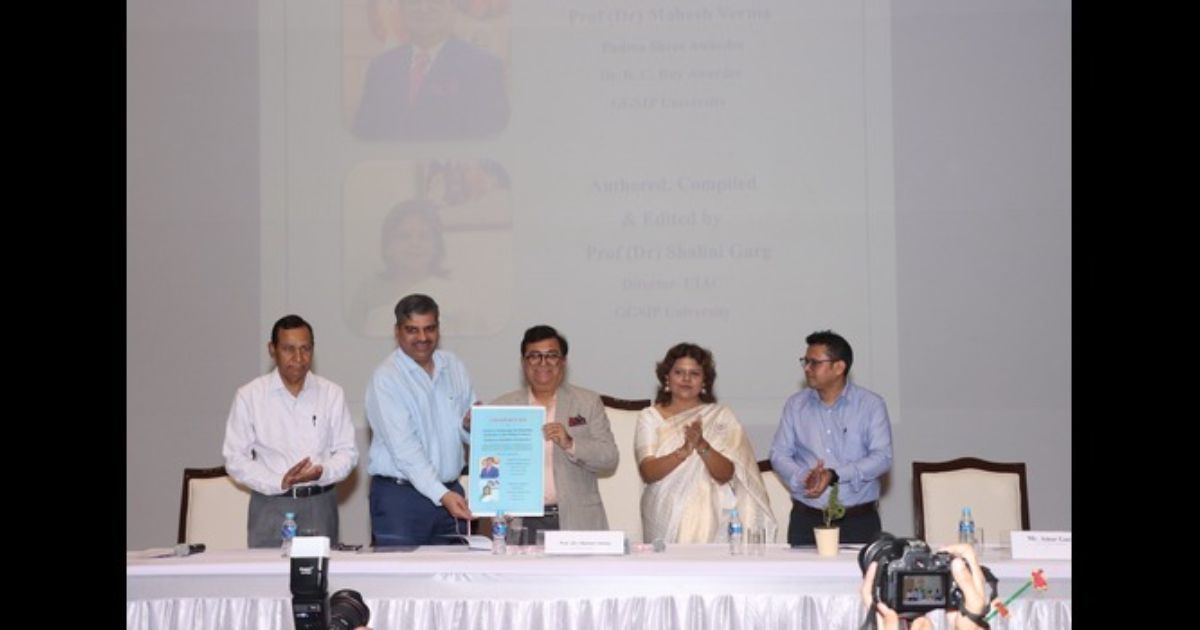
New Delhi: The Guru Gobind Singh Indraprastha University(GGSIPU) has just inaugurated the first Large Language Model(LLM) powered Artificial Intelligence(AI) based course in International Financial Management(IFM) earlier this week. With this the GGSIPU, Dwarka has become India’s first university to adopt LLM enabled AI teaching and learning. The University intends to replicate this model onto all other departments and courses of the university in the future.
And who are the ‘Men’ behind this “Model”?
The visionary of the project is Prof T G Sitharam, currently Chairman of the All India Council of Technical Education(AICTE); the idea was triggered by his strong conviction that Indian higher education cannot afford to lag behind global trends.
His vision spurred Padmashri Prof Mahesh Verma, the Vice-Chancellor of GGSIPU to act which has then enabled the university to embark on this innovative teaching-learning journey.
And within the GGSIPU, Prof Yogi Kocchar, currently Professor of Practice at the University; formerly associated with Microsoft and the Stanford university and Prof Gagan Sharma have designed and piloted the model.
Meanwhile, what is ‘this’ LLM? It is essentially an AI system trained on enormous amounts of raw information and text which can then simplify, summarise and explain concepts, ideas and themes; answer queries and converse in human language. In other words, it is like an omniscient teacher who has devoured millions of articles, magazines , reports, journals and books and can instantly generate custom-made answers to questions raised by learners.
What are the advantages of this AI based teaching and learning model?
One, it makes learning personalized as the learner can probe and engage on his or her volition thus making the whole process learner centred and learner friendly.
Two, it is all pervasive as it straddles across subjects and disciplines; it covers every stream from architecture to commerce to economics to law to engineering to humanities; this ‘subject-neutrality’ of the model offers enormous and widespread benefits.
Three, it is conversational and creative as it goes beyond conventional classrooms, lectures and textbooks.
Four, it makes higher education more inclusive as any student irrespective of background and capability can use this AI based method gaining knowledge.
Five, it bolsters access to higher education; anytime 24*7 round the clock and anywhere whether it be in a living room, library, canteen, bus or even in the metro rail.
While this personalised and pathbreaking AI powered tutor model pioneered by the GGSIPU is welcome, yet challenges remain.
One, efforts will have to be made to keep the human element or human connection intact in the system.
Two, teachers in the university would also have to reinvent themselves through greater research and innovation and convert themselves into transformational mentors for students.
The writer is a freelance commentator on socio-economic and political issues.




