
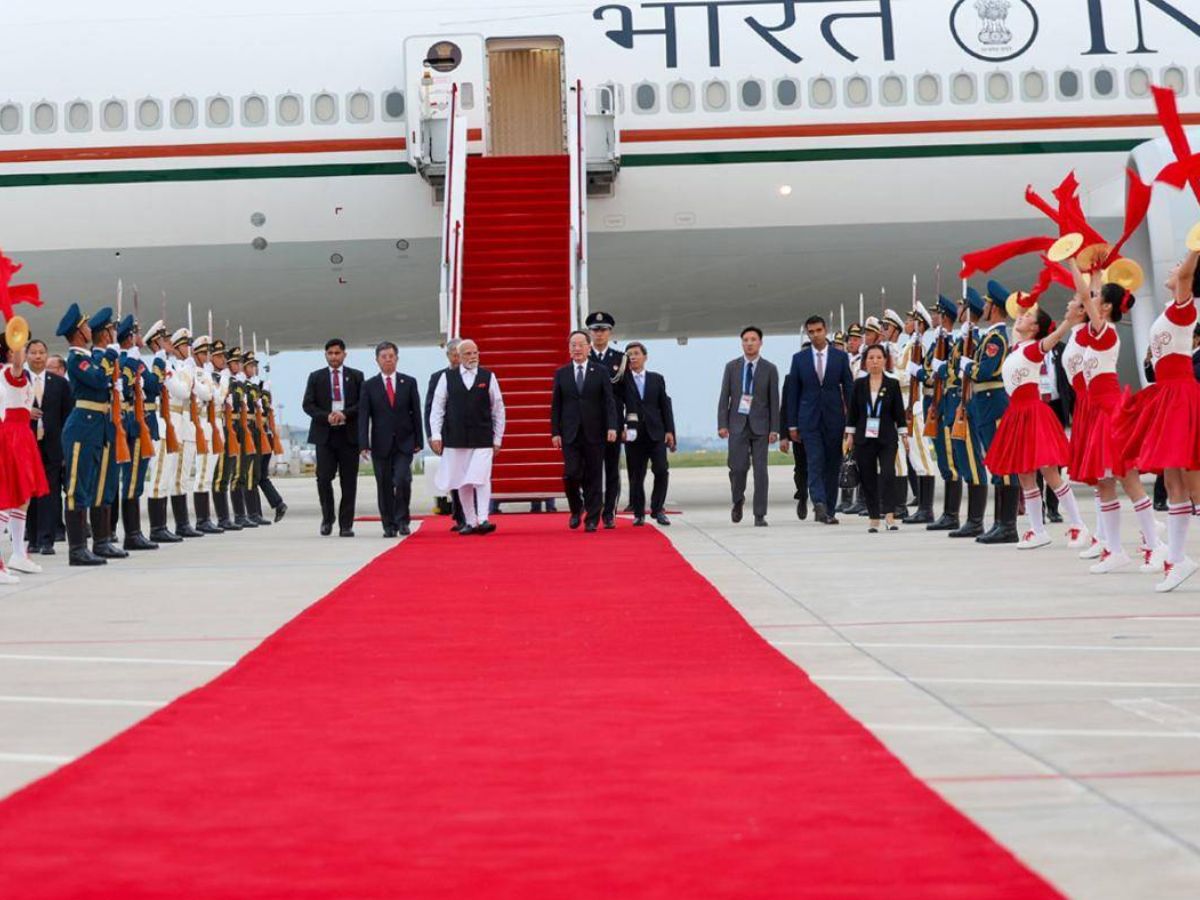
After two successful informal summits between Prime Minister Narendra Modi and President Xi Jinping in Wuhan (2018) and Chennai (2019), during which they developed an understanding on taking bilateral relations forward, relations plunged in 2020 and it has not been possible to have further bilateral visits. This unusual turn in bilateral relations was on account of the breach of trust due to China’s aggressive actions along the India-China boundary.
Even amidst trust deficit, strategic communication is necessary between neighbours, and the two leaders met in the margins of the BRICS summit in Kazan (2024) and again in the margins of the SCO summit in Tianjin (2025). The process for rapprochement has begun.
Building on the Wuhan Spirit of not allowing differences to become disputes, the Chennai Connect had outlined three principal objectives. First, they agreed on a High Level Economic and Trade Dialogue to strengthen trade and investment ties and build a manufacturing partnership; second, they agreed to continue efforts to arrive at a fair, reasonable and mutually acceptable settlement on the outstanding boundary question and on “efforts to ensure peace and tranquillity in the border areas, both sides would continue to work on additional CBMs”; and third, that the year 2020 would be a year of celebration to commemorate the 70th anniversary of establishment of diplomatic relations. The understandings reflected a buoyant perception on economic ties while it was cautious on the boundary question, even hinting that more work was needed on additional CBMs to maintain peace and tranquillity in the border areas.
China’s aggressive actions that led to the loss of lives at Galwan, violated the Chennai understanding, as well as earlier agreements such as Boundary Peace and Tranquillity Agreement (1993), Confidence Building Measures Agreement (1996) and Guiding Principles and Political Parameters for resolution of the boundary question (2005). Further, there was Chinese aggression at Demchok, Pangong, Depsang etc in the Western Sector as well as Yangtse in the Eastern Sector and even in the Sikkim Sector. India responded by beefing up forces and our troops were face-to-face. The Chinese had created a problem they would need to untangle.
That Working Mechanism on Consultation and Coordination had to engage in four years of detailed negotiations, after the Galwan clashes, to reach understanding on disengagement, de-escalation, buffer zones and patrolling norms to stabilise the border areas. These were not the ideal situation but was a basic prerequisite for leaders to engage, even if in the margins of a multilateral setting. But the Kazan leaders’ meeting was useful and set the stage for rapprochement, recognising status quo ante was not yet realised and would require more efforts. The exchanges between Defence and Foreign Ministers and the bilateral consultation at the Foreign Secretary level were substantive in their outcome.
But trust was breached again when China extended military and diplomatic support to Pakistan during Operation Sindoor. Further, it imposed economic sanctions on exports of fertilisers, tunnel bore machines and critical materials to India, that were necessary for our food security, development needs and industry. It was evident that while India would deal with China on her own, India should pursue closer ties with other powers while we build our economy and national strength. It was at this juncture that the Chinese Special Representative on the boundary question visited New Delhi (and subsequently engaged Pakistan and Afghanistan).
The SRs agreed, on the eve of the SCO summit at which the leaders were expected to meet, to revive earlier understandings, of the 1990s and early 2000s, to provide peace and tranquillity in the border areas. They reiterated the Agreement of SRs on Settlement of the Boundary Question (2005) and agreed to constitute groups of experts to look into two issues. First, to explore early harvest in delimitation in border areas (similar to the exercise to exchange maps, undertaken in the past) and second, advance effective border management (similar to CBMs Agreement and its Protocol of the past) to maintain peace and tranquillity in border areas. Interestingly, they tasked the experts to clarify not the LAC but the boundary itself. In effect, the Chinese side had accepted status quo ante in terms of principles and parameters, but they would need to be implemented on the ground. The Tianjin meeting of the leaders took rapprochement further by emphasising the potential for partnership in development priorities, not turning differences into disputes and accommodating each other’s interests. Actions on the ground will demonstrate if trust can be regained. It remains to be seen if the Tianjin understanding provides options that lead to a border settlement.
India and China have differing perceptions on several issues in bilateral relations, but perhaps none greater than the reliance on containment theory and on the perception of relative national power. India does not subscribe to the containment theory and understands the rise of China. In fact, she applies the same logic for herself and does not believe that India can be contained. This belief is based on an understanding that growing powers will have more scope for cooperation rather than the need for confrontation. However, China’s desire for dominant power status led to a policy to seek to contain India within the immediate geography in South Asia. The policy failed and China’s dominance over Pakistan, countries in South Asia and in the Indian Ocean revealed its hegemonic tendency. However, India was not confined either in geography or policy space, and its strategic autonomy gained strength. India is considered a factor for growth and development in the Global South as is a reliable and resilient partner in global value and supply chains.
There is also variance in the perception of national power and influence in global affairs. China finds it difficult to acknowledge India as an emerging major power and wishes to position India as a democracy that fumbles in decision making and an economy that is weak in implementation. This notion of India as a relatively weak nation, sometimes seeking US alliance, suits the domestic narrative in China. Admittedly, India has a lot of catching up to do on its economic front, but initiatives focused on growth, manufacture and integration in global economy have begun to bear fruit and India is currently the fastest growing major economy, poised to become the third largest economy soon. India’s ability to forge positive partnerships across the global community—with major powers, EMDCs and the Global South—is a strategic advantage for India. India can comfortably pursue interests in the Indo Pacific and Quad while collaborating with SCO and BRICS. Admittedly, both India and China have influence in the region and beyond, but on reforms for democratic and representative global governance, India’s role provides more space to countries in the Global South, while China pursues its leadership objectives.
As India builds economic and strategic muscle and empowers her citizens, a new equation is emerging in the relations between India and China. It is time to build trust, not through words but actions. For maintenance of peace and tranquillity in border areas, adherence to bilateral agreements and avoidance of hostile postures is essential. Balanced trade and economic cooperation can help growth and development in both countries. Cooperative relations with a responsibility for mankind will be the basis for reforms in global governance. India and China can be good neighbours and partners that help each other succeed and contribute to the betterment of humanity. It is time to adopt a pragmatic approach of two neighbours that need to share space, build cooperation, manage competition and avoid conflict.
Sanjay Bhattacharyya is a former Secretary, MEA and currently Professor in Jindal Global University.




