
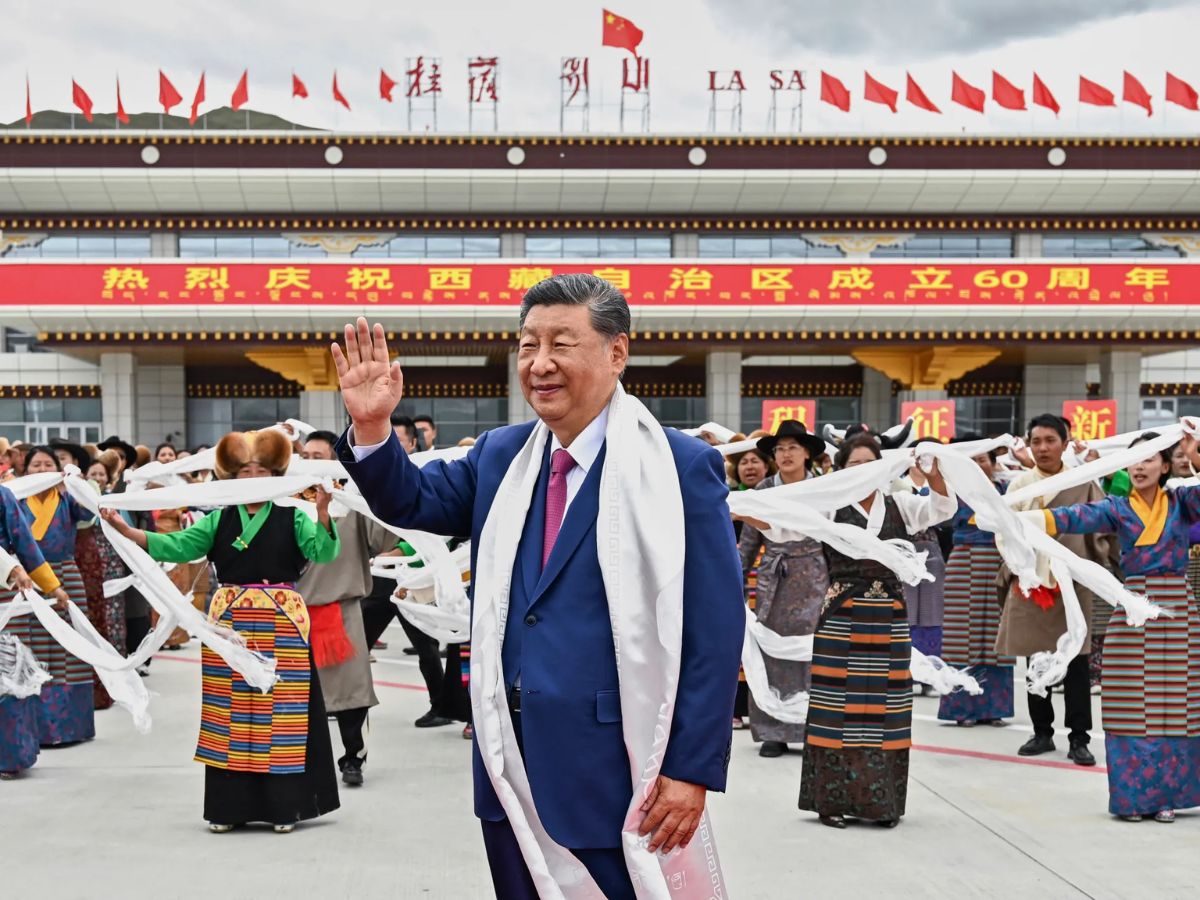
Sixty-six years have passed since Chinese troops marched into Lhasa, declaring the “peaceful liberation” of Tibet. In Beijing’s telling, this was the beginning of prosperity, unity, and modernization. But behind the slogans and infrastructure lies a deeper question: what, truly, can China boast after six decades of occupation? Let’s examine the ledger.
China has built roads, railways, and airports across the Tibetan plateau. The Qinghai-Tibet Railway is often cited as a triumph of engineering. But who benefits? These arteries serve military logistics, resource extraction, and Han migration far more than Tibetan livelihoods. Development without dignity is not progress— it’s control.
Beijing touts rising incomes and improved living standards. Yet economic metrics mask the cultural cost. Tibetan language is sidelined in schools. Monasteries are surveilled. Religious expression is criminalized. A people’s soul cannot be measured in yuan.
China claims to protect Tibet’s fragile ecosystem, branding it the “Third Pole.” Yet mining, damming, and forced relocations continue. Nomads—once stewards of the land—are displaced in the name of “ecological civilization.” The plateau groans under the weight of extractive ambition.
Schools in Tibet increasingly resemble ideological training grounds. Children are taught loyalty to the Communist Party before they learn their own history. Patriotism replaces prayer. Identity is re-engineered, not nurtured.
China boasts “stability” in Tibet. But stability enforced by cameras, informants, and police is not peace—it is fear. The digital panopticon in Lhasa rivals that of Xinjiang. Dissent is crushed before it can breathe.
So what can China truly boast of?
It has mastered the art of occupation: the ability to extract resources, suppress identity, and manufacture consent. It has turned Tibet into a showroom of state power—gleaming infrastructure masking spiritual suffocation.
But it cannot boast legitimacy. Not when Tibetan voices are silenced. Not when His Holiness the Dalai Lama remains in exile. Not when generations of Tibetans continue to resist— not with weapons, but with memory, prayer, and quiet defiance.
China may boast of what it has built. But Tibetans remember what was broken.
Nephew of the Dalai Lama, Khedroob Thondup is a geopolitical analyst.




