
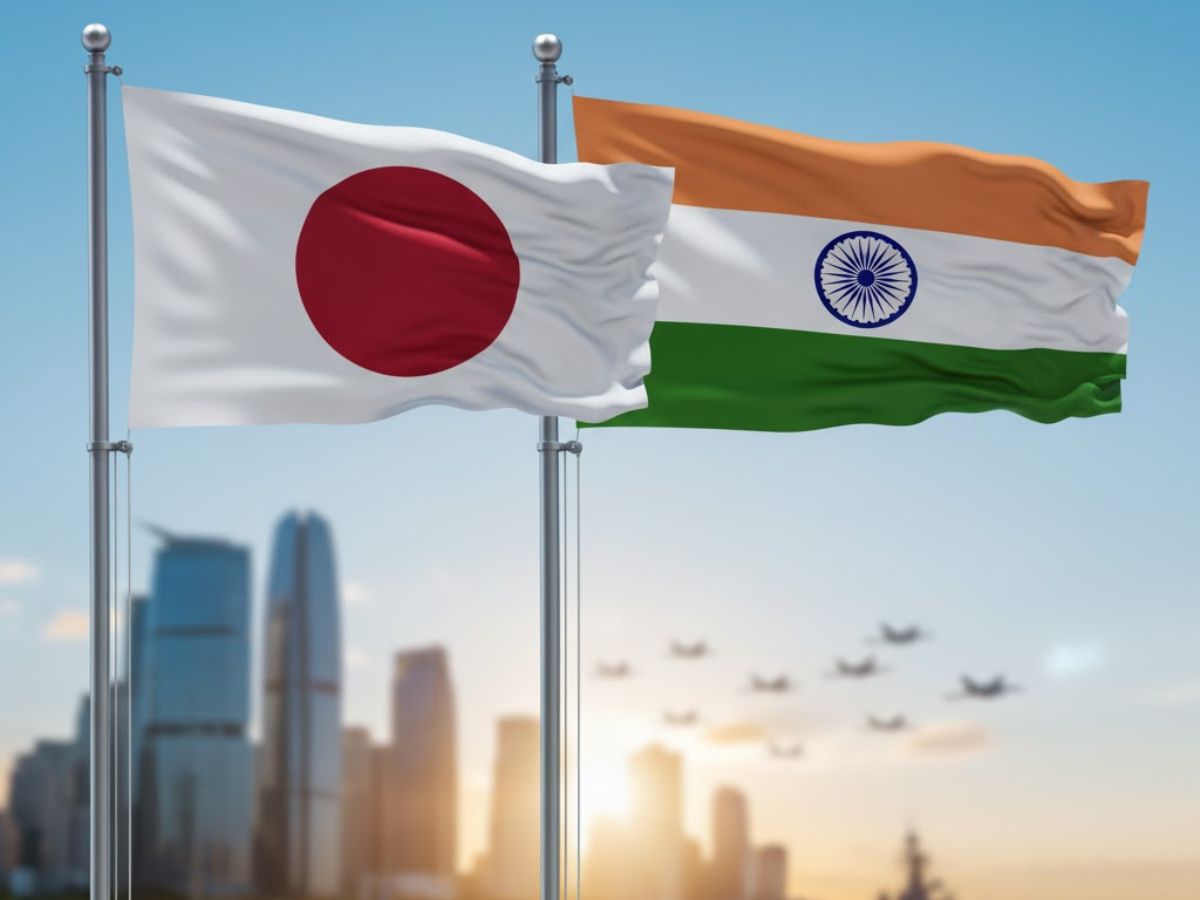
Sanae Takaichi, the new Prime Minister of Japan, has shown that courage of conviction and a determined course of action overcome great odds. Women are a blessing everywhere, yet centuries and even millennia of patriarchy have sought to box them into the Nazi formula of confining women to the tending of children, attending religious ceremonies and focusing on cooking food. All three functions are important, and should be free of gender bias. Fathers need to pay attention to the nurturing of children, not just the mothers, while some of the best chefs in the world are men.
In a country and a party dominated by men since inception, the new Prime Minister never hesitated to fight and beat the odds, finally succeeding in securing a majority in the runoff Prime Ministerial election. Sanae Takaichi is no respecter of ambiguity, and from the start of her career in politics, has shunned ambiguity in her formulations. Prime Minister Narendra Modi will find in Prime Minister Takaichi a steadfast friend and partner in keeping the Indo-Pacific “free, equal and inclusive”.
This writer has argued for many years that no matter what the optics, the Indo-Pacific is headed for a kinetic contest for primacy between China and the democracies, possibly as early as 2027, and stands by that assertion. While CCP General Secretary Xi Jinping, a ruthless strategist, will try to make her tenure in office as short as he can manage, yet in the manner of her mentor Shinzo Abe, Takaichi will most likely last. No individual is free of faults, and despite the many he had, Winston Churchill was the ideal wartime Prime Minister for the British people.
During a possible kinetic storm, Takaichi would be by far the best Head of Government for Japan to have. She is firm, decisive and above all, fully committed to the interests of Japan, which mandate the primacy of the democracies in the Indo-Pacific. Shinzo Abe was a friend of India and Prime Minister Narendra Modi, and incoming PM of Japan Sanae Takaichi may reasonably be expected to follow the Abe path for India-Japan cooperation.
Despite the unexpected turns that US policy has been taking under President Trump, national interest and the public mood will ensure that the US will before long go along with India, Japan, South Korea, Australia and other democracies. Behind the anodyne phrases, a new security alignment is taking place in countries situated on the Indo-Pacific.
Over much of the period since India secured freedom from colonial rule in 1947, “strategic ambiguity” has been the mantra for foreign policy. There is little doubt that strategic ambiguity has served the country well, although it must not be adopted as a panacea for all matters, especially those relating to security. Strategic ambiguity has been visibly absent from the stances taken by Sanae Takaichi, for she is clear about her objectives and how she proposes to achieve them. Where India is concerned, the imperative is to clasp the hand of an even closer partnership that a government led by the first lady Prime Minister proffers.
Takaichi is right in calling for an end to the self-imposed prohibitions on security policy of Japan. The Japan of yesteryear was far different from the democratic Japan that evolved since then, and the changes need to be reflected in the constitutional framework of the country as well. During the 1930s until the surrender of the country to allies in 1945, it was Japan that was seeking to be the hegemon of the Indo-Pacific. Today that place has been filled by China. Hence the need for the democracies to work together to prevent this new attempt at hegemony.
Unlike China, where technology accessed from India could be used, and has been used, in kinetic operations against India, Japan carries no such risk. A seamless technology partnership between India and Japan would serve the interests of both countries. The Japanese are adept in technology, as are Indians. Partnership would supercharge both countries to the benefit of other democracies.
The difference between winners and losers is that the former take advantage of opportunities, while the latter allow them to slip between their hands. India joined hands with Pakistan and China in opposing the US proposal to take control of the Bagram air base in Afghanistan, among the largest in the world. President Biden surrendered Bagram and other US assets in his hurried withdrawal from Afghanistan in August 2021. He thereby put into practice what may be described as a surrender of US assets in Afghanistan by the agreement in Doha reached between the Taliban and the US. Trump claims that he would have held on to Bagram while exiting Afghanistan and we do not know if that assertion is correct or not. Certainly, there was no mention in the Doha accords of Bagram being retained.
There have been reports of PLA personnel swarming over Bagram since the Biden withdrawal. Converting Bagram into a Chinese military base would be a strategic setback for India. Given the warming of ties between the Taliban and India, perhaps the militia would consent to an Indian occupation of the base. If that happens, it would be a boost to the capability of India to project power and if needed to use it against foes. The US would find it difficult to prise the base loose from the Taliban, but India may succeed. In years past, under a different government, India had the opportunity of taking control of several about to be mothballed US Navy ships, and informal soundings were made at the level of an Assistant US Secretary of State about such a transfer. The arms lobby in Delhi ensured that the offer was turned down. Such lobbies are much less powerful now than was the case earlier, and anyway there would be no reason for them to oppose the takeover of control by India of Bagram after securing the concurrence of the Taliban. Other Quad members would welcome such a move, perhaps even the US, aware that Washington must be of the difficulty of taking control of Bagram without the consent of the Taliban. China would be unhappy, but the Afghans know full well the closeness of the link of China with the Pakistan military.
Japan is a technological and military power of importance, and under Modi and Takaichi, could make even closer a partnership that has lasted from the 1960s without pause.




