
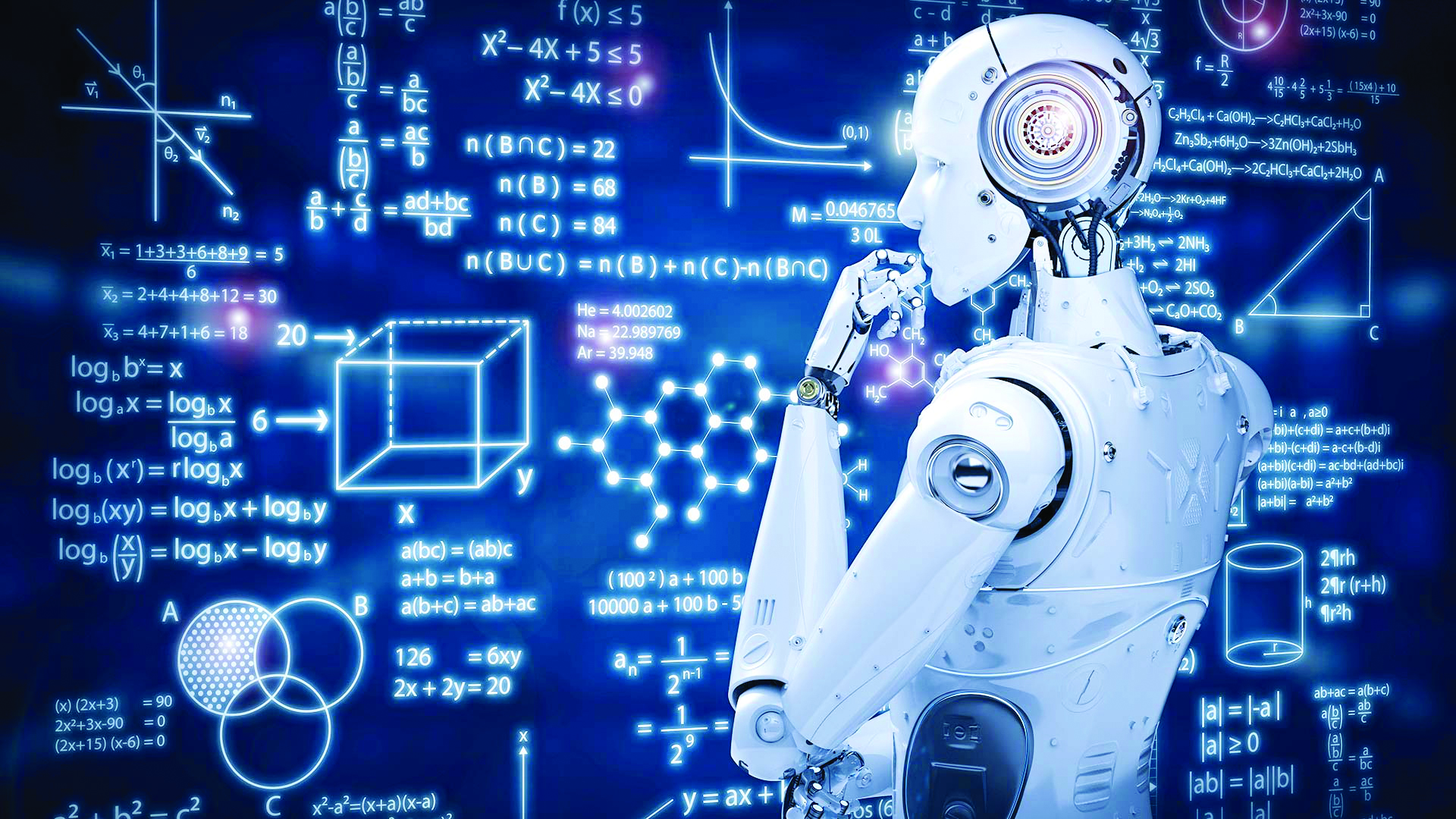
Artificial Intelligence (AI) is transforming the world at an unprecedented speed, faster than any other technological revolution. What was once the domain of science fiction, AI is now a reality that influences every part of our lives, including communication, work, shopping, learning, and decision-making. As estimated by the World Economic Forum, AI holds the power to create 97 million new positions by the year 2025 and replace or reorganize millions more. This scale of disruption indicates a clear fact that universities need to integrate AI as an essential component of learning, as opposed to an optional course. AI is no longer the preserve of tech firms or computer science departments. It is an omnipresent, cross-disciplinary field that permeates medicine, law, design, agriculture, finance, and even education itself.
Universities themselves have a profound responsibility to ensure that all students, regardless of what they are studying, can engage meaningfully and responsibly with AI. Here’s why learning to include AI as a foundation of university education is vital to the future of work and learning.
CREATING FUTURE-PROOF GRADUATES
McKinsey Global Institute puts nearly a million of the global workforce into situations where they need to shift careers or reskill entirely due to automation and AI. Education models based on rote knowledge are no longer adequate, as graduates need to think, analyze data, and utilize AI systems. With AI being a main subject, universities can prepare students with digital literacy, critical thinking, and adaptive problem-solving skills that will enable them to take on future careers such as AI strategists, data scientists, or human-AI interaction designers. Throughout the fields, even non-vocational fields such as marketing, law, and medicine are incorporating AI-powered decision-making, thus basic AI literacy is becoming the key that unlocks every career.
FROM INFORMATION CONSUMPTION TO INNOVATION CREATION
Artificial intelligence-based platforms enable students to transcend memorizing theory and experiment with thought. With machine learning algorithms, predictive models, and generative AI platforms, students can try out hypotheses, build simulations, and analyze real-world problems. For instance, AI can be utilized by environmental science students to model climate scenarios, medical students to predict disease trends based on patient data, and business students to use AI-enhanced analytics to chart market behavior. Such applications make classrooms hubs for innovation where knowledge creation takes the place of memorization. Moreover, students not only gain technical knowledge but also develop an entrepreneurial mindset for solving the planet’s most difficult problems.
AI-DRIVEN PERSONALIZED AND ADAPTIVE LEARNING EXPERIENCES
An intelligent tutoring system is capable of understanding a student’s performance, identifying the weaker areas, and therefore modifying the content. Adaptive learning systems are accompanied by instant feedback, and AI-driven data analytics enable teachers to monitor the engagement and performance trends of the learners. This customized form of learning is bringing teaching and learning opportunities to everyone since there will be no student left behind. It accommodates various learning styles, visual, auditory, or experiential, and augments retention rates. Indian universities have already started adopting AI-based learning systems which customize educational experiences and equip learners to compete in the era of an AI world.
DEVELOPING ETHICAL AND RESPONSIBLE AI USE
AI comes with the opening up of new opportunities, but on the other hand, it creates major ethical matters like algorithmic bias, privacy of data, misinformation and job loss. The absence of ethics in the case of advancements in technology would mean that the societies serving the very technologies would suffer harm. Through the integration of ethics in AI into their programs, higher learning institutions can foster a culture of practice in students. They can study algorithmic bias, create open systems, and critically analyze the implications of automation. This helps to build leaders who understand that innovation must be accompanied by accountability.
DRIVING RESEARCH AND INNOVATION
Analytics based on artificial intelligence have revolutionized research in every academic discipline. Scholars now deal with vast amounts of data, simulate complex phenomena, and identify unrecognized patterns. If students are taught AI-powered research tools in universities, they acquire curiosity, productivity, and interdisciplinarity. AI transitions from literature review and data visualization to hypothesis testing and predictive modeling with ease, making research inclusive and impactful. Universities that embrace AI-based paradigms for research are likely to become centres of world innovation, leading not only to academic success but also societal progress.
CONSTRUCTING INCLUSION AND NARROWING THE DIGITAL DIVIDE
AI can also be an effective leveler in education. Intelligent translation facilities and voice interfaces enable students of different languages to learn together without obstacles. AI-driven assistive technologies like real-time captioning and speech recognition can provide access to education for the disabled more rapidly. Moreover, the use of AI in online learning platforms can be a factor in delivering quality education in remote areas, thus breaking the barriers set by distance and skills, follow career trends, and get to know new opportunities. More importantly, AI education will develop the traits of curiosity and responsiveness, which are the main characteristics of lifelong learning during the age of constant technological disruptions.
BUILDING SMARTER UNIVERSITIES AND SOCIETIES
An AI university is a model of a smart and connected system. AI-intelligent campuses can offer the maximum possible benefits in terms of power usage, security, and administration. With data-driven intelligence, universities will be able to produce better curricula and render student services more efficiently. Weaving AI into the field of university programs prepares students to not only survive the future but also build it. Incorporating AI at the core of higher education allows universities to create the architects of the future, individuals able to harness technology for worldwide progress and human improvement.
Tarun Anand. Founder & Chancellor, Universal AI University (India’s first AI University, a fully residential campus at Karjat, Mumbai, offering AI-embedded programs in Management, Design, Psychology, Music & Engineering).




