
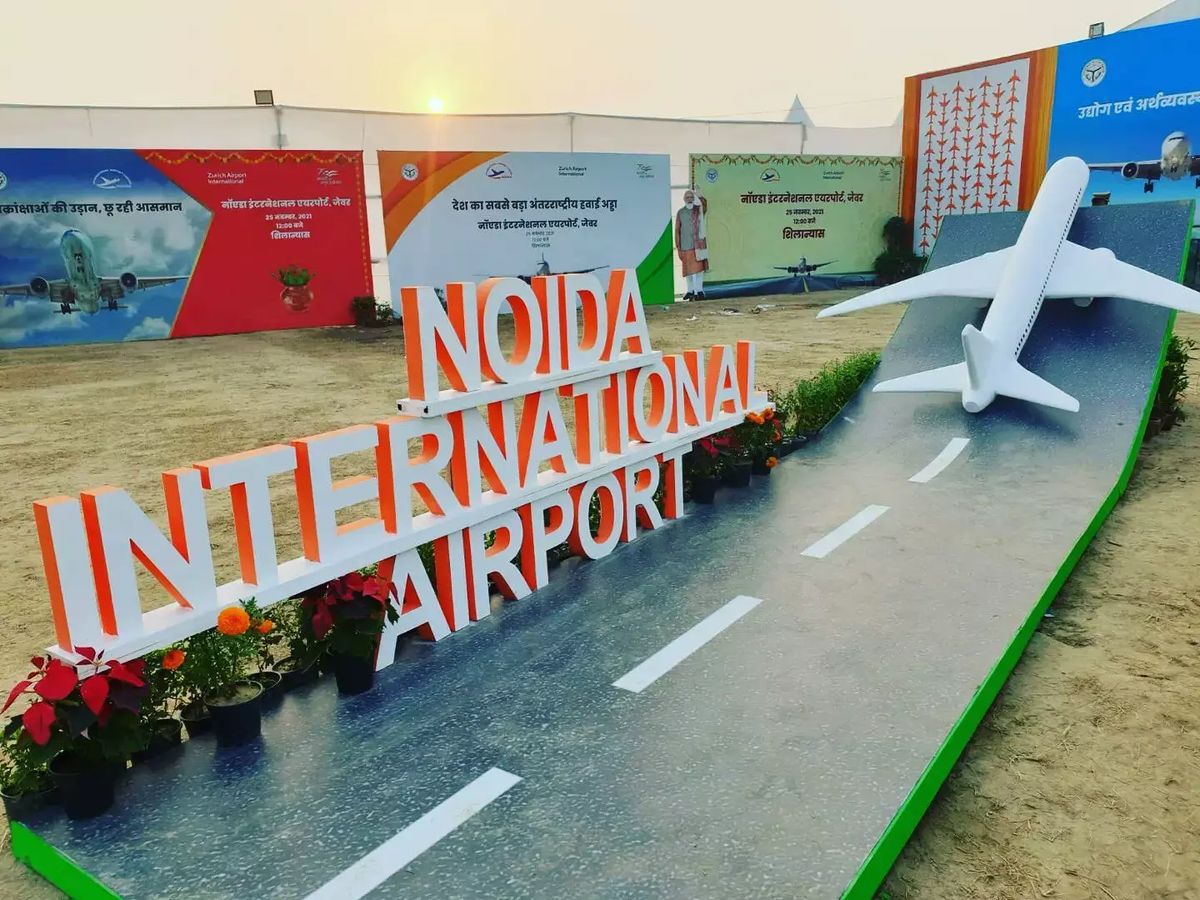
NEW DELHI: Access to the soon-to-be-inaugurated Noida International Airport (NIA) in Jewar is set to become faster and more seamless, supported by an extensive network of road, rail, and bus links connecting it to Delhi-NCR, Agra, Aligarh, Mathura, Meerut, and Haryana. The comprehensive multi-modal transport infrastructure is being developed to ensure efficient, safe, and sustainable connectivity for passengers, tourists, and industries alike, positioning the airport as a key aviation gateway for North India.
The airport will have direct connectivity to the Yamuna Expressway, a vital corridor between Delhi and Agra. Connectivity will be further strengthened through the Delhi-Mumbai Expressway (Ballabhgarh Link), enhancing access from Haryana and western India. Work is also advancing rapidly to connect the airport with the Eastern Peripheral Expressway, offering direct routes to Ghaziabad, Meerut, Palwal, and Sonipat. The North and East access roads, built to facilitate cargo and industrial traffic, are nearing completion, while a 60-meter wide service road in Sector 28 now links the Yamuna Expressway to improve local movement.
Rail connectivity is also being developed at a fast pace. The Uttar Pradesh government has approved the Detailed Project Report (DPR) for the Delhi-Jewar Regional Rapid Transit System (RRTS) corridor, expected to transform high-speed travel between the national capital and the airport. At the same time, the Railway Ministry is working on integrating the airport with the Chola-Rundhi rail line, ensuring smooth transport for both passengers and cargo. Additionally, a new Jewar railway station has been included in the Delhi-Varanasi high-speed rail corridor, further expanding intercity connectivity and travel options.
In terms of public transport, the Uttar Pradesh State Road Transport Corporation (UPSRTC) has finalized an agreement to link the airport with nearby cities and metro networks. Plans are also underway to introduce interstate bus services connecting Uttarakhand, Haryana, Delhi, and Rajasthan, ensuring smooth inter-regional movement. Complementing this initiative, a fleet of 500 electric buses—jointly managed by Noida, Greater Noida, and the Yamuna Authority—will provide sustainable, eco-friendly, and comfortable travel for passengers and airport staff.
To ensure effortless last-mile connectivity, a wide network of cab and car rental services is being established for travelers. In a pioneering step, Mahindra Logistics will launch an exclusive fleet of NIA-branded cabs, offering safe, punctual, and comfortable travel directly from the airport. Additionally, major app-based taxi platforms such as Uber, Rapido, and MakeMyTrip have already joined the initiative, while Ola is in the final phase of partnership. Passengers will be able to book, track, and pay for rides in real time through mobile applications. Furthermore, several car rental companies will provide both self-drive and chauffeur-driven vehicles, catering to diverse travel preferences and requirements.
With this integrated and forward-looking transport network, the Noida International Airport is set to emerge as North India’s largest and most advanced aviation hub. It will be among the few airports in the country to offer fully integrated multi-modal connectivity—spanning road, rail, rapid rail, and bus transport. The synchronized development of expressways, rail corridors, and green public transport underscores the Uttar Pradesh government’s commitment to creating a world-class, passenger-oriented airport, designed not only to enhance travel convenience but also to stimulate regional economic growth and industrial expansion.




