
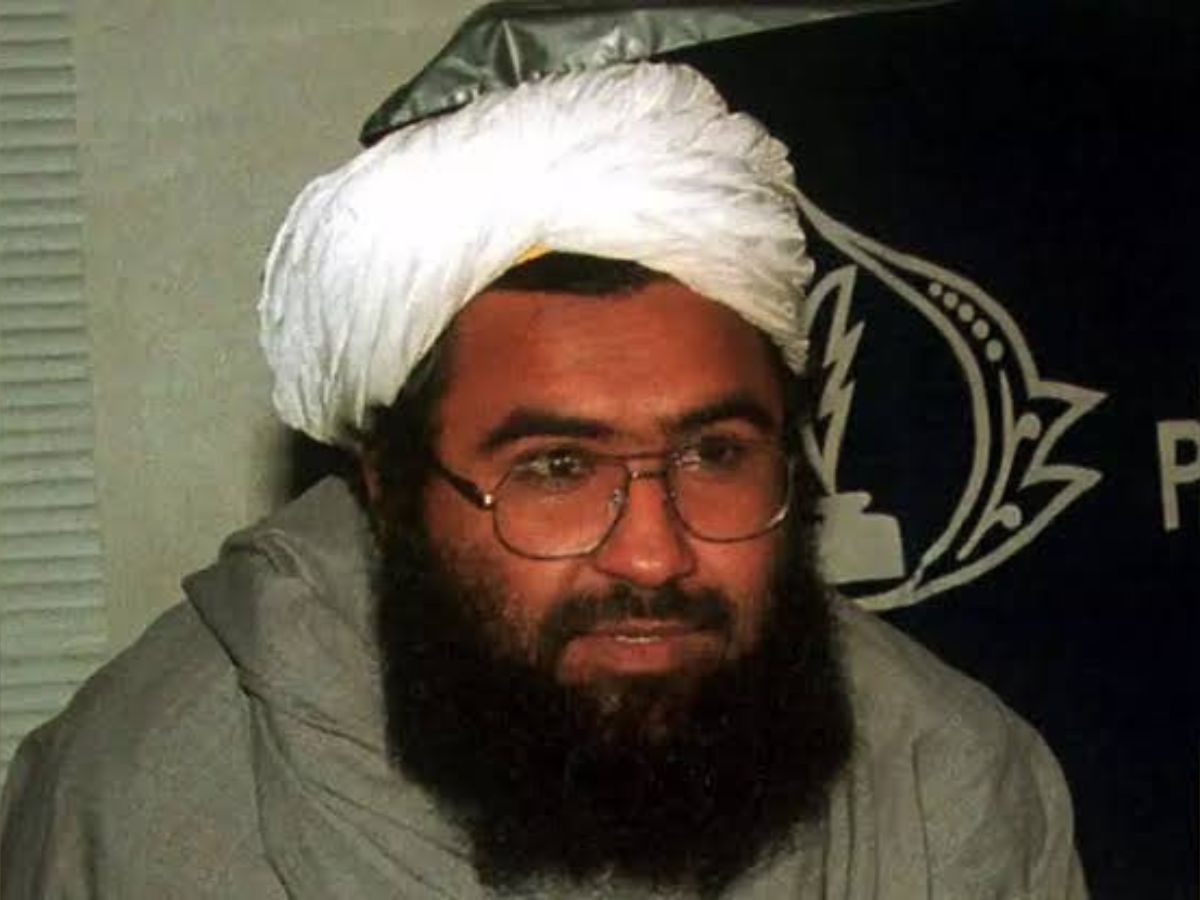
New Delhi: In the months following Operation Sindoor — the May 2025 Indian airstrike that killed family members of Jaish-e-Mohammad chief Masood Azhar — the 58-year-old, India’s most wanted man, had been repeatedly calling for a renewed campaign of vengeance and urging his followers to “avenge the blood of kin” through high-impact strikes inside India.
On Monday evening, a powerful explosion near Delhi’s Red Fort — one of the country’s most heavily guarded heritage sites — brought those warnings back into focus.
A car laden with explosives detonated near the Red Fort metro station, killing at least 13 people and injuring more than 20.
Preliminary forensic analysis has indicated the use of ammonium-nitrate fuel oil (ANFO), a signature component in several major terror attacks over the past decade. Investigators from the National Investigation Agency (NIA) and Delhi Police’s Special Cell have taken over the probe, registering a case under the Unlawful Activities (Prevention) Act.
While officials have yet to attribute the blast to any organisation, Jaish-e-Mohammad’s recent rhetoric, accessed by this newspaper over the past few months, fits the pattern.
Following Operation Sindoor, multiple encrypted channels linked to Jaish handlers had circulated calls for avenging the deaths of Masood Azhar’s relatives.
The explosion came even as agencies were dismantling a multi-state terror module linked to Jaish that came under the radar after posters supporting the outfit surfaced in Kashmir.
Sources in counter-terror circles believe the strike, if traced to Jaish, would mark the group’s first successful bombing attempt since the 2019 Pulwama attack.
Teams are also examining whether the explosives were moved through Kashmir or Punjab before reaching Delhi.
Operation Sindoor, executed in May, targeted a cluster of terror-training compounds inside Pakistan, in which at least ten of Azhar’s close relatives were killed — a development first reported by this correspondent.




