
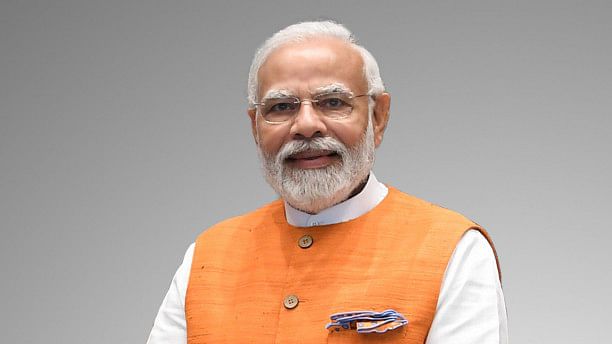
The 2025 Bihar Assembly election has delivered a mandate of rare clarity. With the NDA crossing the 200-seat mark, the verdict reaffirms a political reality that has taken shape steadily over the past decade: Prime Minister Narendra Modi has become the defining face of pro-incumbency in Indian politics. Where once Indian elections were governed by anti-incumbency cycles, Bihar 2025 shows that voters increasingly reward leadership they trust, governance they feel, and continuity they value.
MANDATE REFLECTS NATIONAL POLITICAL SHIFT
As India’s third-most populated state and one of its most rural, Bihar serves as a vital barometer of national sentiment. Nearly 89% of its population lives in villages—making this overwhelmingly rural endorsement even more significant. The NDA’s victory is not just a state-level outcome, it reflects the maturing of a political trend where PM Modi’s governance has turned continuity into a dependable electoral preference.
RISE OF PRO-INCUMBENCY UNDER PM MODI
Over the past decade, a striking pattern has emerged across the country: wherever PM Modi’s governance model takes root, pro-incumbency becomes the dominant political force. India has witnessed three consecutive pro-incumbent Lok Sabha mandates in 2014, 2019 and 2024, each reinforcing voter confidence in continuity. In Gujarat, the BJP has been renewed in office without interruption since 1998. Goa has returned the party to power consistently since 2012. Haryana has done so since 2014. Assam since 2016. Uttar Pradesh and Uttarakhand since 2017, and Tripura since 2018. No political leader in contemporary India has converted stability into a self-sustaining electoral preference as consistently as PM Modi. Bihar 2025 is not an isolated result: it is part of a broader national pattern in which governance, welfare delivery, cultural pride, and personal credibility combine to produce repeated mandates.
CULTURAL CONFIDENCE STRENGTHENS PRO-INCUMBENCY
Bihar’s electorate responded strongly to respect, recognition and cultural pride values central to Modi-era politics. The government’s successful push to secure UNESCO Intangible Cultural Heritage status for Chhath Puja resonated deeply across the state, with voters viewing it as a long-overdue national acknowledgement of Bihar’s cultural legacy. This cultural validation has become a defining pillar of the Modi-led pro-incumbency cycle, where governance meets respect, welfare meets dignity, and political stability meets cultural affirmation.
TURNOUT SURGE MIRRORS PM’S CAMPAIGN TRAIL
The Election Commission recorded an overall turnout of 66.91%, the highest since 1951. Women were the driving force behind this surge, with a turnout of 71.6%, compared to 62.8% among men an unmistakable sign of empowerment-driven pro-incumbency. Turnout rose sharply in areas where PM Modi campaigned. His rallies and one roadshow created visible momentum, energising voters across the state. Samastipur, Muzaffarpur, Katihar, Saharsa, Araria, Bettiah, Sitamarhi and several other constituencies where he appeared recorded substantially higher turnout. The pattern is unmistakable: Modi continues to be the single most influential force in mobilizing voters and shaping electoral sentiment in India today.
PERFORMANCE IN MUSLIM-DOMINANT CONSTITUENCIES
Early trends showed the NDA leading in 42 Muslim-dominant seats, with the BJP ahead in 24, the JDU in 11, the LJP in five and the RLM in two. The Mahagathbandhan led in seven seats, while AIMIM registered early leads in three. The breadth of this traction indicates that the Modi governance model has begun to consolidate a wider and more diverse pro-incumbency, cutting across traditional political lines and demographic boundaries.
AMIT SHAH: ARCHITECT OF GROUND-LEVEL CONSOLIDATION
If Narendra Modi is the face of pro-incumbency, Amit Shah remains its principal architect on the ground. His meticulous state-wide coordination, which included 46 meetings and rallies, deep organisational outreach, and the resolution of more than a hundred candidate-level disputes, ensured unity within the NDA. Shah himself summarised this synergy, stating that leadership creates sentiment while organisation converts that sentiment into seats. The NDA’s exceptionally high strike rates in which the BJP, JDU and LJP crossed well above the 80% mark reflect the strength of this coordinated pro-incumbency machinery.
CONGRESS: A NATIONAL DECLINE, NOW A FRINGE PARTY?
Bihar’s results also highlight the Congress Party’s deepening slide into political irrelevance across the country. In the Bihar Assembly, Congress remained stuck at six seats out of 243. Its marginalisation is even starker elsewhere: it holds no seats in the West Bengal Assembly (294 seats), none in the Delhi Assembly (70 seats), none in the Andhra Pradesh Assembly (175 seats), and just two seats in Uttar Pradesh (403 seats). Even in smaller states, the party’s footprint has nearly vanished it has zero representation in Sikkim and Nagaland, just one seat in Arunachal Pradesh, three seats in Goa, and six seats in Jammu and Kashmir. This shrinking presence, combined with long-standing failures to return to power in major states, has led many observers to conclude that Congress now resembles a fringe party in the national political landscape.
NATIONAL CONTEXT: MODI MAKES PRO-INCUMBENCY A NORM
Bihar’s verdict fits squarely within a broader national pattern. Under Modi, the BJP has cultivated a durable culture of pro-incumbency, while Congress has been unable to return to office in major states for decades. West Bengal has not elected a Congress Chief Minister since 1977, Bihar since 1990, Uttar Pradesh since 1989-90, Tripura since 1993, and Odisha since 2000. Analysts describe the contrast succinctly: Modi has made pro-incumbency a trend, while Congress has made no-comeback a political reality. Performance, credibility and continuity have become the new electoral norm under the Modi era.
MANDATE THAT REINFORCES INDIA’S PRO-INCUMBENCY ERA
The NDA’s sweeping victory gives Bihar a stable government with a decisive developmental mandate. But the deeper significance of Bihar 2025 lies in what it symbolises: a political transformation in which Prime Minister Narendra Modi has become the face of India’s pro-incumbency era. His governance model, welfare architecture, cultural confidence, and national appeal have together turned continuity into a preferred democratic choice. Bihar has once again validated this transition, reinforcing the strength, legitimacy and durability of the pro-incumbency phenomenon that PM Modi has shaped.
(Pradeep Bhandari is National Spokesperson, Bharatiya Janata Party)




