
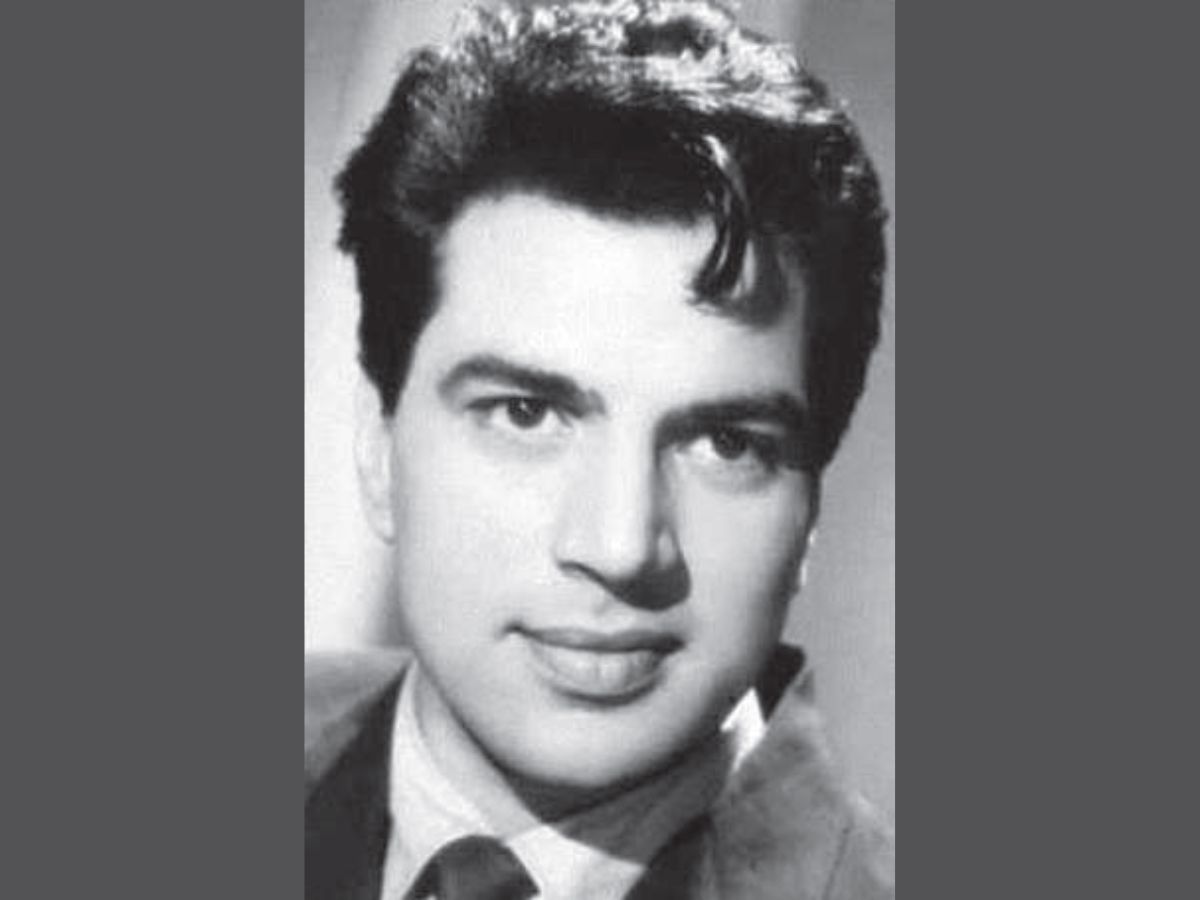
A crush of many, a darling of millions, Garam Dharam remained the humblest, the gentlest and the kindest of stars of Bollywood even after touching dizzy heights of stardom and success… When Dharam Singh Deol, born in Nasrali, a small village in Ludhiana district in Punjab on December 8, 1935, after winning Filmfare’s “All-India Talent Hunt” set out on a train journey to Bombay in 1958, carrying Dilip Kumar’s face in the film “Shaheed” on his mind, he wouldn’t have imagined that his film journey would last for 60 years, featuring him in nearly 300 films traversing generations.
He proved that even an individual of humble beginnings, with no degree or diploma from any film institute nor any godfather or godmother in the film world to launch or promote one, could reach dizzying heights of success and stardom through sheer talent, hard work, dedication and irrepressible determination to succeed. Self-belief, grit and perseverance, thy name was Dharmendra. He also set an inspiring example that even a highly successful and immensely popular person could remain gentle, kind, considerate, compassionate and humble sans vanity, pompousness and starry tantrums. No wonder, when his journey ended, the entire Bollywood, cutting across generations, poured out to say goodbye. Truly, he was the biggest people’s star ever.
He debuted in 1960 in the film, “Dil Bhi Tera Hum Bhi Tere” against Tanuja, directed by Arjun Hingorani. The soulful song in Mukesh’s melancholy-filled voice, “Mujhko Is Raat Ki Tanhai Mei Aavaaz Na Do” is still hummed by lonely souls six decades later. His second film, “Shola Aur Shabnum” (1961), directed by Ramesh Saigal, a love triangle featuring Tarla Mehta was also a hit. Its song, “Jaane kya dhoondti rahti hai, yeh aankhe”, sung by Mohd Rafi with Khayyam’s music was listeners’ choice for years.
Veteran film watchers know, Dharam-Ji not only survived the tsunami named Rajesh Khanna and the hurricane called Amitabh Bachchan, but continued giving hits after hits; he is credited to have given the maximum number of hits in his film career—more than any other actor, from Dilip Kumar to Big B to Shahrukh Khan. By the time Bachchan’s jackpot, “Zanjeer” (1973) happened, Dharmendra had done half a dozen memorable films with renowned directors, enacting roles of different genres proving his versatility as an actor. “Bandini” (1963) with Nutan, directed by Bimal Roy, was so different from “Haqeeqat” (1964), written, produced and directed by Chetan Anand; it remains the best B&W war movie on the 1962 conflict with China; entire India sang with misty eyes Kaifi Azmi’s soul stirring songs: “Kar chale hum fida jaan tan sathio, ho ke mazoor mujhe, usne bhulaya hoga”; Dharmendra lived the role as did his son Sunny in “Border”.
Three decades before Salman Khan, when Dharmendra went shirtless lifting Meena Kumar on his shoulder in “Phool aur Patthar” (1966), he set the box office on fire. Same year, in total contrast to this masculine persona, in Hrishikesh Mukherjee’s “Anupama” he portrayed a shy, introvert, softer character who sings, “Ya dil ki suno duniya walao, ya mujhko abhi chup rahane do”. In 1969, in Yash Chopra’s “Aadmi Aur Insaan” and Hrishikesh Mukherjee’s “Satyakam”, he played an honest and upright character who faces many hardships but still upholds high values.
In 1975, in Ramesh Sippy’s blockbuster, “Sholay”, Dharmendra plays a courageous, daring young man who has a heart of gold; his act of a drunken tapori at the water tank to pressure Mausi-ji to let Basanti marry him was a huge hit. In Hrishikesh Mukherjee’s “Chupke Chupke”, as Pyare Mohan Illahabadi regaling with his chaste Hindi, he gave Bachchan a run for his money.
Though he was one of the most versatile and accomplished actors, regrettably, he never got his due. He deserved a National Award for “Satyakaam” and Filmfare’s best actor award for “Anupama” and best actor in a comic role for “Chupke Chupke”. Much before Amitabh and Rajini, he should have been honoured with a Padma Vibhushan for fighting for noble causes in his films and entertaining India for more than half a century.
He was incredibly handsome. Dilip Kumar, while handing over Filmfare’s Life Achievement award to Dharam admitted that he always wished he were handsome like him. Kamal Haasan has said that his mother wanted a handsome son like Dharam. Jaya Bachchan found him handsome like a Greek God. Time magazine had once voted him as one of the ten most handsome men in the world. On the “Dance Deewane” TV Show, Waheeda Rehman confessed that she had a crush on him. “Tu Hassen Main Jawan” heroine Hema Malini wondered: how anybody could be so handsome. No wonder she listened to her heart and married him.
He appeared with Madhubala in “Boyfriend” in a supporting role in 1961. While just a few weeks back, he was shooting for “Ikkis” with Agastya Nanda, grandson of Amitabh Bachchan, signifying an unparalleled longevity in filmdom.
It’s difficult to count the number of actresses he had worked with: Madhu Bala, Meena Kumari, Nutan, Tanuja, Mala Sinha, Suchitra Sen, Vyjayanthimala, Waheeda Rehman, Sharmila Tagore, Mumtaz, Asha Parekh, Sri Devi, Jaya Bachchan, Rekha, Rakhi, Sadhana, Jayalalithaa, Saira Banu, Hema Malini, Padmini, Anita Raj, Kimi Katkar and others. He and Hema formed the most saleable jodi of Bollywood; they acted in around three dozen films—most of them were hits, such as “Sholay”, “Sharafat”, “Jugnu”, “Naya Zamana”, “Raja Jani”, “Jugnu”, “Dream Girl”, “Dost”, “Seeta aur Geeta”, “Pratigya”. Besides Amitabh Bachchan, he acted with most reigning Bollywood stalwarts such as Ashok Kumar, Raj Kapoor, Dev Anand, Dilip Kumar, Rajendra Kumar, Raaj Kumar, Rajesh Khanna, Firoz Khan and many more.
He acted with several gifted directors like Bimal Roy, Hrishikesh, Chetan Anand, Ramesh Sippy, J.P. Dutta, Asit Sen, Raj Khosla; Hrishikesh-Da extracted the most nuanced and memorable performances from Dharam-Ji. He was called the original He-Man and his film titles reflected that image: “Aag Hi Aag”, “Loha”, “Hukumat”, “Jung e Elaan”, “Dadagiri”, “Kshatriya”. In these films, he was featured with the likes of Sunil Dutt, Vinod Khanna and Shatrughan Sinha.
In 1987, he gave eight back-to-back hits which remain an unbeaten record till date. Many Indians don’t know that Dharmendra was the hero of a bilingual film: “Shalimar” (in Hindi), “Raiders of the Sacred Stone” (English) directed by Krishna Shah which also featured Hollywood stars Rex Harrison, John Saxon and Sylvia Miles, apart from India’s Zeenat Aman. In his non-hero phase, his acting with Nafisa Ali in “Life in a Metro” was endearing. In 2023, in “Rocky Aur Rani Ki Prem Kahani”, Karan Johar picturised the unforgettable song of Dev Anand’s “Hum Dono” on Dharmendra and Shabana Azmi: “Abhi Na jao chhod kar, ki dil abhi bhara nahi”. Ironically, it aptly sums up the feelings of millions of Indians for a lovable man called Dharmendra.
Surendra Kumar is a retired Indian ambassador.




