
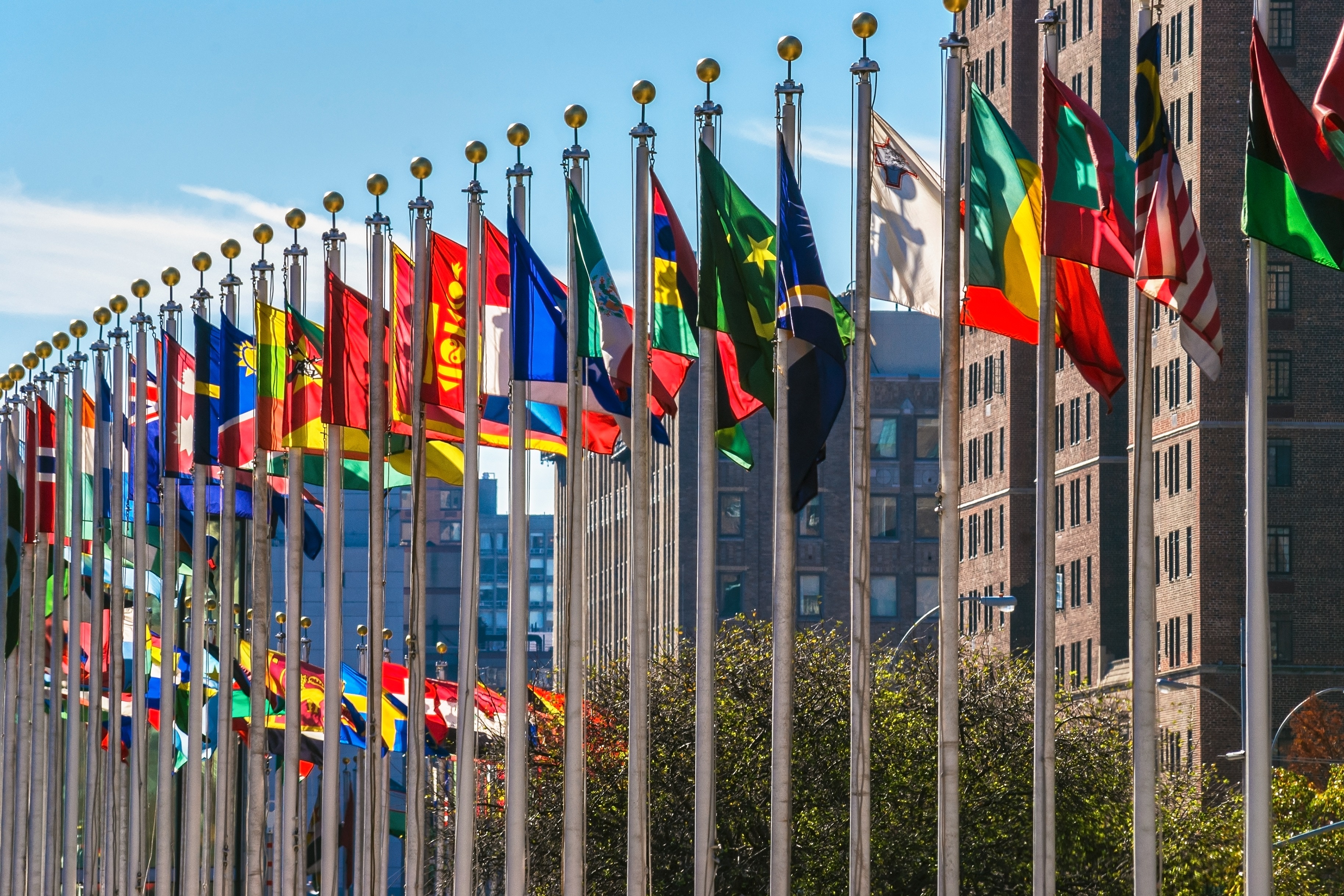
The world’s multilateral institutions – conceived in the ashes of global war and built to safeguard peace, prosperity, and stability – are struggling under the weight of 21st century challenges. Climate disruption, cross-border conflicts, geopolitical fragmentation, pandemics, fragile states, and the unprecedented pace of technological change now collide with governance systems designed many decades ago. The need for significant reform has never been more urgent. Yet as the examples of where multilateral organizations have fallen short continue to mount, so too does the sense that the multilateral system is incapable of reforming itself or keeping pace with the times.
The reasons for this perception are no mystery. Multilateral institutions today remain structurally hardwired to reward the power and interests of their most influential shareholders. Their governance frameworks – from the UN Security Council’s veto system to the weighted voting systems of the Bretton Woods institutions – embed asymmetries that distort decision-making and shield the wealthiest and most powerful nations from accountability. The consequences have been profound. Decision-making is often opaque and politicized, oversight bodies lack true independence, and gaps and inconsistencies in these institutions’ operating norms have gone unchecked. Legal immunities can create operational impunity and procurement and project-level corruption is pervasive. Perhaps most damaging is how incentives inside these organizations often reward risk aversion and self-preservation over transparency, innovation, and results. The system suppresses bad news faster than it corrects bad outcomes, and hitting production targets often takes precedence over successful project implementation, as intended.
These failures are not philosophical abstractions; they shape how billions of dollars are deployed and how effectively the world is able to respond to crises. Yet even as governance erodes and legitimacy declines, multilateral institutions retain one indispensable attribute: they remain the only global platforms capable of coordinating convening power and collective action at scale. They are truly too important to fail. From peacekeeping and emergency health interventions to financial stabilization and global standards-setting, the system has repeatedly delivered public goods no nation could achieve alone. That paradox – indispensability alongside dysfunction – is why serious reform is both unavoidable and essential.
Nowhere is this tension clearer than in development finance. While most assume the World Bank and other multilateral development banks (MDBs) primarily lend money, their real latent power lies in guarantees, risk-sharing mechanisms, and their ability to mobilize private capital. One of the most surprising – and least understood – facts is that every dollar of MDB capital can unlock up to fifteen dollars of private investment when deployed through guarantees, rather than loans. Yet these tools remain dramatically underutilized.
Recent attempts to consolidate and scale guarantee operations across the World Bank Group, such as shifting responsibility to the Multilateral Investment Guarantee Agency under a unified Guarantee Platform, illustrate both the promise and the pitfalls of reform. Initial numbers look impressive – with more than $12 billion of guarantees mobilized in its first year as a consolidated entity – but volume is not the same as impact. Without improvements in project selection, additionality, environmental and social risk management, and rigorous results tracking, more guarantees may not necessarily translate into better development outcomes.
The multilaterals are on the road to achieving meaningful reform, but it is a long and winding road. The most promising reform emerging today is a move toward balance-sheet optimization – a recognition that MDBs can massively expand their firepower without asking taxpayers for more money. This includes revising overly conservative risk management buffers, scaling political-risk insurance, exploring hybrid capital instruments, and modernizing the treatment of callable capital. These technical, often invisible reforms could unlock hundreds of billions – if not trillions – of dollars in new financing capacity at a moment when global needs are exploding.
This is why the single most transformative change we could make to the multilateral system is deceptively simple: turn MDBs into global risk managers. Free them to use their balance sheets as they were designed – not timidly, not politically, but strategically and at scale. Do that, and the world will gain a financing engine finally proportionate to the challenges ahead: decarbonizing energy systems, building resilient infrastructure, governing AI, strengthening global health defenses, and supporting fragile states before they collapse into conflict.
To achieve this, however, governance reform must accompany financial reform. Effective risk management requires independence, transparency, and accountability. It requires merit-based leadership appointments, stronger audit and evaluation functions, and the end of political vetoes over operational decisions. It requires opening the system to the voices of affected populations and the expertise of emerging powers, rather than treating them as passive recipients of norms crafted elsewhere. It requires harmonizing global standards across MDBs and bilateral development institutions to remove bottlenecks that slow projects for years. And finally, it requires much greater risk-taking on behalf of the multilaterals – which were intended to provide support to transactions that the private sector will not support.
This is not wishful thinking. The architecture for change already exists. The political debate has finally shifted from “whether” to reform toward “how best to do so”. The global financing gap, magnified by climate impacts and the demands of digital transformation, has become too large to ignore. Perhaps most importantly, the evidence is clear that reform pays for itself: freeing even a fraction of existing MDB balance sheet capacity would dwarf any conceivable future increase in donor contributions.
Multilateralism will not be saved by nostalgia or rhetorical commitments to a “rules-based international order”. It will be saved only by redesigning institutions so they can actually deliver on the rules and ideals they espouse. That means confronting governance failures head-on, unlocking the financial tools that have always been hiding in plain sight, and aligning incentives with real-world outcomes rather than institutional comfort. Multilateral institutions do not lack resources. They lack courage, imagination, and accountability. Reforming multilateral institutions along these lines – and at last deploying their full potential as global risk-managers – is the closest thing we have to a structural solution worthy of the challenges that face us.
Daniel Wagner is managing director of Multilateral Accountability Associates and co-author of “The New Multilateralism”.




