
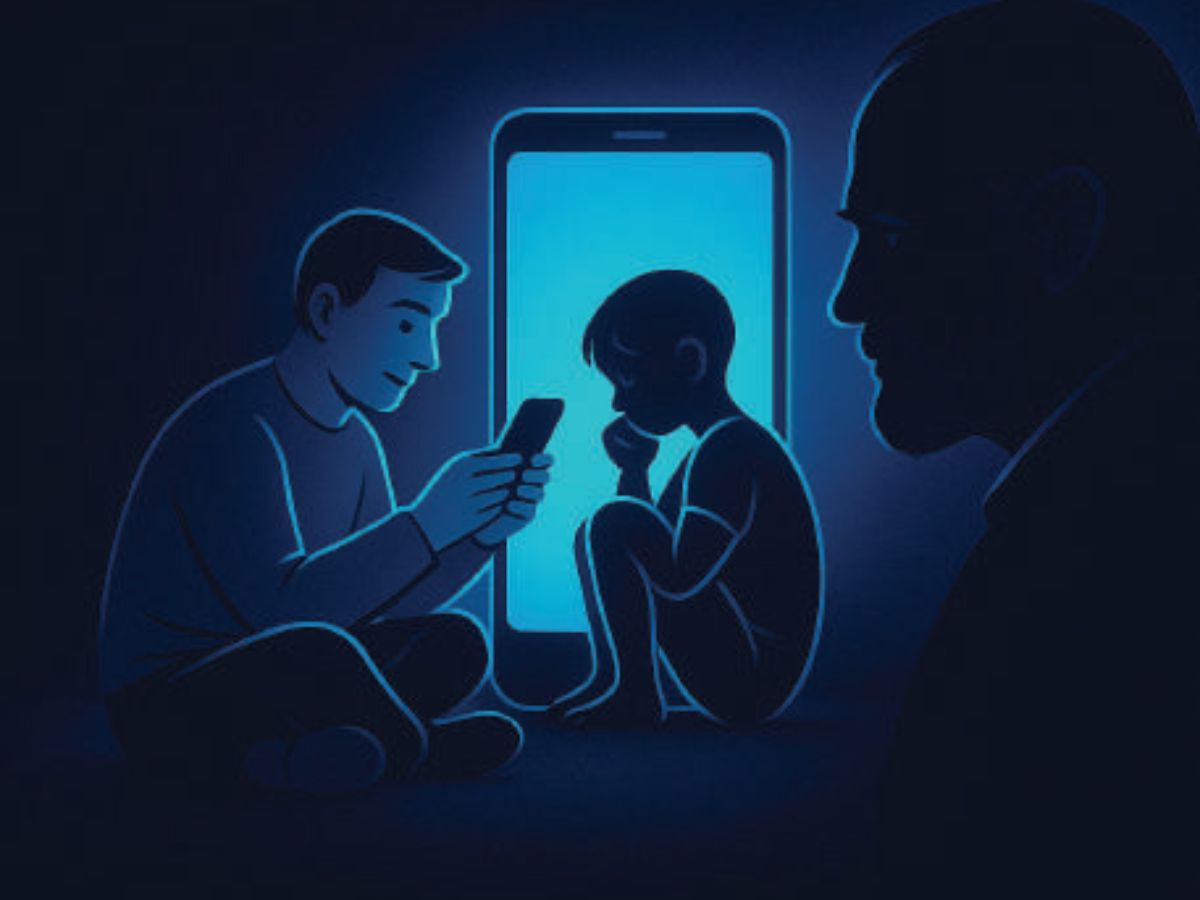
In 2023, a major psychological survey found that adults now spend seven hours a day on screens outside of work, not for learning or creating, but for consuming entertainment or entertainment disguised as seriousness. The machines have grown intelligent, but the users have quietly regressed. The question today is simple: are we surrounded by adults, or by children wearing adult bodies?
Walk through a mall, scroll through a feed, or sit in a meeting. The faces are adult, the reactions are juvenile, and the inner world is still governed by impulse. The passport claims thirty or fifty, yet the being within rarely crosses the mental age of five. The mismatch between biological age and psychological age has never been wider. The calendar keeps turning, but consciousness refuses to grow.
This is not a cultural trend. It is the collapse of the second birth, the inner birth that alone makes one human. The first birth is from the mother. The second comes from understanding, from self-observation, from the steady dissolution of the inner pretender. The Mundaka Upanishad speaks of the lower knowledge that multiplies information and the higher knowledge that frees one from illusion. Without that second birth, one remains driven by instinct and fear, draped in office clothes but inwardly no different from an anxious child.
The world today does not promote this inner birth. It rather obstructs it. It surrounds you with stimulation so that silence never arrives. It glorifies emotional indulgence and declares it authenticity. It rewards quick gratification and punishes the slow discipline required for clarity. Modern economies prosper when people remain needy and impulsive, and modern politics thrives when people remain afraid. A population of adults is difficult to manipulate. A population of children elects whoever promises sweets.
The Digital Pacifier
Infinite scrolling is the new pacifier, notifications are the new rattles, and the algorithmic feed is a mobile above the crib, dangling bright objects to keep the infant occupied. Entertainment has become emotional sugar, a constant drip of stimulation that prevents the mind from developing the strength needed to sit quietly with itself.
A mature mind can rest in silence and not feel threatened. An infantilised mind needs ceaseless noise to avoid meeting its own hollowness. This is why superhero fantasies dominate global entertainment. They offer the child’s dream that problems will be solved by someone else, and that complexity will bow before spectacle. Adults watch imaginary heroes rescue imaginary universes while their own inner disorder grows unattended. This is not art appreciation. It is self-escape.
Consider relationships. Adults today demand the emotional care that children demand from parents. They require constant reassurance, immediate validation, and unending comfort. They expect partners to soothe them, friends to heal them, and managers to protect them from discomfort. Whenever friction appears, they collapse because the mind has never learned to sit with contradiction. Love becomes negotiation for safety, and intimacy becomes joint avoidance of inner turbulence. Two infants cannot uplift each other. They can only take turns crying.
Consider workplaces. Offices have silently transformed into daycare centres for degree-holders. Snacks and games and mood posters are used not for wellbeing but for psychological sedation. Corporations understand something very basic: a pleasantly distracted child obeys. A consistently stimulated adult forgets to enquire. Productivity rises not through wisdom but through pacification. The worker remains cheerful, distracted, and manipulable, measuring his worth in bean bags and free lunches.
You are not exempt from this. Watch yourself the next time you reach for the phone without reason, the next time you feel restless after ten minutes of silence, the next time you require someone’s approval before trusting your own perception. The infant is not elsewhere. He operates your hands, chooses your distractions, and speaks through your complaints. The first honest step is to stop imagining that this diagnosis applies only to others.
The Craving for Father Figures
Observe politics. The rise of authoritarian leaders across continents is not the rise of strength, but the rise of fatherhood impersonated. People vote not for policies but for protection. They want leaders who will absorb their anxiety, decide on their behalf, and relieve them of the burden of independent thought. They want someone to soothe their insecurities and hand them an identity, because the child within is terrified of freedom.
A mature mind does not crave saviours. An immature mind cannot survive without them.
At the root of this global immaturity lies dependence. Look honestly at your daily movements. They are driven by fear of losing status, fear of losing comfort, fear of being alone, and fear of an unknown future. Beneath all these is the unspoken terror of death. Fear disguises itself as ambition, lifestyle, preference, or personality, but it remains the same ancient force that keeps a child clinging to the parent’s hand.
Fear wants predictability and protection. It wants a world that rearranges itself for its convenience.
This turns the adult into a demanding being, and demand is always the language of the child. When the inner child is unexamined, it becomes the ruler of the house while the so-called adult acts as a polite spokesperson.
If the roots of immaturity are dependence and fear, what is the root of fear? It is the absence of self-understanding. When the ego does not know what it is or why it feels restless, it clutches at every possibility, grasps at every object, and demands from the world what it refuses to uncover within. The ego fears clarity because clarity threatens the illusion it lives by. Therefore it hides behind noise, stimulation, identity, and authority figures, anything that helps it postpone the encounter with itself.
The Lie of the Weekend
People say they reward themselves on weekends. But watch what actually happens. Malls overflow, travel becomes frantic, and consumption turns compulsive. The week was mechanical, and the weekend is merely escape from that mechanicalness. Two days of stimulation cannot cure five days of inner deadness. Entertainment becomes an accomplice to suffering and keeps the cycle alive.
This is why maturity is so rare. Maturity requires the intelligent acceptance of discomfort for the sake of clarity. Growth requires friction, not comfort. Not random misery, but the refusal to run from the inner disorder. Maturity is the willingness to sit with uncertainty without grabbing at false assurances, the patience to reduce inner noise rather than accumulate new identities, and the courage to face the mind’s confusion without demanding that life rearrange itself for your relief.
A mature person does not require continuous validation. He does not numb fear with toys or seek peace by manipulating others. He can be alone without being lonely, think without being instructed, and act without awaiting applause. This freedom is not a birthright. It is earned through inner labour. One becomes an adult not by growing older but by growing inward.
The Most Dangerous Human Being
Why does the world fear mature people. Because they cannot be governed through temptation or terror. They consume less because they are not trying to fill inner emptiness with objects. They obey less because they have stopped outsourcing their thinking. They are dangerous not to civilisation but to every system that depends on human weakness. Markets need addicts and governments need dependents. A mature human being is neither.
The rishis withdrew to forests, the Buddha left a palace, and Mahavira abandoned a kingdom. Not because escape is holy, but because clarity required them to step away from collective sleep. A mature human being is a revolutionary being. He does not need slogans or placards. His very presence exposes the falseness around him.
Where should one begin? Start with the truth that circumstances do not define you; your inner response does. The child blames the world. The adult sees that freedom and responsibility are inseparable.
Stop demanding that life protect you from discomfort. Stop asking others to tell you who you are. Stop running toward noise whenever silence arrives. Let the mind face its turbulence. Let the inner child cry if it must, but do not pacify it with a purchase or a trip or a distraction. Let it exhaust itself. Only then does real maturity begin.
None of this requires the world’s permission. The world will not assist you; it profits from your sleep. But truth does not wait for convenient conditions, and your inner disorder will not pause while you gather courage.
Whether you take this up or continue as before changes nothing about what is true. The only question is whether you can respect yourself while living as a permanent child. The inner nature is maturity and freedom; living as a child is synonymous with inner wails. The nursery door was never locked. It only appeared locked because you never pushed.
A burning world does not need more frightened children. It needs adults who have finally been born. The choice, as always, is yours, and so are the consequences.
Acharya Prashant is a teacher, founder of the PrashantAdvait Foundation, and author on wisdom literature.




