
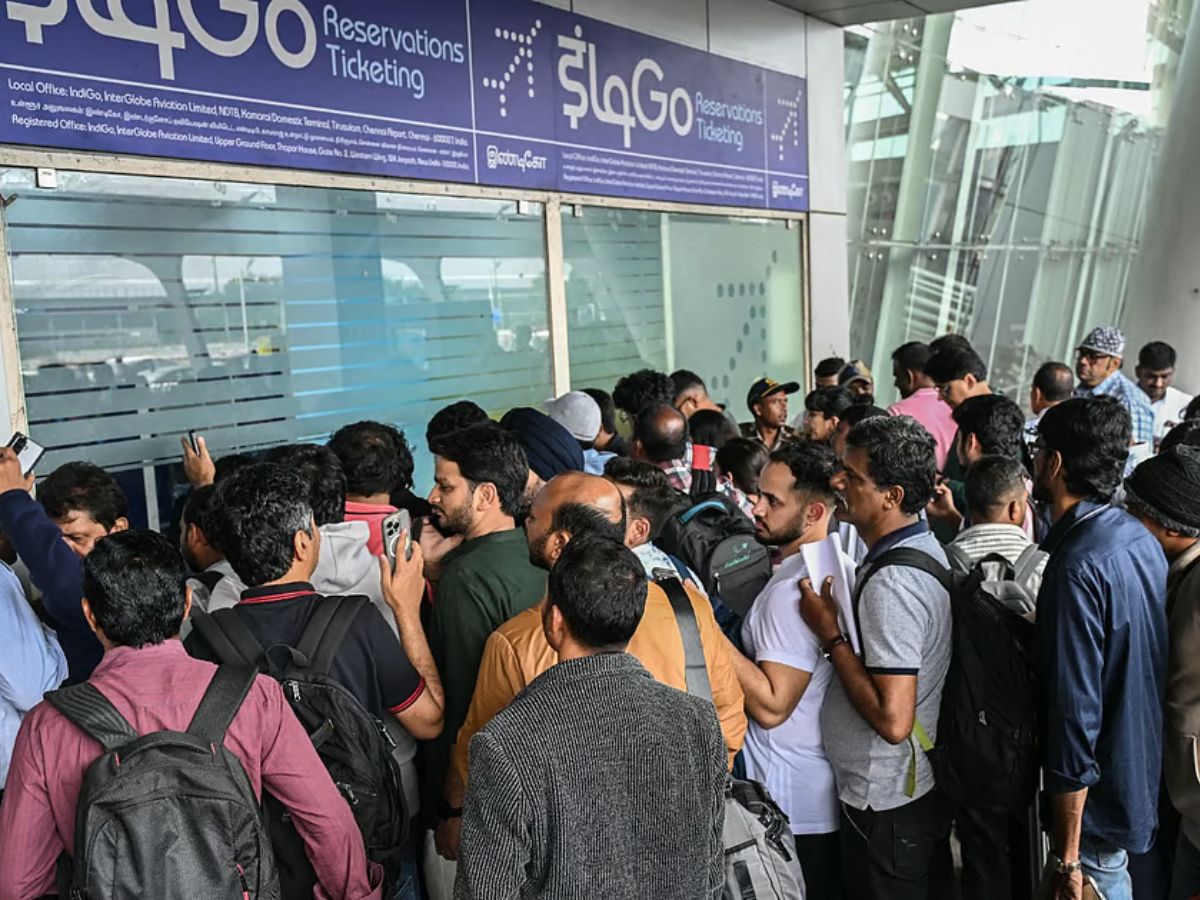
New Delhi: The disruptions at IndiGo caused by repeated violations of Flight Duty Time Limit (FDTL) norms have placed the airline’s board under direct scrutiny, raising questions about whether the group of nine directors discharged their legal duties as required under Indian company law. IndiGo’s operational breakdown did not take place suddenly. Pilot fatigue complaints had been increasing for months, rostering conflicts had become routine and several internal warnings indicated that the airline was approaching a point where it could no longer maintain lawful scheduling. Despite this, the board did not initiate any inquiry, did not direct management to realign duty schedules and did not intervene at any stage before the situation escalated into a nationwide disruption affecting thousands of passengers. Stock exchange filings for the September 2025 quarter identify four independent directors and five non independent directors.
Independent director and chairperson Vikram Singh Mehta has previously worked in leadership roles in the energy and policy space and has served on governance platforms. Independent director Pallavi Shardul Shroff is a senior lawyer, who has been involved in regulatory and corporate matters for decades. Independent director Birender Singh Dhanoa has held positions across corporate sectors. Independent director Michael Gordon Whitaker has worked in airline operations and has direct exposure to how crew management and duty time structures function inside a commercial aviation environment.
These four directors are designated, under law, to ask questions, demand information, commission reports when required and ensure compliance with standards that affect safety and continuity of service. In this case, none of them appears to have reviewed the fatigue risk environment or insisted on corrective action even as the airline’s duty time practices began diverging from DGCA norms. The non independent directors are managing director Rahul Bhatia, one of IndiGo’s founders and the person who shapes its commercial and operational direction, former SEBI chief Meleveetil Damodaran, senior corporate professional Anil Parashar, former WestJet CEO Gregg Albert Saretsky and former NITI Aayog chief Amitabh Kant.
All five occupy positions that give them access to operational information, strategic decisions and regulatory exposure. Saretsky, in particular, has worked inside a large airline and is familiar with the consequences of fatigue noncompliance on scheduling stability, risk and passenger handling. Kant and Damodaran have both held public roles involving accountability and oversight in government or regulatory institutions. Yet none of these directors raised any public or internal demand for a review of the rostering system before the breakdown occurred. The governance structure functioned without friction, but also without intervention. Officials in the Ministry of Aviation and DGCA indicated that FDTL compliance concerns in the industry had been communicated to airlines, including IndiGo. Pilot unions and internal fatigue reporting had signalled growing problems.
Given this, a reasonable expectation under the Companies Act, 2013 is that directors should have sought clarification from the management. The Act lays down clear responsibilities. Section 166 requires every director to act in good faith, exercise due and reasonable care, skill and diligence and act in the best interests of the company, its employees, shareholders and the community. In a company engaged in passenger transport, community interest directly includes the safety and convenience of travellers. Independent directors have additional duties under Schedule IV, which obligate them to safeguard the interests of all stakeholders, balance conflicting interests, evaluate risk management systems, insist on integrity of financial and operational controls and bring independent judgment on issues that come before them. Schedule IV also states that independent directors must monitor management performance, ensure that systems of reporting and compliance exist and must uphold ethical standards of integrity.
By these standards the board’s inaction during a period of sustained operational stress raises core questions about compliance with statutory duties. Fatigue related violations are not abstract matters. They relate to the ability of pilots to perform safely, to the predictability of flight schedules and to the continuity of service that passengers rely upon. When thousands of passengers faced cancellations and extended delays across airports, it became evident that the board had not used the tools available under law. Directors can request detailed internal reports, appoint independent experts, call for audits and require management to provide explanations. None of this was visible in IndiGo’s case before the disruption materialised.
The incident illustrates a pattern seen across several large private companies, where boards consist of individuals with long careers in policy, regulation, business or aviation but do not consistently review operational risks that can cause public inconvenience. In IndiGo’s case, the collective backgrounds of the directors did not translate into oversight. The presence of former government officials, former airline heads, legal experts and corporate leaders did not result in timely scrutiny of a basic compliance requirement but has created a bad name for the entire aviation industry in India and given the Opposition to attack the Union Government. The government too is facing questions for delayed intervention. DGCA has the authority to issue directives, conduct surprise inspections and impose penalties but was likely swayed to not to take any action given the “big” names in the board of directors.
In combination, an inactive board and a “scared” regulator produced a situation where the public bore the consequences of a lapse that could have been prevented months earlier.




