
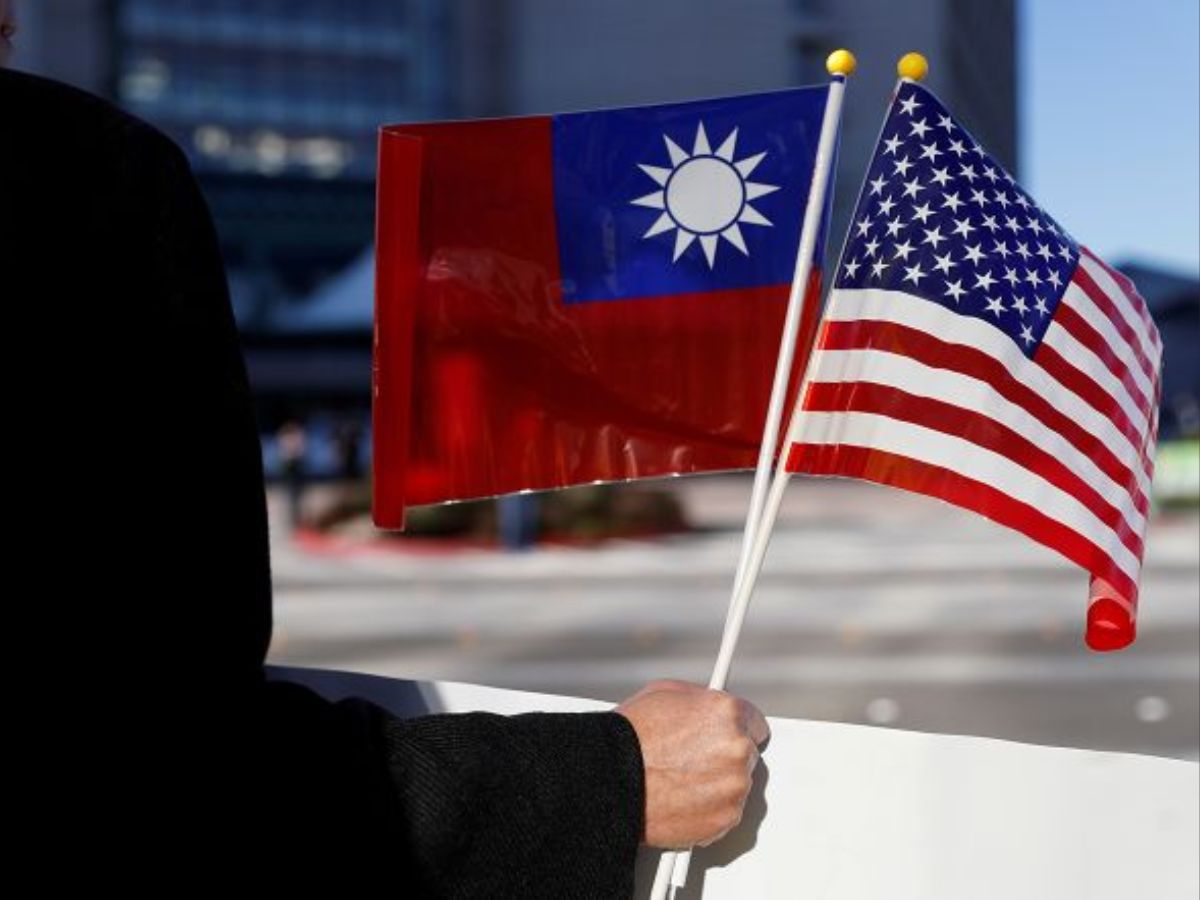
Donald Trump’s approval of an $11.1 billion arms sale to Taiwan, even as he prepares for a trip to China, underscores the paradox at the heart of U.S. policy: balancing engagement with Beijing while reinforcing deterrence against its ambitions toward Taiwan.
The Trump administration has authorized the largest-ever U.S. arms package to Taiwan, valued at $11.1 billion. The deal includes HIMARS rocket systems, howitzers, Javelin anti-tank missiles, drones, and other equipment—a comprehensive suite designed to strengthen Taiwan’s asymmetric defense capabilities Aljazeera +2. This announcement comes just days before Trump’s scheduled visit to China, a juxtaposition that highlights the dual-track nature of American strategy in the Indo-Pacific.
Why Arms Sales Now?
Deterrence Against Beijing’s Pressure: China has intensified military exercises and diplomatic coercion, with President Xi Jinping vowing to unify Taiwan by 2027. The arms package signals Washington’s commitment to ensuring Taiwan can resist coercion and maintain credible self-defense. Strategic Timing: By approving the sale before his China trip, Trump demonstrates that dialogue with Beijing will not come at the expense of Taiwan’s security. It is a calculated move to show strength while still leaving the door open for negotiation. Domestic and International Messaging: The deal reassures allies in Asia—Japan, South Korea, and the Philippines—that U.S. commitments remain firm. Domestically, it bolsters Trump’s image as a leader unwilling to compromise on national security.
The Paradox of Engagement and Deterrence
Trump’s decision reflects a longstanding U.S. paradox: engage China economically and diplomatically, while simultaneously constraining its military ambitions. The arms sale is not merely about Taiwan—it is about preserving the credibility of U.S. alliances and the rules-based order in Asia. If Taiwan were to fall under Beijing’s control, it would dramatically shift the balance of power in the Indo-Pacific.
Chinese Backlash
Beijing has already condemned the sale, warning that “any attempt to use Taiwan to contain China is doomed to fail” CNBC. Trump’s upcoming trip will likely be overshadowed by this tension. Escalation Dynamics: While the arms package strengthens deterrence, it also risks accelerating China’s military buildup and hardening its resolve.
Diplomatic Tightrope: Trump must navigate the optics of being both a partner in dialogue and a supplier of weapons to China’s most sensitive adversary.
The $11.1 billion arms sale to Taiwan is a strategic signal of resolve. It shows that Trump is willing to confront Beijing’s ambitions even as he seeks to engage it. For Taiwan, the package is a lifeline—an investment in survival amid mounting threats. For the U.S., it is a reaffirmation that deterrence and diplomacy must coexist, however uneasy the balance may be.
In the end, Trump’s dual approach—arming Taiwan while visiting China—captures the essence of America’s Indo-Pacific dilemma: to deter without provoking, to engage without conceding, and to defend freedom without illusion.




