
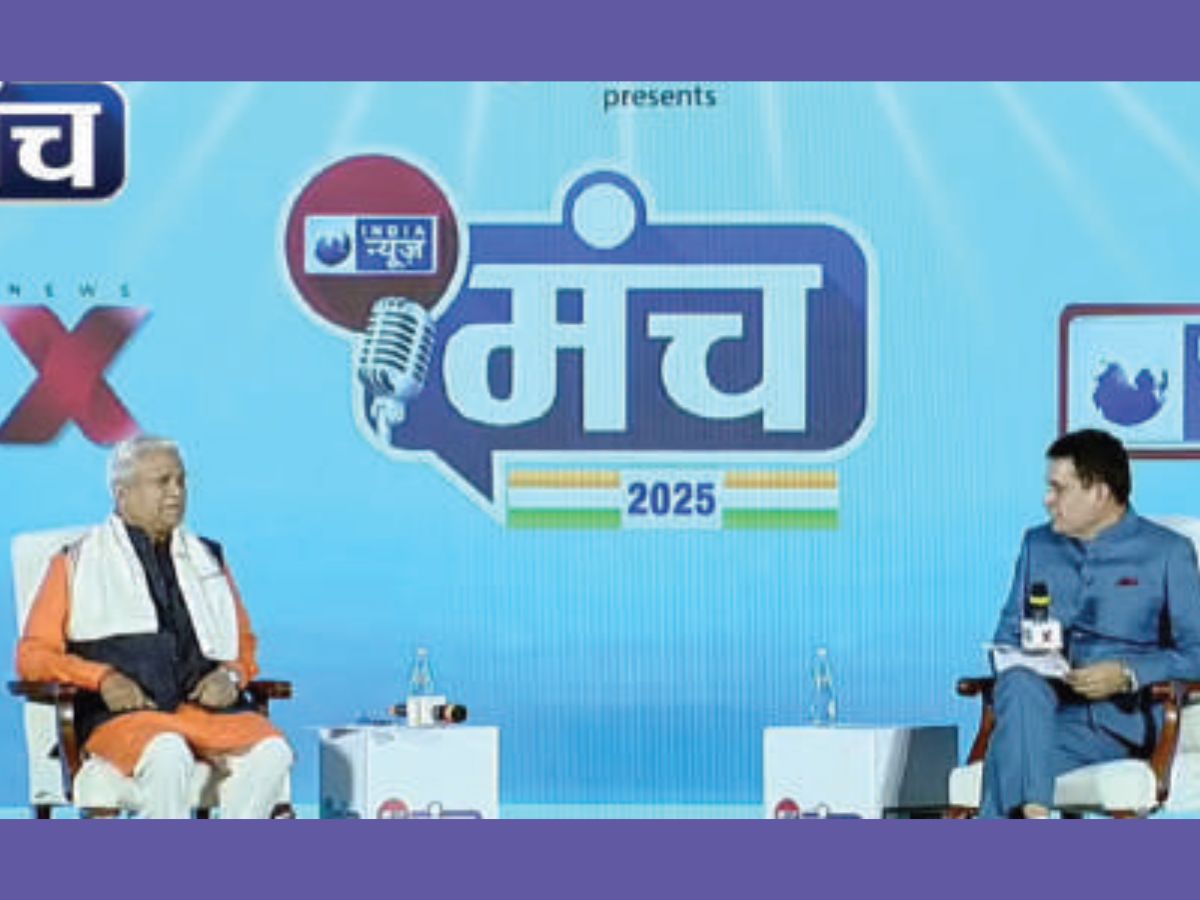
New Delhi: All India Sampark Pramukh of the Rashtriya Swayamsevak Sangh (RSS), Ram Lal, while addressing the India News Manch 2025 organised by the ITV Network, reflected on the organisation’s century-long journey and its ideological foundations.
Ram Lal said the RSS, founded in 1925, has steadily expanded its presence across the country—from Leh-Ladakh to Ahmedabad and from the Andaman and Nicobar Islands to Arunachal Pradesh. He noted that the organisation brings together people of all age groups and functions without discrimination on the basis of caste, creed, language, or gender, united by a shared commitment to national service.
Highlighting the challenges faced by the RSS, Ram Lal said its growth was slow and met with persistent opposition, including ridicule, hostility, and three bans—in 1948, during the Emergency, and in 1992. Despite these hurdles, he said, resistance gradually turned into public support.
Recalling the vision of founder Dr. Keshav Baliram Hedgewar, Ram Lal said the RSS was formed to unite a deeply divided Hindu society. He noted that even critics acknowledged Hedgewar’s success in building confidence around social unity, calling the organisation’s formation a significant achievement given the circumstances of the time.
Responding to questions on nationalism, Ram Lal said the RSS has always respected the Tiranga, noting that debates over the national flag were common during the freedom movement across various organisations. He added that the RSS accepted the Tricolour by consensus and its members participated in major national movements, including the freedom struggle and the liberation of Goa.
On Hindutva, he described it as a cultural and social philosophy rooted in India’s civilisational values, rejecting claims that the RSS seeks to establish a theocratic state. Citing historical examples such as the rule of Chhatrapati Shivaji Maharaj, he said Hindu governance never meant discrimination against minorities. Addressing criticism on women and minorities, Ram Lal said women have long played a significant role in the Sangh through independent yet equal platforms. He also highlighted the RSS’s work in education through the Vidya Bharati network and stressed the organisation’s financial transparency, with accounts regularly audited.
Clarifying the idea of “Bharatikaran” (Indianisation), Ram Lal said it does not mean giving up one’s religion or way of worship, but reflects a shared cultural identity based on Indian values that allows all communities to coexist harmoniously. He expressed confidence in India’s future, stating that those working continuously for the nation’s unity, freedom, and development are vital contributors to its strength and progress.




