
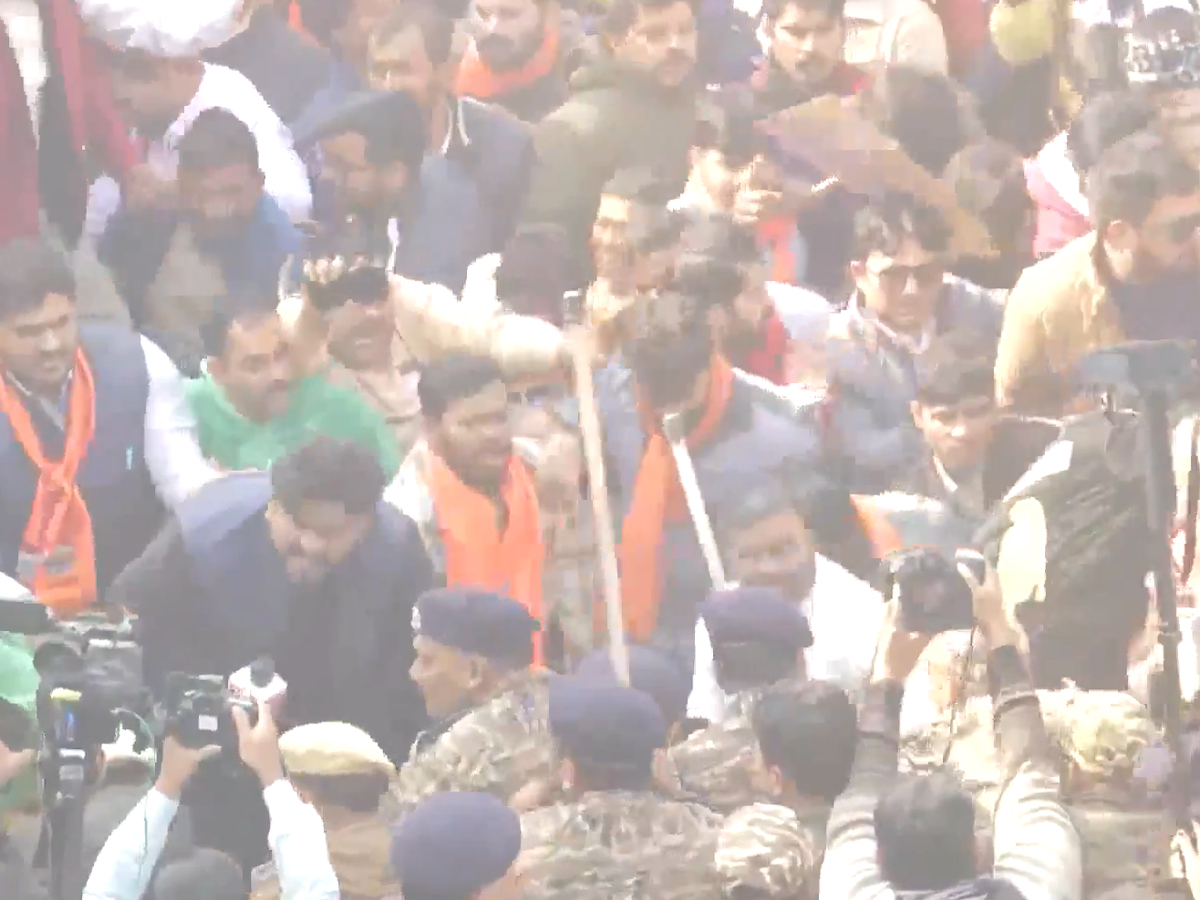
A protest in New Delhi against a brutal killing in Bangladesh grew tense when demonstrators tried to push past security barriers outside the Bangladesh High Commission. The gathering followed news of the lynching of Dipu Chandra Das, a Hindu man killed in Bangladesh, prompting strong reactions from groups and communities in India.
Crowds formed outside the Dhaka mission to demand justice and attention to the rising violence against minority communities. Tensions rose as protestors confronted police, leading to barricades being breached and law enforcement stepping in to control the situation.
Police lathi-charged on protesters who were trying to break barricades outside the Dhaka Mission in New Delhi.
#WATCH | Delhi | Members of Vishva Hindu Parishad and other Hindu organisations protest near the Bangladesh High Commission over the atrocities against Hindus and the mob lynching of Dipu Chandra Das in Bangladesh pic.twitter.com/0nrtZ3XWYG
— ANI (@ANI) December 23, 2025
‘Hindued are Being Killed There’
Police and paramilitary forces had increased security around the High Commission in advance of the protests. Multiple layers of barricades and checks were put in place to prevent any breach or escalation near the diplomatic zone.
#WATCH | Delhi | Protest by members of Vishva Hindu Parishad and other Hindu organisations continues near the Bangladesh High Commission over the atrocities against Hindus and the mob lynching of Dipu Chandra Das in Bangladesh
A protester says,” Hindus are being killed there.” pic.twitter.com/pZ8RYdPpYB
— ANI (@ANI) December 23, 2025
Despite these measures, a group of protesters pushing past the barriers led to a tense moment that required police intervention. Officials later said the protesters were dispersed quickly and no major security threat unfolded.
Why People Took to the Streets
The protest stemmed from outrage over the killing of Dipu Chandra Das in Mymensingh, Bangladesh. Reports say Das was lynched by a mob following allegations related to blasphemy, sparking anger among minority communities and supporters in India.
Participants in Delhi held banners and chanted slogans condemning violence against minorities and demanding justice for the victim. One protestor declared, “Hindus are being killed there,” highlighting widespread concern over the safety of minority groups in Bangladesh.
Government Responses and Diplomatic Backdrop
India’s Ministry of External Affairs dismissed media exaggerations about a security breach. Officials said only about 20–25 youths gathered briefly to raise slogans and that there was no attempt to storm the High Commission or create a security crisis. Police dispersed the crowd after a short time.
Meanwhile, Bangladesh’s foreign ministry called the protest “highly regrettable” and questioned how demonstrators could gather so close to the diplomatic compound without prior notice. Dhaka said the incident created panic among staff and rejected claims that it was “misleading propaganda.”
Wider Unrest and Diplomatic Tension
The Delhi protest echoed unrest in Bangladesh, where violence and demonstrations have spread following recent incidents, including the death of a prominent student leader and the lynching of Das. The incident has triggered protests across multiple Indian cities, reflecting broader concern over violence in the neighbouring country.
In response to rising tensions, Bangladesh has suspended consular and visa services at its High Commission in New Delhi and other mission points, citing “unavoidable circumstances,” further signalling strained ties.
What Protesters Are Demanding
Those at the Delhi rally demanded justice for the killing of a minority worker and called for stronger measures to protect oppressed communities in Bangladesh. The atmosphere remained charged as demonstrators voiced frustration over perceived inaction and ongoing unrest.
Local observers say the protest highlights growing concerns about regional stability, minority rights, and cross‑border relations in South Asia. The knee‑jerk reaction at the diplomatic mission underscores how incidents in one country can quickly spill over into neighbouring states, affecting public sentiment and political discourse.
What Happens Next
Authorities on both sides are monitoring the situation closely. Indian officials have reiterated their commitment to protecting foreign missions and have engaged in diplomatic contact with Bangladesh. Meanwhile, Bangladesh insists that internal incidents should not be politicised or used to portray broader communal issues. Both nations continue to watch developments as tensions play out publicly and diplomatically.




