
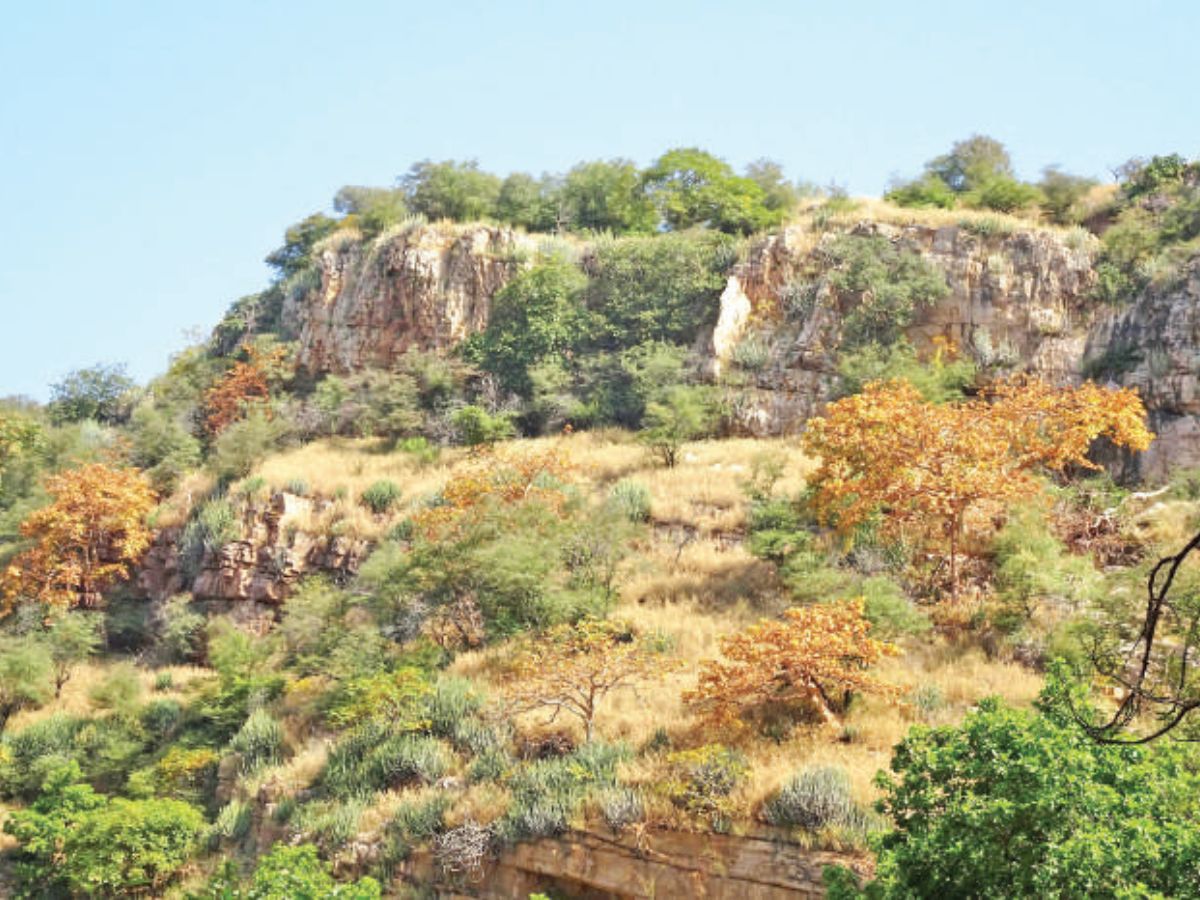
Which disease should the hills choose: the quarry or the resort? The question is like asking a patient whether he prefers death by bleeding or by suffocation. The physician would say: choose health. Yet health, the state of mountains being left as mountains, does not occur to a mind that recognises value only when something can be extracted or sold. We have forgotten that leaving something alone can be the wisest action of all.
Recently, the Supreme Court accepted a definition that treats the Aravalli Hills as landforms in Aravalli districts that rise 100 metres or more above local relief, with that relief measured through contourbased mapping around the landform. On paper, it sounds like a technical clarification. In practice, it risks turning protection into a threshold game, because what does not cross the trigger can begin to look, on records, like it does not exist. A geological fact, a 670-kilometre spine of ancient rock running from Gujarat to Delhi, is thus pushed towards selective recognition by administrative measurement. The mountain did not shrink; only its protection did.
The damage was already underway long before this verdict arrived. In Rajasthan alone, illegal mining has erased around a quarter of the Aravallis, as some committee findings and investigative reports have pointed out, with other estimates putting the loss even higher. What remained was a wounded remnant, still performing its ecological duties despite decades of assault. Even if the judgment speaks of safeguards and restrains new mining leases until a sustainable mining plan is prepared, the deeper risk remains: once protection depends on a mapped trigger in a landscape where mapping, exemptions, and enforcement are contested, low-relief ridges, hillocks, and recharge-bearing landscapes that are ecologically continuous with the hills can slip out of recognition, not because they stop serving life, but because they stop qualifying on paper.
What is not notified becomes negotiable; what is negotiable is soon priced; what is priced is soon sold. What follows is a sequence we know too well: drilling, blasting, trucks hauling stone, crushers thickening the air with silica, builders levelling what remains. And then come the resorts, their brochures offering communion with nature on land where nature has already been erased. You are invited for “eco-tourism,” charged a steep entry fee renamed an “environment fee.” The irony is not accidental; it is the signature of a civilisation that destroys what it claims to cherish and then sells tickets to the graveyard.
Not About Hills, But About Hunger
We are told this is development. We are not told whose development it serves, or who will be left to absorb its consequences. The quarrying contractor profits. The contract-maker profits. The builder profits. The brand profits. And when the area runs dry of water, as it inevitably will, the tanker economy profits. Everyone with capital is circling. The only question no one pauses to ask is who will pay.
This is an environmental crisis powered by an economic logic of extraction, a heist dressed in environmental language, and its cost is paid as class violence. India is not poor; its wealth is concentrated. Decisions like this one maintain that concentration by transferring what little the poor still possess, clean air, groundwater, liveable temperatures, into the hands of those who already have everything.
The hills perform services that never appear on any balance sheet. They blunt desert winds, hold back fine dust, allow rainwater to seep underground instead of rushing away as floods, and release heat at night, offering the region what little relief it gets from brutal summers. None of this enters the calculations of those trained to see only stone to sell and land to develop. Flatten the hills and temperatures will rise, but the contractor has air-conditioning. Dust will thicken, but the builder has air purifiers. Groundwater will collapse, but the resort owner can summon tankers. Floods will arrive faster, but the politician lives on elevated ground.
Who, then, bears the cost? The roadside vendor, the rickshaw-puller, the delivery worker, the security guard standing twelve hours in the sun, the slumdweller under a tin roof, the farmer whose well no longer yields. They did not ask for this quarry. They will not benefit from this resort. They will pay with their bodies so that someone else may profit.
One detail reveals the structure. When stone is crushed, fine silica rises into the air. It does not enter the lungs of those whose homes will later be tiled with that stone. By the time it becomes a polished floor, it is clean. The dust that causes silicosis remains where it was created, inhaled by quarry workers and nearby villagers. The rich get the tiles. The poor get the dust. This is what climate injustice means, not an abstraction, but a transaction.
The Silence That Makes It Possible
Why is there no uproar? Because those who could object are confident the consequences will not reach them. The upper-middle class can speak fluently about environmental collapse. They watch documentaries, share articles, sense that something is wrong. And then they do nothing. They will not risk comfort, reputation, or social standing. Concern remains a dinnertable sentiment.
The poor, meanwhile, are too occupied with survival to organise. They experience heat, dust, and scarcity without being shown how these arise from distant decisions taken in insulated rooms. They live with the consequences without access to the cause. They are, in the precise sense of the word, voiceless.
Large parts of the media ecosystem, structurally aligned with extraction interests, have little incentive to amplify this story. Politicians, often dependent on builder financing, rarely object. Courts adjudicate competing claims, and within that framework the claims of the voiceless, human and non-human alike, carry the least weight. The system is not broken. It is functioning as intended.
The verdict may also sit uneasily with Article 21 of the Constitution, which the Court itself has interpreted to include the right to a healthy environment. If a decision degrades air, depletes water, and makes life progressively unlivable for millions, a constitutional question arises. But constitutional questions require someone to pursue them, and those most affected rarely have access to legal representation.
Let us not pretend that responsibility rests only with contractors and politicians. The comfortable classes are not bystanders in this process; they are its customers. Every SUV on a highway cut through hills, every weekend at a resort carved from forest, every golf course kept green with water denied to nearby villages feeds the same cycle. The quarry supplies the construction. The construction houses the consumer. The consumer demands more construction. Demand remains largely unexamined.
Golf courses appear elegant. In reality, they are vast expanses of grass sustained by water that surrounding villages will never see. What stood there before was forest. Forests are erased so that the affluent may stroll, and the resulting space is wrapped in the language of “green” and “nature.” These labels are not accidental. They are declarations.
This is where the logic leads. Clean nature becomes a privilege rather than a commons. Forests are gated, rivers privatised, air enclosed. And beyond this lies the final asymmetry: those with wealth increasingly find ways to escape the consequences they helped create, while the poor and the non-human world remain behind to endure a damaged planet. Even then, admiration persists. The ones who withdraw are still celebrated. The crowd still asks for selfies from those who are leaving.
Guilt Is Not Action
Guilt does not help. It allows one to feel moral without changing one’s life. One can grieve the Aravallis while driving an SUV on a road that demanded their flattening, mourn forests while buying furniture, lament climate change while booking flights. Guilt is inaction made comfortable.
This cannot be changed by individual sincerity alone. No single person can stop a stone-crusher by standing before it. The forces driving destruction are organised, funded, and protected. Sentiment does not move them. Only countervailing power does, and in a democracy power arises from numbers.
The only honest response is multiplication. Not guilt, but the spread of clarity. Understanding that remains private changes nothing. When it moves outward, it becomes counterweight. Extraction has money. Preservation has people.
This is not a call for heroism. It is a call for honesty. When understanding changes, silence is no longer neutral. Those who destroy act openly. Protection cannot rely on discretion.
The Aravallis have no voice. The poor have no platform. The unborn have no vote. Those who possess all three and still choose silence are not neutral observers. They become participants in a theft whose victims will never know the names of those who benefited.
The hills ask only to be left alone. They require nothing from us except restraint. And restraint does not generate profit, the only language this economy recognises.
The question, then, is not really about the Aravallis. It is about us. About whether conscience can become consequence. A burning world does not need private sorrow nursed in comfortable silence. It needs voices willing to be counted. The choice, as always, is ours. And so are the consequences.
Acharya Prashant is a teacher, founder of the PrashantAdvait Foundation, and author on wisdom literature.




