
NEW DELHI: The upcoming West Bengal Assembly elections promise to be one of the most politically intriguing contests in recent decades, with the Muslim vote bank emerging as the central battleground. For the first time in many years, the once largely consolidated Muslim electorate appears poised for fragmentation, potentially reshaping the state’s political landscape.
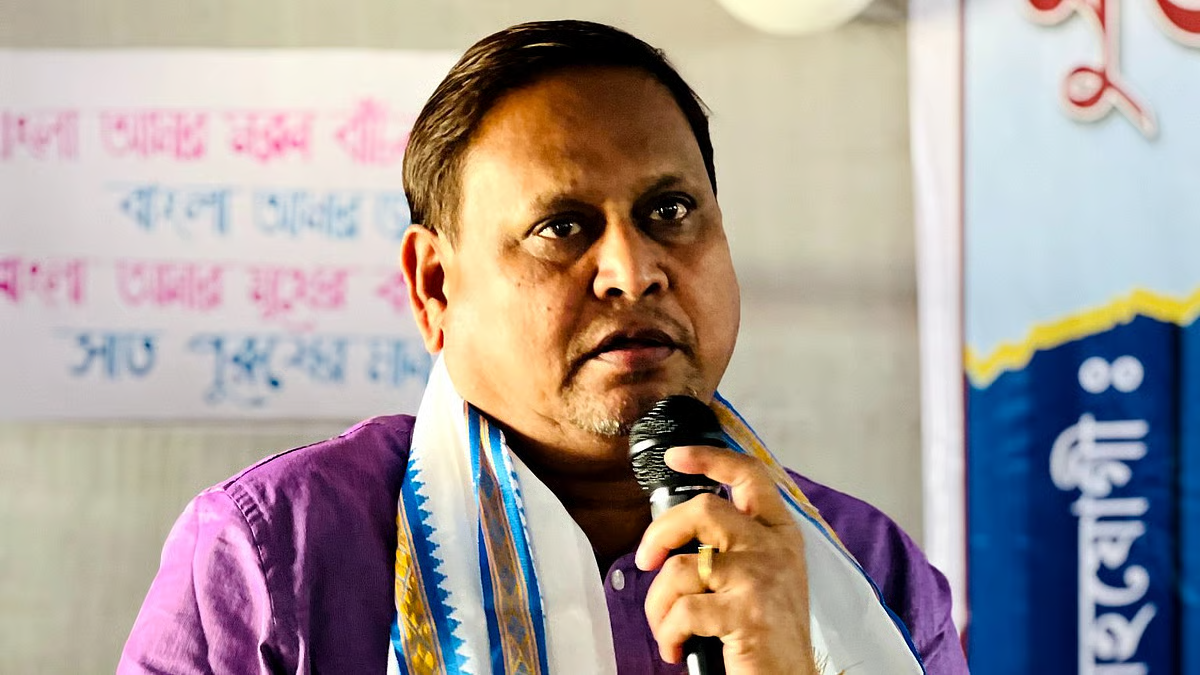
This fresh political churn has been set in motion by suspended Trinamool Congress (TMC) MLA Humayun Kabir, who recently launched the Janata Unnayan Party following the foundation stone laying ceremony of the Babri Masjid in Murshidabad. Kabir’s decision has stirred intense debate across the political spectrum, particularly unsettling the ruling Trinamool Congress, which has long relied on strong Muslim support as a pillar of its electoral success.
Anticipating potential erosion of its core support base, the Trinamool Congress has stepped up its outreach in border districts with sizeable minority populations to reinforce its political hold. At the same time, the Bharatiya Janata Party (BJP), historically viewed as electorally distant from Muslim voters in Bengal, appears to be recalibrating its strategy. Since Shamik Bhattacharya assumed charge of the BJP’s state unit, the party has moderated its tone and initiated cautious efforts aimed at reducing political polarisation.
Sources told the publication that following the formation of his party, Kabir reached out to AIMIM chief Asaduddin Owaisi and India Secular Front (ISF) leader Pirzada Abbas Siddiqui. According to sources, AIMIM has shown a positive inclination towards an alliance, while discussions with Siddiqui are still ongoing. In the previous Assembly elections, the ISF had contested in alliance with the Congress and the Left Front.
Muslims account for nearly 30 per cent of West Bengal’s population and play a decisive role in close to 100 Assembly constituencies. For decades, this community has been instrumental in shaping the state’s political course. Disenchantment with the Congress in the 1970s paved the way for the Left Front’s rise to power, while later dissatisfaction with the Left helped the Trinamool Congress emerge as the dominant political force.
Currently, however, growing signs of disaffection within the community have raised concerns within the TMC about a possible shift in loyalties. Political observers suggest that a potential alignment between Humayun Kabir, Asaduddin Owaisi and Abbas Siddiqui could significantly undermine Mamata Banerjee’s electoral base. Owaisi is expected to command influence in Malda, North Dinajpur and South Dinajpur—districts adjoining the Seemanchal region. Abbas Siddiqui’s ISF holds considerable sway in parts of South Bengal, traditionally seen as a Trinamool stronghold. Two years ago, the ISF secured around 400 panchayat seats in the region.
Kabir, meanwhile, comes from Murshidabad, where the Babri Masjid foundation ceremony has had a notable political and social impact. For the BJP, which has long aspired to form a government in West Bengal, the evolving political equations offer a potential opening. In the most recent Lok Sabha elections, the vote share gap between the BJP and the TMC stood at approximately seven percentage points, widening to nearly ten points in the Assembly elections. Consolidation of Muslim votes against the BJP has traditionally been a key obstacle for the party.
A split in this vote bank, however, could alter that equation and improve the BJP’s prospects. A political analyst closely following developments in West Bengal told The Sunday Guardian that if Humayun Kabir succeeds in splitting the Muslim vote, the consequences could be “disastrous” for Mamata Banerjee and the Trinamool Congress, which currently draws a substantial share of its support from the state’s nearly 27 per cent Muslim population. The analyst added that most anti-Trinamool parties appear to be quietly backing Kabir’s initiative. Both the Congress and the Left have adopted a relatively accommodating stance, with reports suggesting that Kabir is open to seat-sharing arrangements with parties such as the CPI(M).
West Bengal is expected to go to the polls next year, likely between mid-May and June. As is often the case, the election has drawn nationwide attention, given the state’s history of intensely contested and politically significant battles. One of the key concerns remains whether the electoral process will unfold peacefully, as incidents of poll-related violence have long been a recurring feature of Bengal’s political landscape.




