
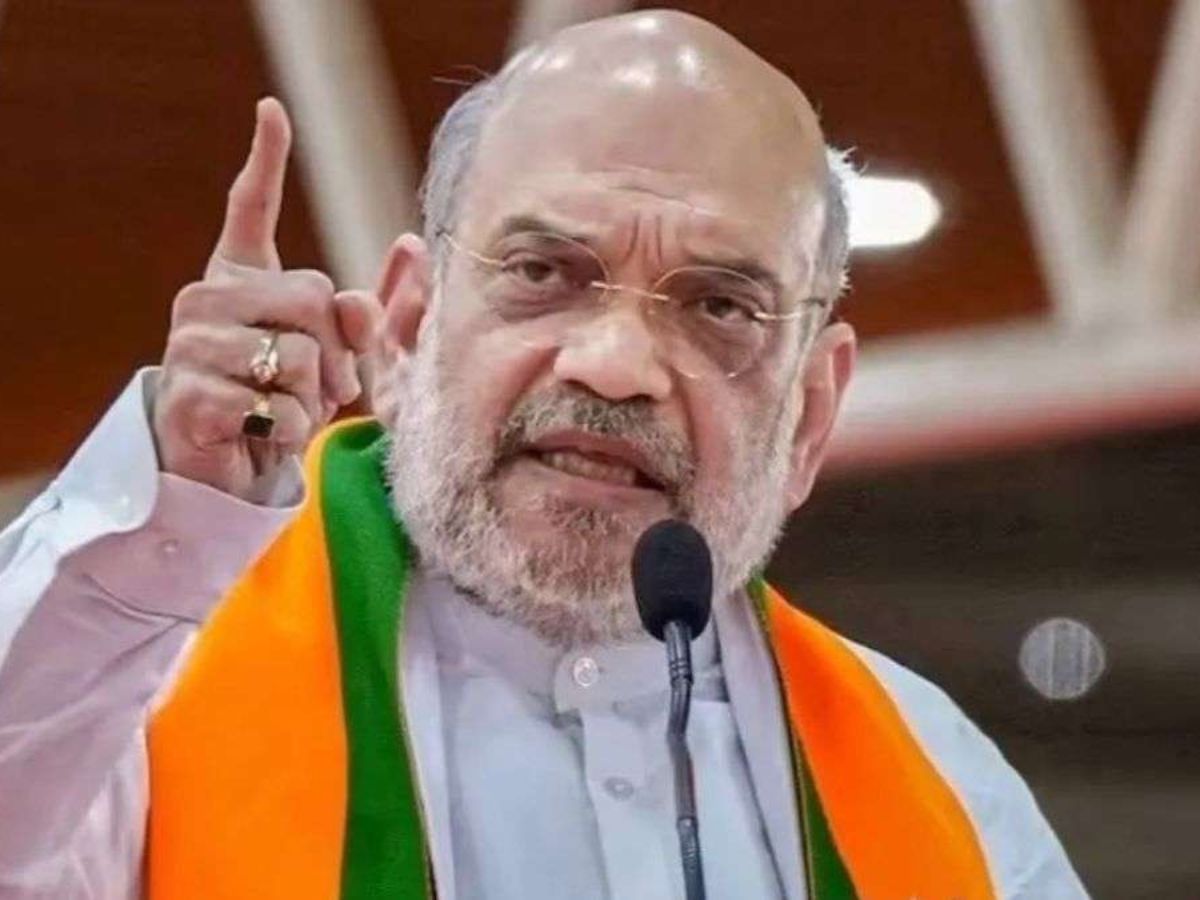
NEW DELHI: Union Home Minister Amit Shah on Tuesday said that the people of West Bengal have firmly decided to elect a Bharatiya Janata Party (BJP) government in the forthcoming Assembly elections, asserting that such a mandate would help restore the state’s rich legacy while simultaneously speeding up development and giving top priority to ‘Gareeb Kalyan’, or welfare of the poor.
Today, Shah in Kolkata, launched a strong attack on the Mamata Banerjee-led Trinamool Congress (TMC) government, accusing it of poor governance, rampant corruption and allegedly encouraging the infiltration of illegal immigrants into the state.
Referring to a significant historical event, Shah said December 30 carries immense importance for the country, as on this day in 1943, Netaji Subhash Chandra Bose hoisted the Indian national flag in Port Blair. Drawing a connection between the historic occasion and Bengal’s political future, he said the period from now until April would be crucial for the state as it prepares for the upcoming Assembly elections.
“People in Bengal have resolved to elect a strong government that will revive the state’s legacy, ensure development and focus on welfare, instead of a government that has delivered fear, corruption, misgovernance and infiltration,” Shah said.
He further alleged that during the last 15 years of TMC rule, West Bengal has experienced an atmosphere of fear, widespread corruption and administrative failure, adding that citizens are increasingly concerned due to unchecked infiltration of illegal immigrants.
The Union Home Minister assured voters that once the BJP comes to power, the state’s cultural and historical legacy would be restored, along with accelerated development and welfare initiatives, similar to what the party claims to have delivered in several other states.
“As soon as a BJP government is formed in West Bengal, we will revive Bengal’s legacy and develop the state. Welfare of the poor will be our priority. We will also construct a national grid that will stop infiltration into Bengal,” Shah said.
Shah also announced that the BJP plans to establish a strong and comprehensive national security grid along the borders to prevent illegal entry. Stressing the strength of the proposed system, he said, “Insaan chhod dijiye, parinda bhi pair nahi maar paye. We will not only stop infiltration but will ensure that every infiltrator living illegally in West Bengal is removed from the country.”
Meanwhile, the TMC responded sharply to Shah’s statements. TMC Rajya Sabha MP Saket Gokhale accused the Union Home Minister of repeatedly admitting his own failure to curb infiltration, despite being responsible for the country’s internal security and border management.
In a post on his social media handle X (formerly Twitter), Gokhale said that Shah had made similar remarks about stopping infiltrators during a press conference in Guwahati a day earlier. “This makes Amit Shah perhaps the first honest Modi minister who repeatedly admits his own incompetence in public,” he wrote.
Gokhale further alleged that infiltrators had penetrated deep into Indian territory, citing incidents such as the killing of civilians in Pahalgam and a blast in Delhi that claimed several lives. He also pointed out that the BJP itself has acknowledged the presence of infiltrators in states like Assam and Tripura, both of which are governed by the BJP.
“Interestingly, the borders through which these so-called infiltrators enter India are directly under Amit Shah’s control,” Gokhale said, raising serious questions about the Home Minister’s record since he assumed office in May 2019.
Notably, West Bengal is slated to hold Assembly elections in 2026, and Amit Shah’s visit has taken place amid an already tense and polarised political atmosphere in the state. The Trinamool Congress has been strongly opposing the ongoing Special Intensive Revision (SIR) of the electoral roll, which has emerged as a key flashpoint in the run-up to the polls.
The war of words underscores the sharpening political contest in West Bengal, with questions of infiltration, governance and the integrity of the electoral process dominating the discourse as the state moves closer to the 2026 Assembly elections.




