
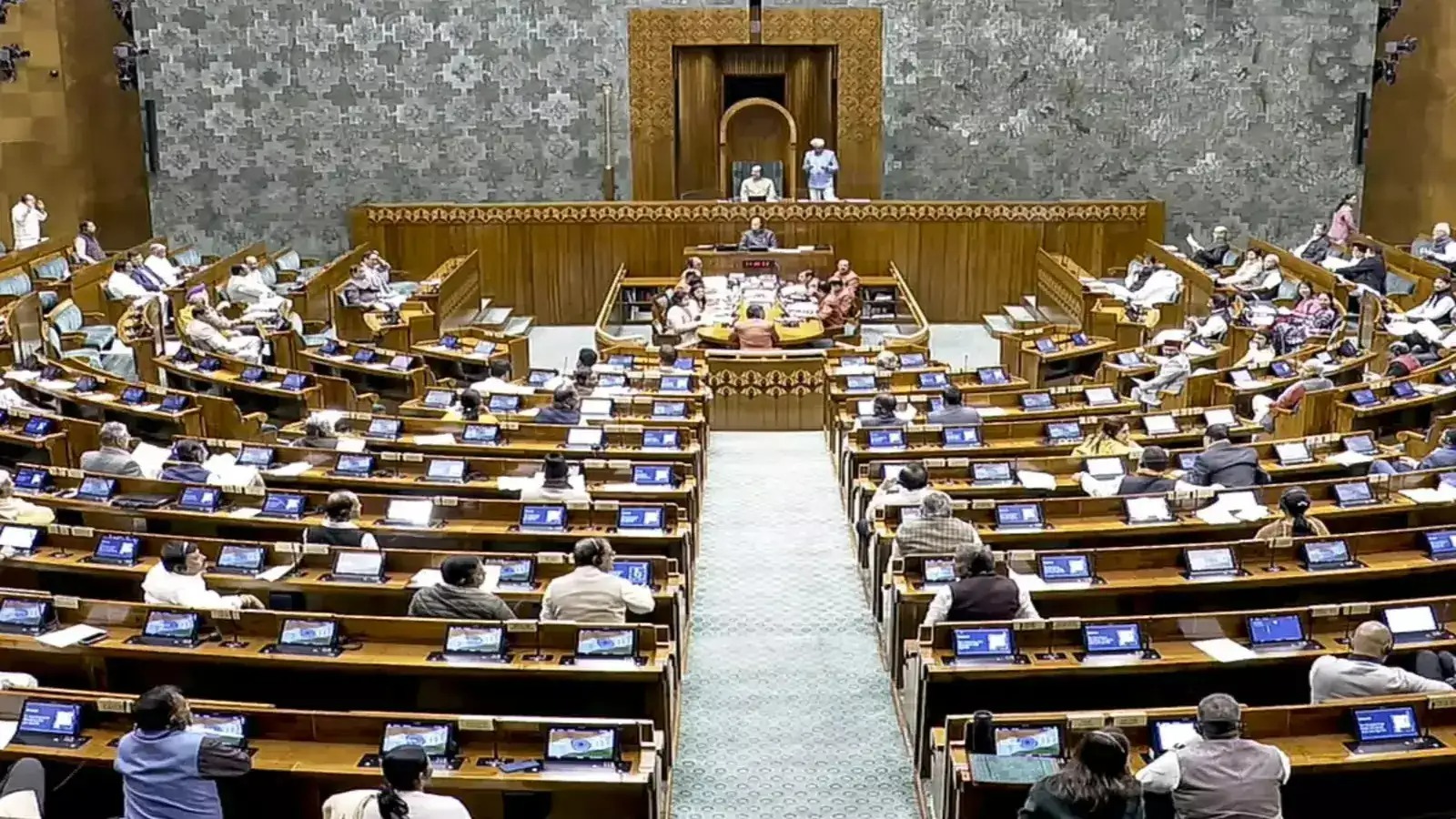
The Viksit Bharat Shiksha Adhishthan Bill 2025, introduced in Parliament on 15th December, responds to a long-standing need in our higher education system. In the current system multiple regulators operate with overlapping mandates; they create fragmentation, confusion, and delays. The Viksit Bharat Shiksha Adhishthan (VBSA) is designed as an apex umbrella body.
VBSA mainly replaces multiple central regulators (UGC, AICTE, NCTE) with a single, more transparent framework. The Bill establishes three independent councils under VBSA for regulation, accreditation, and standards. The core academic functions of UGC, AICTE, or NCTE will be relocated into these specialised councils, with a clear separation of powers. In line with the “light but tight” vision of NEP 2020, it seeks clear standards with less day-to-day interference for institutions that demonstrate responsibility. The framework also encompasses all modes of higher education, including open, distance, and online learning, ensuring that similar quality standards apply regardless of the mode of study.
LONG POLICY TRAJECTORY
The core ideas of the Bill draw on a long policy trajectory. The idea of a unified regulatory body and the need to separate standard setting, regulation, and accreditation first appeared in the draft National Education Policy released in 2019. After extensive discussions, the idea was incorporated into NEP 2020. VBSA, therefore, does not occur overnight; it consolidates several years of thinking on how to reduce duplication among UGC, AICTE and NCTE while protecting institutional autonomy. Policy documents also draw on international experience, which shows that transparent regulation helps systems expand access while maintaining quality. The government has already responded by agreeing to refer the Bill to a Joint Parliamentary Committee (JPC) for detailed examination of the Bill clause by clause. The JPC can build a broader consensus around a more coherent and student-centred regulatory framework.
INCLUSIVE FEDERAL DESIGN
Membership of VBSA and its councils is very inclusive. It comprises academicians, domain experts, and representatives from States, Union Territories, State universities, and Institutions of National Importance. This structure ensures that the state government participates in the decision-making process. In this sense, VBSA aims to strengthen cooperative federalism in higher education rather than dilute it. It does so by providing all stakeholders with a shared table for designing academic norms. Professional bodies such as the Council of Architecture will act as Professional Standard Setting Bodies, contributing domain expertise on curricula and academic standards while leaving regulatory enforcement to VBSA, which further widens participation in standard-setting.
STATES POWERS PRESERVED
Universities established under state Acts will continue to be governed by those state Acts. The state government will decide on creating posts, funding, establishing setting fees within state limits, and overseeing local governance structures. On the other hand, VBSA regulates minimum academic standards for all higher education institutions, whether central or state. It also puts in place transparent accreditation and public-disclosure-based regulation across the entire system. States are also represented in the VBSA and its councils. This means that state concerns can shape regulations from the outset, rather than being introduced only through later consultation. The intention is to provide national coherence in quality norms. At the same time, state governments will continue to establish, fund and maintain the state universities; Institutions of National Importance, such as IIT’s and IIM, will come within the common quality framework while retaining their existing autonomy in academic and internal governance.
AUTONOMY THROUGH PERFORMANCE
The VBSA, as reflected in NEP 2020, will enable universities to become “independent self-governing institutions” through transparent accreditation and graded autonomy. Autonomy for institutions does not mean the absence of standards; it is freedom linked to performance. Institutions that meet clearly defined quality benchmarks gain greater independence. They will adopt a curriculum design, programme structure, and research priorities rooted in the Indian context but futuristic. Academic councils and governing bodies within universities will continue to play a role in shaping courses and research. In the new scheme, institutions must demonstrate capacity and integrity through public disclosures and accreditation outcomes.
CHECKS ON COMMERCIALISATION
The regulatory philosophy set out in NEP 2020 is explicit: the system must “curb the commercialisation of education”. It should encourage innovation and good governance; VBSA encourages this aspect. It ties autonomy and expansion opportunities to learning outcomes, governance quality, and equity indicators. Public disclosure of finances, admissions, and outcomes on a national portal will make it necessary for any institution, whether public or private, to make education affordable and inclusive. Accreditation standards will consider inclusion and equity along with curriculum quality and research performance. At the same time, universities are encouraged to build stronger links with industry and society. The Regulatory Council will not fix or increase fees, but it will rely on disclosure, student feedback and outcome-based evaluation to discourage hidden charges and unfair practices.
REGULATION WITH SAFEGUARDS
Like most modern higher education laws, the VBSA Bill lays out principles in the parent legislation. It allows the regulator to frame detailed regulations. This approach is common in complex sectors because Parliament cannot routinely update technical norms such as credit definitions, learning outcomes or accreditation rubrics. However, the Bill also contains safeguards; draft regulations of the regulator must remain consistent with the parent Act and the Constitution. These regulations will remain open to parliamentary scrutiny and judicial review, which keeps the balance between flexibility and accountability.
NATIONAL NORMS, STATE SPACE
“Overriding effect” clauses in the VBSA Bill are standard features in national higher education statutes. Such overriding clauses usually operate only when there is a direct conflict between state norms and minimum national standards. These norms include areas such as degree nomenclature and minimum qualifications for faculty recruitment. This standardisation is necessary to preserve the portability of qualifications across the country. It will also protect students when institutions fail to meet basic benchmarks. Existing state power, for example, the authority to establish and fund universities, or to determine policies that prioritise state students in admissions, remains intact.
PENALTIES TO PROTECT
The Bill has a graded penalty structure for suitable action against fly-by-night institutions. The idea is to create a strong deterrent so that such unauthorised institutions do not mislead students. For recognised universities and colleges, penalties are linked to proven violations of norms. These norms relate to academic quality, financial probity, or student welfare. Before taking any significant action, the Regulatory Council issues notices to the institution. It then allows the institution to present its position and make its representations. This process is in tune with existing laws.
EQUITY AND DATA
Equity is a central pillar of NEP 2020 and of the VBSA design. The policy aims to enhance the Gross Enrolment Ratio; VBSA can ensure targeted support for disadvantaged regions and social groups and strengthen equity. It can do so by applying standard quality norms and disclosure requirements to all institutions. Public data on scholarships, dropout rates, hostel availability, and grievance redressal will be available in one place. This public data will enable governments, policy makers and society to identify where gaps persist.
HIGHER EDUCATION AS A PUBLIC GOOD
The concept of higher education as a public good is central to NEP 2020; VBSA seeks to ensure that public resources are used more effectively and transparently. VBSA requires mandatory public disclosure of finances, admissions and outcomes. Through this, the new framework reinforces the public-good character of universities. It makes the institutions more accountable to society. India aspires to build a knowledge-driven future. It must, therefore, align autonomy, equity, and accountability within a single shared framework. VBSA is the way to go to rebuild trust in higher education and expand opportunities for every learner. VBSA links the everyday experiences of students and teachers with larger national goals, such as Atmanirbhar Bharat and Viksit Bharat, where knowledge, skills, and character develop together.
Mamidala Jagadesh Kumar, Formerly: Professor of Electrical Engineering, IIT Delhi, Vice-chancellor, JNU and Chairman, UGC.




