
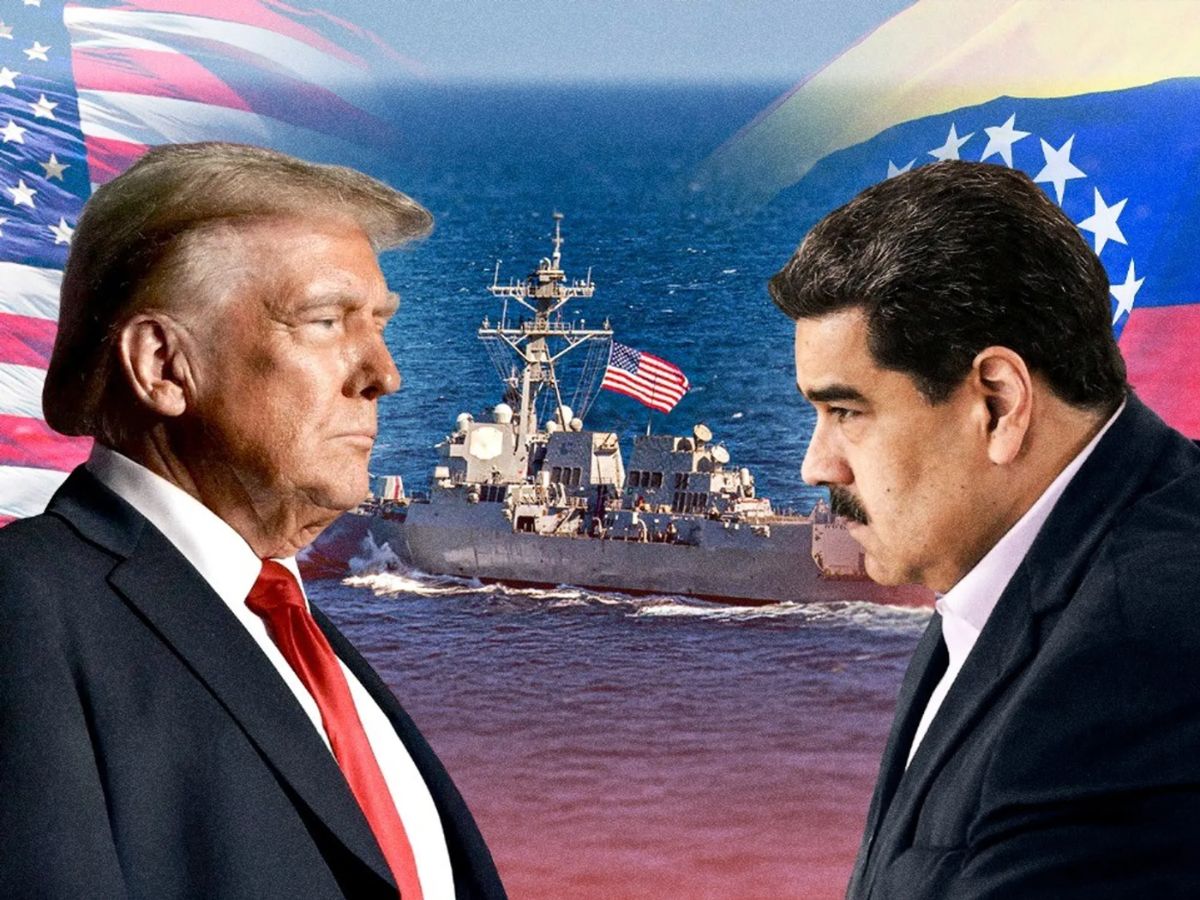
Panaji: There are moments in global politics when history does not knock politely. It kicks the door down. What unfolded between Washington and Caracas in 2026 appears to be one such moment. When US President Donald Trump claimed on Saturday that the United States had carried out a “large-scale strike” against Venezuela and captured President Nicolás Maduro and his wife, the world collectively gasped—not because the trajectory was unexpected, but because the destination had finally been reached.
This was not an overnight eruption. It was a carefully layered escalation, one policy decision stacked upon another, moving with grim predictability from economic pressure to open military confrontation. The seeds were sown early in the year. On February 26, 2025, Trump cancelled oil concessions that had been extended to Venezuela under the previous Biden administration. In one stroke, Washington signalled a decisive return to hardline politics. Oil is Venezuela’s lifeblood, and choking that flow was a direct assault on the Maduro regime’s survival.
Barely a month later, on March 24, the screws were tightened further. The United States imposed a 25% tariff on countries that continued to buy Venezuelan oil. This was not merely about Caracas; it was a warning shot to the rest of the world. Trade with Venezuela would now come at a price. Economic isolation became policy, and compliance was no longer optional but coerced.
Then came August 8, a date that marked a fundamental shift in tone. Washington doubled the bounty on Maduro to an extraordinary 50 million dollars and designated the Cartel de los Soles as a foreign terrorist organisation. This was more than symbolism. By directly linking Venezuela’s leadership to narcotics trafficking, the US reframed the conflict. Maduro was no longer just an authoritarian ruler presiding over a failed state; he was being cast as the head of a criminal-terrorist enterprise. In Washington’s playbook, such a designation rarely ends at rhetoric.
The first overt military step followed swiftly. On September 2, 2025, the US struck what it described as a drug-smuggling vessel in international waters. From that point onward, restraint vanished. Between September and November, more than 30 strikes were carried out against alleged drug boats in the Caribbean and the Pacific. Reports suggest between 83 and over 110 people were killed. Officially, these were anti-narcotics operations. Unofficially, they were acts of war by incremental design.
October 15 deepened the shadows. Trump authorised covert Central Intelligence Agency operations inside Venezuela. History tells us that when the CIA enters the theatre openly, the endgame is already being written. Venezuela was no longer just being pressured from outside; the conflict had crossed its borders, quietly but decisively.
Caracas responded with muscle-flexing of its own. On November 12, Venezuela conducted military exercises, a display meant to signal readiness and defiance. The same day, Washington launched its “Southern Spear” mission. Two days later, the arrival of the USS Gerald Ford aircraft carrier group near Venezuelan waters made the message unmistakable. Diplomacy had been replaced by deterrence, and deterrence was now escorted by fighter jets and missile systems.
Economic warfare continued in parallel. On December 11, sanctions were imposed on members of Maduro’s family and six oil ships. Five days later, Trump announced a “total blockade” of sanctioned oil tankers. By December 20, a second tanker had been seized off the Venezuelan coast. This was siege economics, a strategy as old as empire, updated for the age of sanctions and satellite surveillance.
Then came the most explosive claim of all: a US strike inside Venezuela itself, targeting a dock facility allegedly used to load drug boats, resulting in a major explosion. If confirmed, this would mark the first acknowledged American attack on Venezuelan soil. Trump framed it as law enforcement by other means, accusing Maduro of emptying prisons and mental institutions, forcing inmates northward, and using oil money to fund drug crime. Maduro, for his part, offered talks on drug trafficking and oil “wherever and whenever they want,” a statement heavy with desperation and deflection, conspicuously avoiding any direct mention of CIA strikes.
Operations, we are told, are still ongoing. The US continues to pursue fleeing tankers. Congress is examining the legality and scope of the strikes. Venezuela has denounced the actions as piracy and has reportedly increased military activity and missile deployments. President Maduro and his wife were captured by Delta Force, the elite spearhead of American special missions. This marks a defining rupture in modern geopolitics. Regime change, once denied, now stands barefaced. For those who still believe global power is exercised within neat legal frameworks, Venezuela is a brutal reminder that might, when patiently escalated, eventually dispenses with masks.
The question now is not whether the world order has shifted, but how many other doors history is preparing to kick down next. The operation’s symbolism matters as much as its tactics. By placing boots on Venezuelan soil and extracting the head of state, Washington has crossed from pressure to precedent. Sanctions, bounties, tariffs, and isolation were not alternatives to force; they were its rehearsal. International law, invoked loudly for adversaries and softly for allies, has again proven elastic in the hands of power. For Latin America, the message is chillingly familiar: sovereignty survives only until it obstructs strategic interests. For rivals watching closely, from Eurasia to the Indo-Pacific, this is a signal that escalation ladders do not end at diplomacy. They end where patience runs out—and where power decides history must be accelerated, not negotiated.
Savio Rodrigues is the Founder and Editor-in-Chief of Goa Chronicle.




