
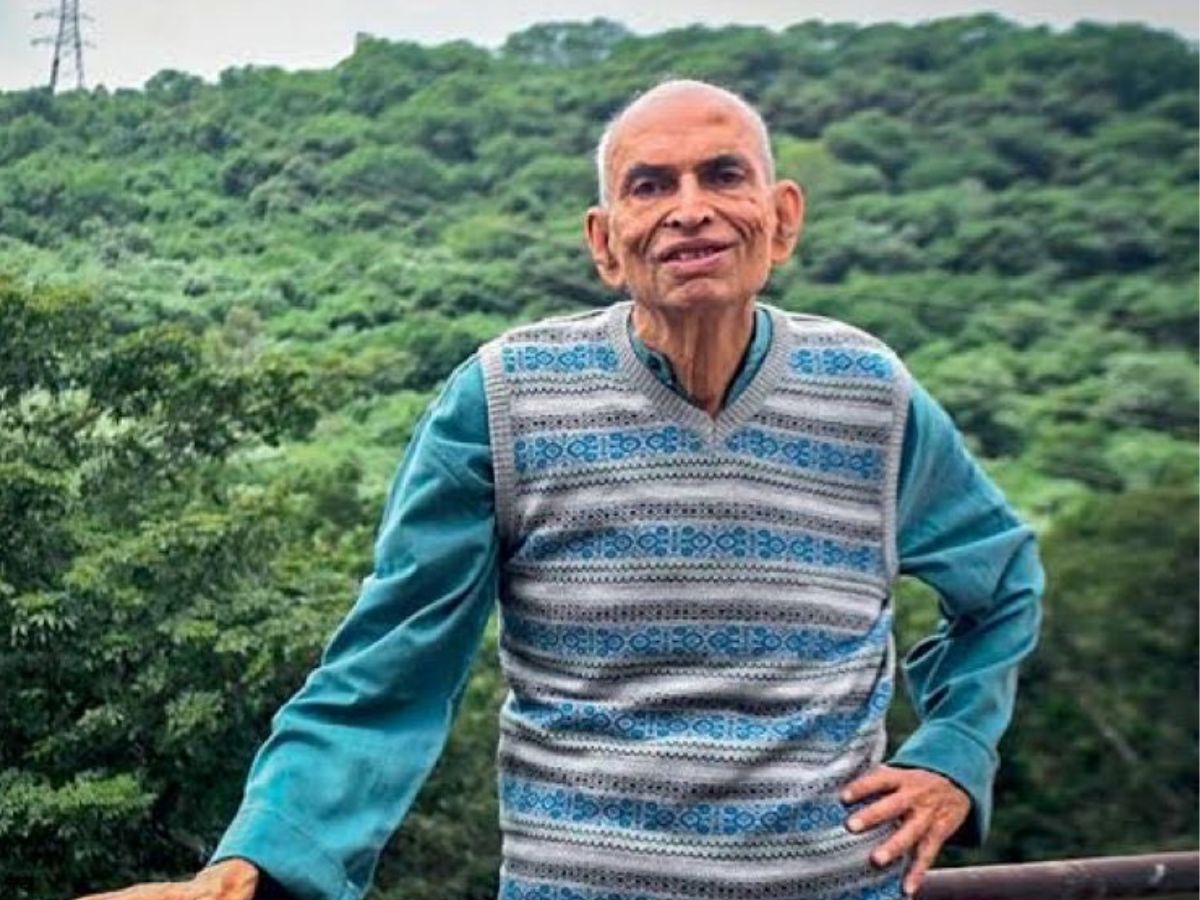
Renowned Indian ecologist Madhav Gadgil passed away at his residence in Pune late on Wednesday, January 7, 2026, after a brief illness. He was 82, his son Siddhartha Gadgil confirmed on Thursday, January 8.
According to sources, Gadgil breathed his last late Wednesday night at a hospital in Pune. He played a pioneering role in India’s ecological research and conservation policy, leaving a lasting legacy in environmental science.
Who Was Madhav Gadgil?
Madhav Dhananjaya Gadgil was a prominent ecologist, academic, writer, and columnist. He founded the Centre for Ecological Sciences at the Indian Institute of Science (IISc), Bengaluru, and served on the Scientific Advisory Council to the Prime Minister of India. In 2010, he chaired the Western Ghats Ecology Expert Panel (WGEEP), widely known as the Gadgil Commission, which played a major role in environmental planning and policy.
Madhav Dhananjaya Gadgil was born on 24 May 1942 in Pune, Maharashtra. He died on 7 January 2026 in Pune, Maharashtra. Gadgil was the son of economist Dhananjay Ramchandra Gadgil.
Madhav Gadgil Educational Background
Madhav Gadgil completed his graduation in biology from Fergusson College in 1963 and a master’s in zoology from Mumbai University in 1965. Gadgil later received a PhD in mathematical ecology from Harvard University, underlining his strong foundation in research and quantitative ecology.
Madhav Gadgil Personal Life
An accomplished athlete during his college years, Gadgil held the Maharashtra State Junior and Pune University high jump records in 1959 and 1961 and represented Pune University at the All India University Athletic Meet. He was married to Sulochana Gadgil, a meteorologist and Harvard scholar, whom he met at Fergusson College. The couple had a daughter, a journalist and Spanish teacher, and a son, a mathematician. The family lived in Pune. His life has been documented in the Marathi biography Vidnyanyatri – Dr. Madhav Gadgil by A. P. Deshpande.
Madhav Gadgil Academic and Research Contributions
After returning to India in 1971, Gadgil spent more than 30 years at IISc, Bengaluru, where he established major research centers and advised the government on environmental policies. His early work in the 1980s led to the Nilgiris becoming India’s first biosphere reserve.
As chairman of the Gadgil Commission (2010), he proposed that 64% of the Western Ghats be declared Ecologically Sensitive Areas (ESA).
Gadgil was first among all in quantitative ecology and animal behavior studies in India, emphasizing the inclusion of humans as part of ecosystems. He contributed significantly to the Biological Diversity Act 2002 and developed People’s Biodiversity Registers, which remain in use today.
Madhav Gadgil Publications
Gadgil conducted extensive research in population biology, conservation biology, human ecology, and ecological history, authoring over 250 scientific articles. He published several influential books, including:
-
This Fissured Land (1992)
-
Ecology and Equity (1995, with Ramachandra Guha)
-
Nurturing Biodiversity: An Indian Agenda (1998, with P. R. Seshagiri Rao)
-
Diversity: The Cornerstone of Life (2005)
-
Ecological Journeys (2005)
-
Science, Democracy and Ecology in India (2013)
He also wrote in Marathi, contributed to newspapers like The Hindu (1999–2004) and Sakal, and influenced ecological education, biodiversity management, and environmental policy across India.
Madhav Gadgil Awards and Recognition
Madhav Gadgil received numerous national and international awards :
-
Fellow of INSA (1984), IAS and NASI (1990), TWAS, ATBC, and Foreign Associate of the US National Academy of Sciences (1991)
-
Member of the British Ecological Society and Ecological Society of America
-
Padma Shri (1981) and Padma Bhushan (2006)
-
Shanti Swarup Bhatnagar Prize (1986)
-
Rajyotsava Prashasthi, Karnataka (1983)
-
Harvard Centennial Medal (2002)
-
Volvo Environment Prize (2003, shared with Muhammad Yunus)
-
H.K. Firodia Award (2007)
-
Doctor of Science (Honoris Causa), Central University of Orissa (2013)
-
Georgescu-Roegen Award, TERI (2014)
-
John and Alice Tyler Prize for Environmental Achievement (2015, shared with Jane Lubchenco)
-
Vikram Sarabhai Award and Ishwarchandra Vidyasagar Award
-
Fergusson Gaurav Puraskar (2019)
-
United Nations Champions of the Earth Award (2024)
How Did Madhav Gadgil Help Establish India’s First Biosphere Reserve?
One of Dr. Gadgil’s landmark achievements was the creation of India’s first biosphere reserve, the Nilgiri Biosphere Reserve, in 1986. He conducted extensive ecological surveys across three states in the Western Ghats, trekking through forests, engaging with local communities, and even living among forest dwellers in sacred groves to understand the ecosystem firsthand.
What Role Did Gadgil Play in Shaping India’s Biodiversity Laws?
As a member of multiple government advisory bodies, including the Prime Minister’s Scientific Advisory Council, Gadgil was a key architect of the Biological Diversity Act of India. He also contributed to implementing the Forest Rights Act, helping protect India’s ecological heritage while balancing the rights of forest communities.
These accolades reflect Gadgil’s pioneering contributions to ecology, conservation, and environmental policy, both in India and internationally.




