
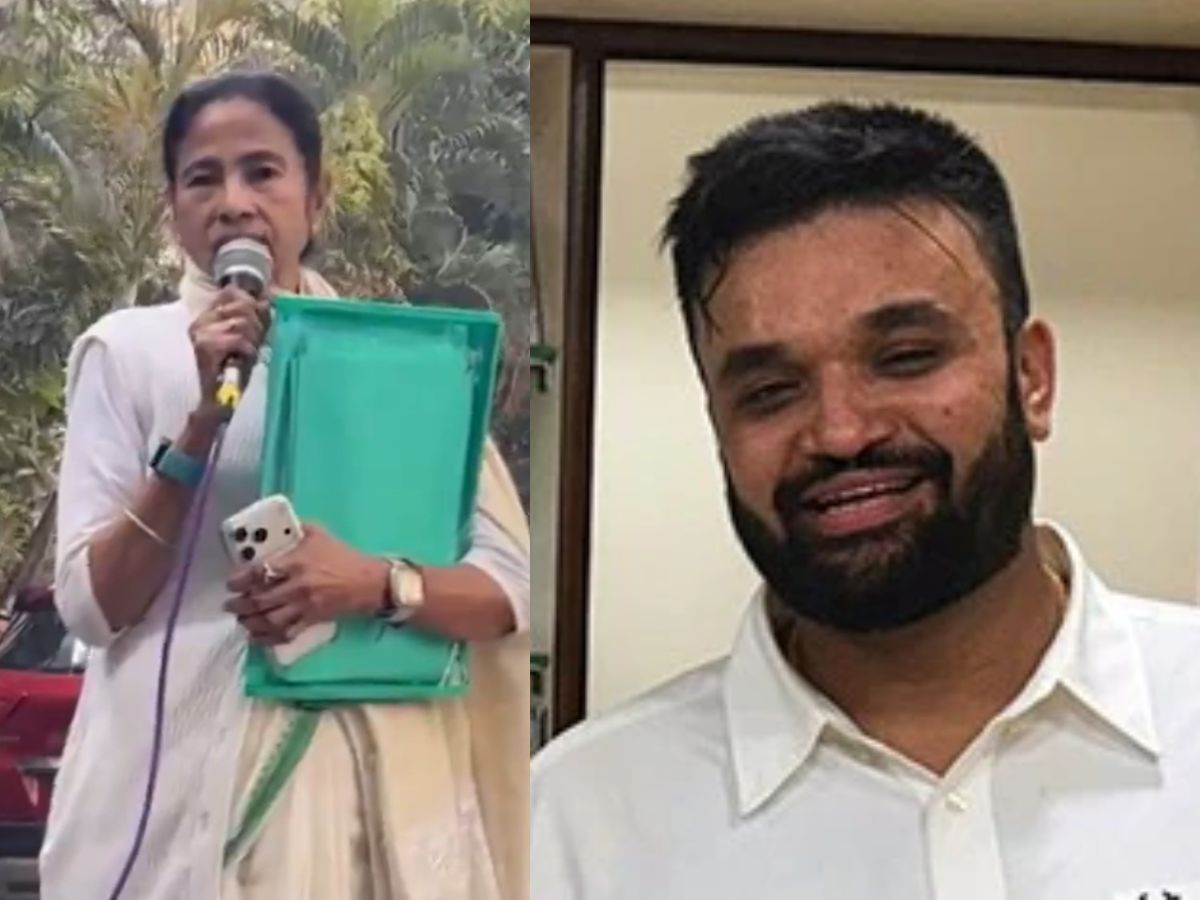
The ED on Wednesday raided the Kolkata residence, on the 11th floor of a Salt Lake building, Loudon Street, of Pratik Jain, co-founder of political consultancy firm IPAC, and its city office in connection with an alleged coal smuggling and money laundering probe.
The search operation turned political after West Bengal CM Mamata Banerjee arrived at Pratik Jain’s residence and accused the central agency of targeting her party, and claimed officials were trying to access internal Trinamool Congress documents.
With the state elections months away, the raids have triggered a fresh confrontation between the Central Government and the West Bengal government.
Who is Pratik Jain?
Pratik Jain is the co-founder and Director of the Indian Political Action Committee, better known as I-PAC. He is an alumnus of IIT Bombay. He built a reputation as a behind-the-scenes strategist.
Pratik Jain focuses on election planning, data analysis, and governance outreach. Under his leadership, I-PAC expanded its footprint across India. The firm advised multiple political parties and governments.
In West Bengal, I-PAC works closely with the Trinamool Congress. The firm supports grassroots engagement, campaign management, and policy feedback systems.
Why ED Raided I-PAC Offices?
ED officials linked the searches to a money laundering probe connected to an old coal smuggling case. The agency examined documents and digital data during the operation.
Officials also attempted to seize electronic devices as part of the investigation. Searches took place at multiple locations, including a trader’s office in Burrabazar. The ED has not issued a detailed statement on its findings so far.
Mamata Banerjee’s Sudden Visit Raises Questions
As the searches continued, West Bengal CM Mamata Banerjee arrived at Pratik Jain’s residence. The Kolkata Police Commissioner reached shortly before her. Her presence transformed a legal probe into a full-blown political flashpoint.
“This is most unfortunate that ED raided the house and office of our IT wing and its head. They are trying to collect all the information. I rang up Pratik, he is in charge of my party,” said Mamata Banerjee.
She came out holding a file and addressed reporters.
“I have collected the party file. ED is trying to get details of all our party activities and plans. They are trying to get the candidate list and our internal information. Is it the duty of ED and Amit Shah? See, I got this, the file and hard drive,” she said.
VIDEO | Kolkata: West Bengal CM Mamata Banerjee (@MamataOfficial) visits I-PAC Director Prateek Jain’s residence after an ED raid and says, “Is it the duty of Home Minister Amit Shah and the ED to take away all my party documents? If I go to the BJP party office, what will be the… pic.twitter.com/lRQOpKtVN4
— Press Trust of India (@PTI_News) January 8, 2026
Mamata Banerjee Attacks Centre & Amit Shah
Mamata Banerjee accused the Centre of political vendetta. She claimed central agencies were misused to target her party. “Unfortunately, our IT cell office was targeted in an attempt to seize all hard disks. This appears to be part of a planned political strategy,” she said.
She also attacked Union Home Minister Amit Shah, calling him a “nasty Home Minister”. “He cannot even protect the country. Enforcement agencies and the Home Ministry have failed to safeguard democratic institutions,” Banerjee added.
I-PAC Role in Bengal Politics
I-PAC maintains close coordination with senior bureaucrats. It works closely with TMC national general secretary Abhishek Banerjee and his office. The consultancy plays a role in candidate selection during Assembly elections. It remains active throughout campaign cycles.
Will This Affect Upcoming Bengal Elections?
The timing of these raids has raised questions about their impact on the 2026 West Bengal elections. Many political watchers believe the action could shift public focus and deepen mistrust between state and central authorities.
The Trinamool Congress has called this move central overreach and has vowed to fight the narrative both legally and politically. Conversely, opposition voices argue that law enforcement should be free to act without political interference.
This clash could energize voter debates on governance, transparency, and the role of federal agencies in state politics. Analysts are already watching public response closely, especially in rural and urban voter bases.
Political and Legal Repercussions
Experts say this case may set a precedent for how investigative agencies handle politically sensitive players in future elections. If the allegations result in strong evidence, it could prompt legal consequences for those implicated. If not, political backlash may grow against the central agencies.




