
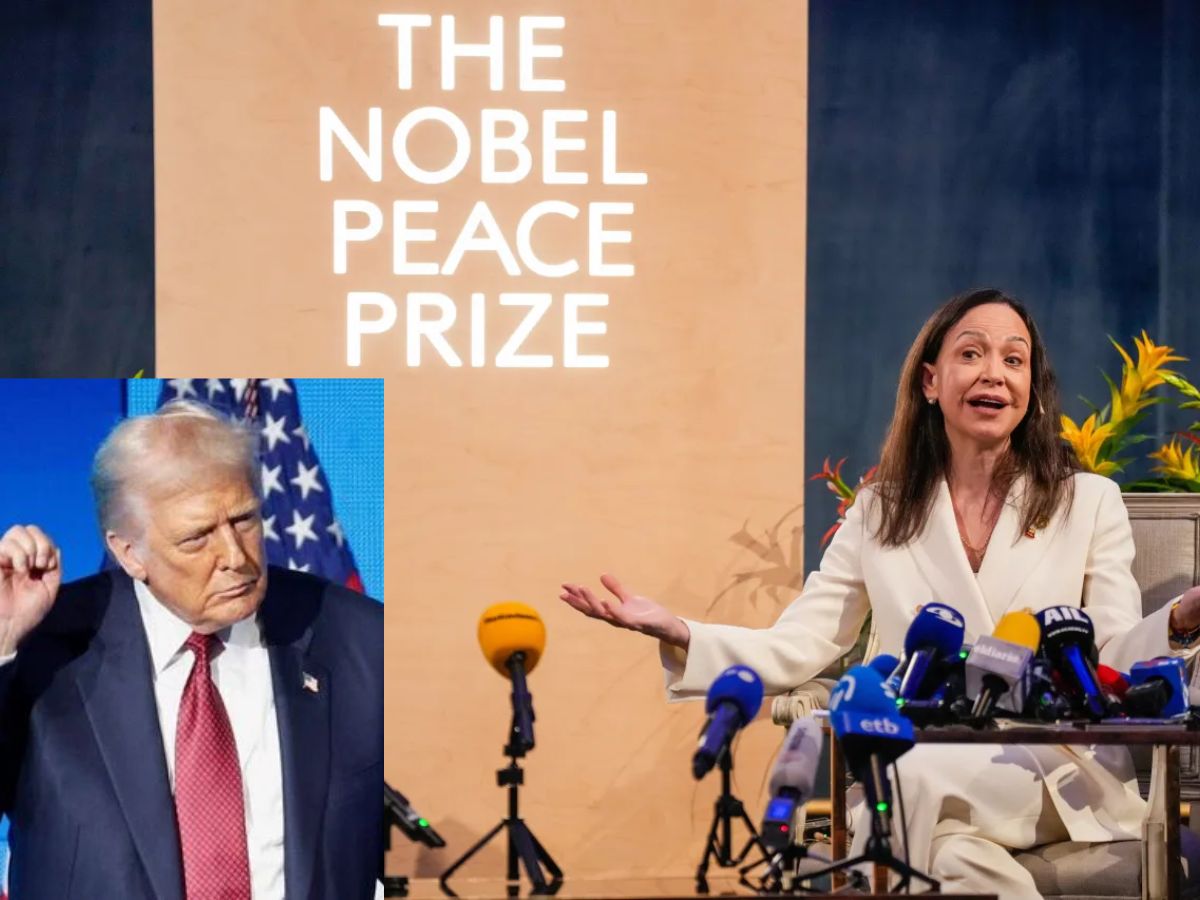
WASHINGTON, D.C., United States, January 9 —As President Donald Trump prepares to meet Venezuelan opposition leader María Corina Machado next week, his focus has turned to an unconventional diplomatic objective: her Nobel Peace Prize. This comes weeks after U.S. forces captured Nicolás Maduro and seized Venezuelan oil assets, raising questions about the ultimate motives behind the administration’s aggressive intervention.
What did Trump say about the Nobel Prize?
In a Fox News interview, President Trump confirmed he would meet Machado in Washington. He stated she intends to give him her Nobel Peace Prize, an offer he called a “great honour.” Trump has long coveted the award, telling host Sean Hannity, “I’ve stopped eight wars… I think it’s been a major embarrassment to Norway.” The Norwegian Nobel Institute immediately clarified that a prize cannot be transferred or shared once awarded.
How is this linked to US actions in Venezuela?
The meeting follows a series of decisive U.S. moves in Venezuela:
- President Nicolás Maduro was taken prisoner by the military on January 3, 2026, and deported to the United States.
- The seizure of 30-50 million barrels of sanctioned Venezuelan oil, with proceeds controlled by the U.S.
- Plans for U.S. oil firms to rebuild Venezuela’s energy infrastructure.
- Machado, awarded the Nobel in late 2025, praised Trump for Maduro’s capture and previously dedicated her prize to him.
What were the stated reasons for the intervention?
The administration’s explanation focused on national security and economic interests, not a peace award alone.
Energy Security: Trump said oil seizures were reclaiming assets taken from U.S. companies, aiming to lower global prices.
Counter-Narcotics: Maduro faces U.S. charges of drug trafficking and narco-terrorism.
Governance: Trump stated the U.S. would “run” Venezuela to rebuild it, dismissing the possibility of immediate elections.
Why does the Nobel narrative matter now?
The prize talk introduces a personal and reputational layer to the strategic intervention. It shifts some public focus from the material outcomes—oil and regime change—to a symbolic award for peacemaking. Analysts note it allows the administration to frame the operation as a humanitarian success globally, despite the complex aftermath on the ground. The Nobel Institute’s rejection of a transfer underscores the gap between political theatre and formal institutions.
FAQs
Q: Can María Corina Machado give her Nobel Prize to Donald Trump?
A: No. The Norwegian Nobel Institute states a Nobel Prize is non-transferable and cannot be shared or revoked after award.
Q: What did the US gain from seizing Venezuelan oil?
A: The U.S. controls 30-50 million barrels of oil and its sales proceeds, with stated aims of asset recovery for U.S. firms and lowering global oil prices.
Q: Why was Nicolás Maduro captured?
A: Maduro was captured in a U.S. military raid and extradited to face federal charges for drug trafficking and narco-terrorism.
Q: Is the US governing Venezuela now?
A: President Trump stated the U.S. would effectively “run” Venezuela indefinitely to rebuild the country, with no immediate elections planned.




