
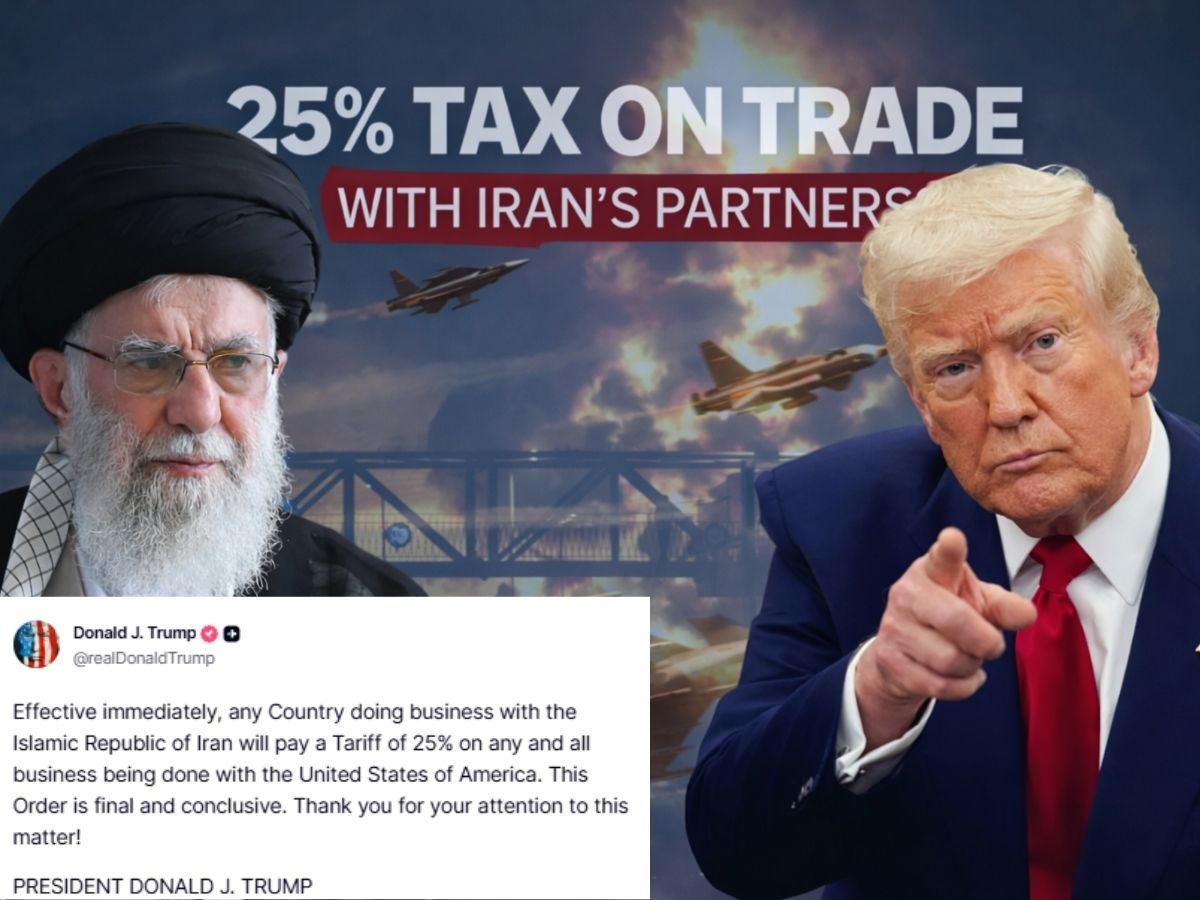
WASHINGTON, D.C., January 13 — President Donald Trump escalated global economic pressure on Iran, announcing the United States will impose an immediate 25% tariff on any country that conducts business with the Islamic Republic. The sweeping order, delivered via Truth Social, offers no details on enforcement or exemptions and risks upsetting major U.S. trading relationships worldwide.
What is Trump’s new tariff order on Iran?
In a Monday post on Truth Social, President Trump declared that any country doing business with Iran will be subject to a 25% tariff “on any and all business being done with the United States of America.” He stated the order is “final and conclusive” and “effective immediately.” The policy is designed to economically isolate Tehran amid a violent crackdown on protests that has reportedly killed at least 599 people.
Which countries could be affected by the tariff?
The order could impact a wide range of U.S. trading partners, as Iran maintains commercial ties with several major global economies. Important countries that have substantial trading ties with both Iran and the United States are:
- China
- India
- Turkey
- The United Arab Emirates (UAE)
The tariff threatens to disrupt complex global supply chains and diplomatic relationships, as these countries are forced to choose between access to the U.S. market and maintaining trade with Iran.
How will the 25% tariff be enforced?
The announcement lacked essential operational clarity. President Trump offered no details on enforcement, how “doing business with Iran” would be defined or monitored, or whether humanitarian items such as food and medicine or strategic goods would be exempt. The missing details have triggered uncertainty for international governments and companies.
Is the U.S. still talking with Iran?
Despite the aggressive economic move, Trump indicated diplomatic channels remain open. He told reporters on Air Force One that “Iran called, they want to negotiate,” confirming earlier reports of backchannel communications. However, he cautioned, “I may have to act before then,” linking potential further action—possibly military—to the ongoing protest crackdown. Iran had not immediately acknowledged Trump’s latest comments but has previously warned the U.S. and Israel would be “legitimate targets” if force is used.
What is the expected goal of this tariff policy?
The order marks a strong escalation of the “maximum pressure” campaign against Iran. By threatening heavy penalties on trading partners, it seeks to cut off the regime’s key sources of revenue. It also acts as a political signal of Trump’s willingness to deploy U.S. economic power alone to advance foreign policy aims, even if it fuels global trade tensions.
FAQ: Trump’s 25% Tariff on Iran’s Partners
Q: Does this mean the U.S. will charge 25% more on all imports from countries like India and China?
A: According to the order, yes—if those countries continue “any and all business” with Iran. However, the specifics of what triggers the tariff and how it will be applied are undefined.
Q: Can a country get an exemption?
A: Trump’s announcement did not mention any exemption process. This lack of clarity is a major point of concern for U.S. allies and trading partners.
Q: Is this linked to the protests in Iran?
A: Yes. The order intensifies economic pressure on Iran while the regime faces domestic unrest. Trump is linking the action with the possibility of military force and confirming that diplomatic talks are underway.




