
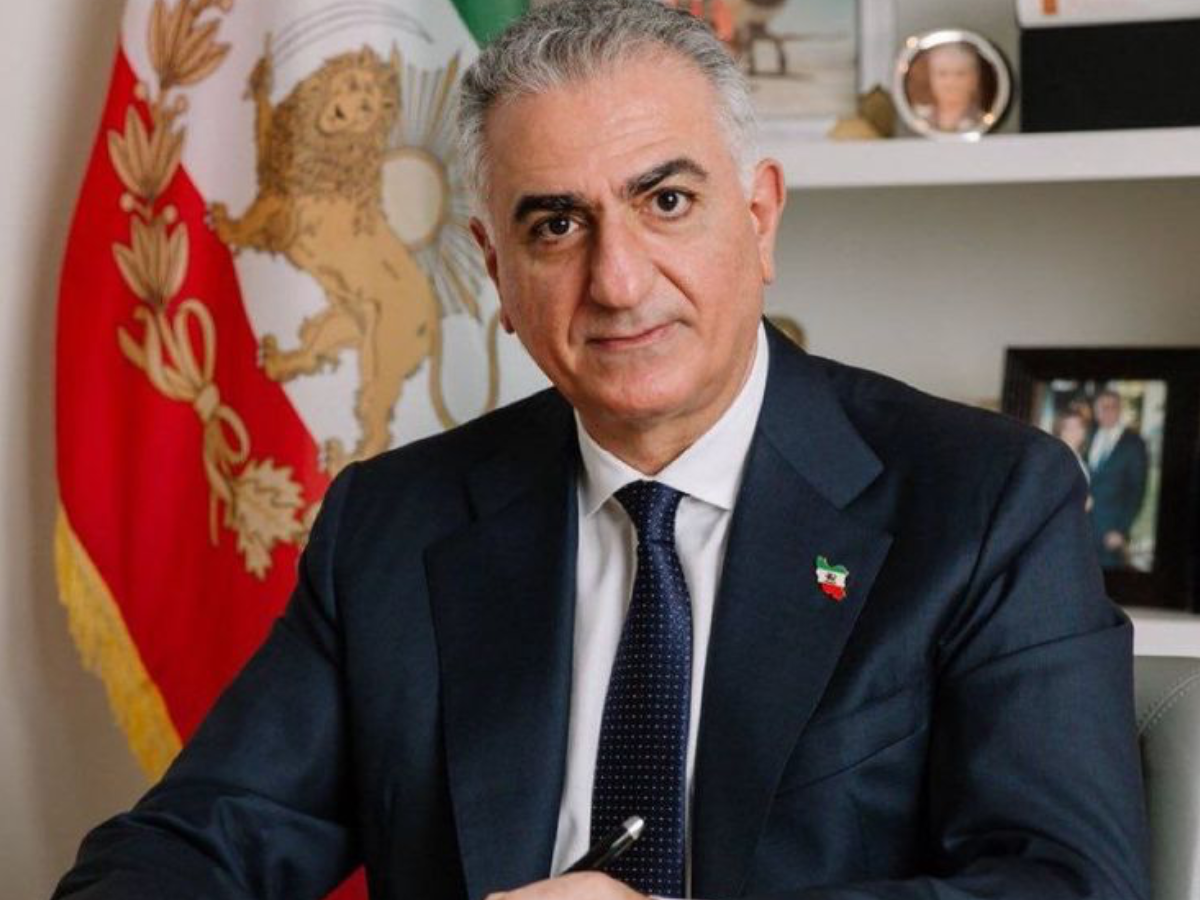
Iran’s crown prince in exile, Reza Pahlavi took the opportunity at a recent press conference to announce the strong historical bond between Tehran and the capital of India, New Delhi, speculating on how a democratic Iran might improve ties with India. Iran’s crown prince also made a daring prediction about the dissolution of the Islamic regime in Iran and advocated “surgical” strikes on select military targets in Iran to expedite the end of the Islamic government in the country.
Who is Reza Pahlavi
Reza Pahlavi is the eldest son of Mohammad Reza Shah Pahlavi, who ruled Iran until the 1979 revolution resulted in the end of the monarchy. He has lived in exile since he was young and has spent more than four decades outside his native Iran, which is now the primary residence, having lived in the United States. Throughout his life, he has played on his image as a proponent of a secular state and democracy while refraining from making a direct statement about his own possible return as a monarch. While his fans see his figure as an embodiment of an idealized pre-revolutionary Iran, his detractors tend to question his relevance within his own homeland.
What did Reza Pahlavi Say?
During a press conference in Washington, Pahlavi said, “The demise of the Islamic Republic is inevitable. The question is no longer if, but when it will happen.” According to reports, Iran’s establishment has been downplaying the whole situation and refers to the opposition movement as a foreign-sponsored riot. However, it is estimated that the opposition has claimed the lives of thousands of people. Talking to the media, Pahlavi contradicted the notion and maintained that the opposition is a grassroots movement. Interestingly, there have also been reports that Iranians themselves have been boycotting the Iranian establishment.
Pahlavi urges focused global backing for Iran’s protesters
In place of military action, Pahlavi has advocated strategic pressure, which, according to him, is concentrated and strategic. He lists sanctions targeting top commanders of the Revolutionary Guard Corps, diplomatic alienation of Tehran and more severe economic pressure. He also advocates the release of political prisoners and the establishment of internet access via satellite to help Iranians overcome the government organized blackouts.
In his opinion, if the world acts in time, it will help decrease the spilling of blood and bring about change for the better. In the absence of help, the regime will collapse, but there will be “a much higher human cost,” as stated by Pahlavi.
Reza Pahlavi praises India–Iran Civilizational ties
Reza Pahlavi described the relationship between Iran and India as an “historical partnership through and through.” Referring to the past decades of constant interaction between the two civilizations and the deep respect between them, Reza Pahlavi said that “a democratic Iran would see this relationship broaden into many fields like energy, technology and education.”
‘A New Chapter Awaits’: Why Reza Pahlavi Sees India as Central to Iran’s Post-Regime Future
In the wake of the current situation, however, there is talk of future alliances, and the mention of India has been common among the projections made by Pahlavi. The historical and civilizational linkages between Iran and India have been pointed out by him and Iran’s past exchanges with India, which go back several decades, have been remembered.
Iran’s new-found democracy would logically look towards alliances with those countries which value these principles and Iran could gain much from the strengths of India, which are its capability in technology and information technology.
“I Will Return, Islamic Republic Will Fall”: Iran’s Exiled Crown Prince Reza Pahlavi
Pahlavi has fallen short of claiming Iran’s next leader position, but he has clearly stated his intention of being involved in the transition process because he has the plan ready, which includes referendums for the Iranian people to decide the form of the new Iranian government they wish for Iran. Whether Iranians are behind the plan is to be decided, as some of the Iranians, the ones protesting, have allegedly chanted his name, while others are cautious of anyone connected with the former government of Iran. However, there is no denying the fact that the current unrest is the most widespread in Iran in years.
Exiled Crown Prince Reza Pahlavi Emerges as Leading Opposition to Khamenei
While Iran’s exiled Crown Prince and prominent opponent of Iran’s Supreme Leader Khamenei, Crown Prince Reza Pahlavi, has come into prominence as a vocal critic of Iran’s Islamic Government, his political motivations and goals remain to be understood properly.
Call for ‘Surgical’ action against Iran’s Revolutionary Guards
Pahlavi called for the global community to act selectively against Iran’s Revolutionary Guard rulers. He clarified that he did not want foreign occupation by the military but wanted specific action against the command structures that were suppressing people by violent means.
Pahlavi’s Vision of a democratic Iran aligned with India
Pahlavi said post-regime Iran would seek a partnership with countries that value sovereignty and freedom. He identified India as a natural ally because of its technological strength, democratic tradition and the potential role in rebuilding Iran’s economy.
What is India’s relationship with Iran?
Both Iran and the Republic of India have had a very complicated history with each other, influenced by their respective needs in the energy domain, politics and history. Iran had been one of the main suppliers of oil to the Republic of India, but US sanctions had reduced such transactions. Iran and the Republic of India had jointly developed some infrastructure such as the port in Chabahar, referred to as the gateway to Afghanistan and Central Asia. There are cultural and academic exchanges, and such forces in the region, in spite of political pressures. An Iranian politics changeover is bound to influence their relationship.




