
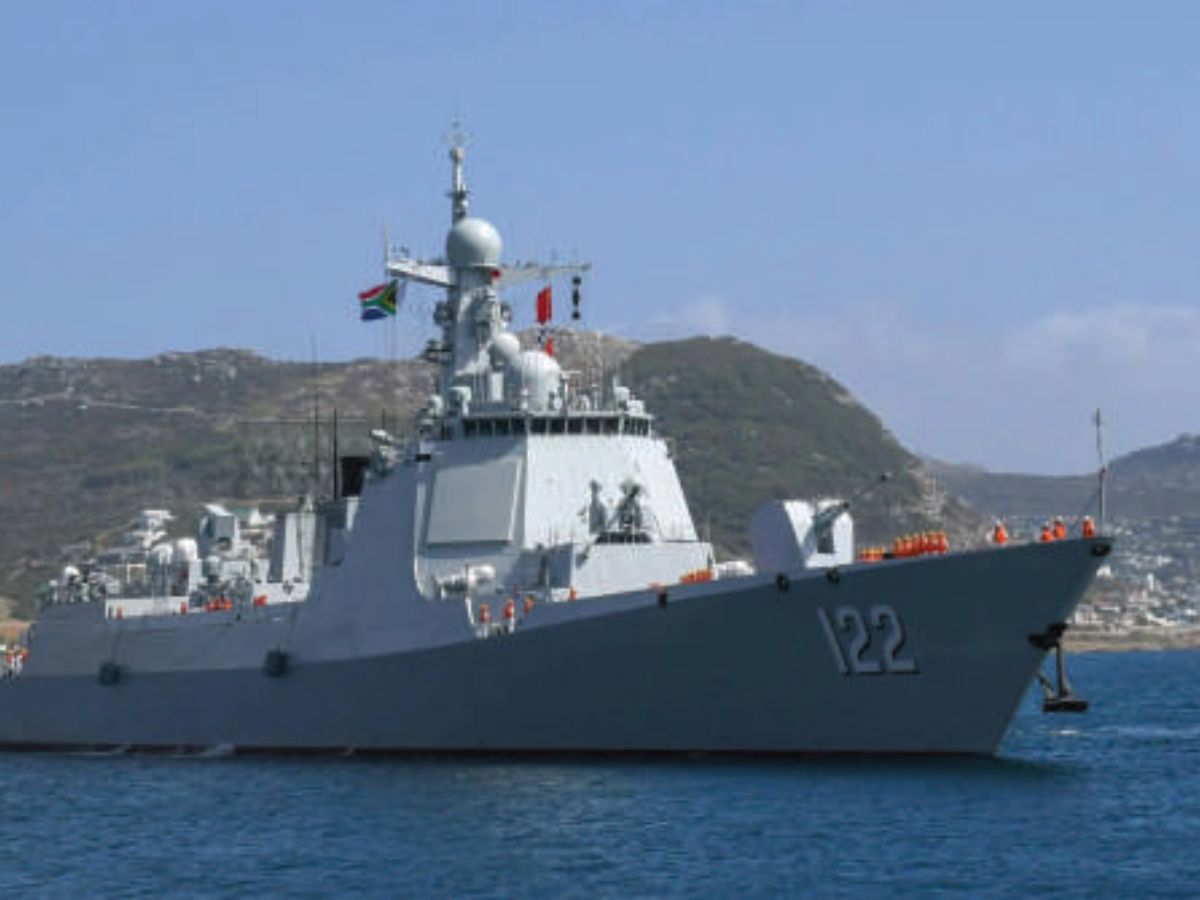
The “Will for Peace 2026” BRICS Plus naval exercises took place from January 9 to January 16, 2026, off the coast of Simon’s Town, South Africa. Despite holding the BRICS chair for 2026, India opted out, while other members like China, Russia, and the UAE participated. While India was formally invited by the host nation, South Africa, it made a “considered political decision” not to participate in these naval exercises. China led the drills, which included naval forces from Russia, Iran and the UAE. Brazil, Egypt, Ethiopia, and Indonesia attended as observers, whereas India declined even observer status.
The theme of the naval exercises was “Joint Actions to Ensure the Safety of Key Shipping Lanes and Maritime Economic Activities”. The drills focused on maritime security, counter-terrorism, anti-sea strikes, and search and rescue operations. The exercise was projected by the participants as a strategic engagement within the BRICS Plus framework to demonstrate a new model of security cooperation among Global South nations. The event sparked a debate in the West over South Africa’s “non-aligned” stance, particularly due to the involvement of sanctioned nations like Russia and Iran during a period of high global tension.
There were three main reasons behind India’s decision not to participate in these exercises. Firstly, despite recent diplomatic exchanges, India remains cautious about defence engagement with China, maintaining that political trust must precede deeper security cooperation following the 2020 Galwan Valley clashes. While diplomatic relations have seen slight improvements—including PM Modi’s meeting with Xi Jinping at the 2025 SCO summit—New Delhi remains cautious about military cooperation until there is a full return to pre-2020 troop positions along the Line of Actual Control (LAC). Despite some diplomatic improvements, troop positions along the Line of Actual Control (LAC) haven’t fully returned to pre-2020 levels, making deep defence cooperation with China difficult. India continues economic engagement with China, but tightly restricts military cooperation, viewing the naval drills as potentially too entwined with military aims.
Secondly, India has emphasized that BRICS was conceived for economic and development cooperation, not as a military alliance. As India holds the BRICS chair in 2026, it aims to keep the focus of its presidency on global institutional reform and economic development rather than military signalling. Therefore, India is resistant to attempts to transform the bloc into a security-focused organization.
Thirdly, participation in a China-led drill alongside Russia and Iran was viewed as a potential risk to India’s strategic autonomy and its complex relationship with the United States. India seeks to avoid being seen as part of an anti-Western military bloc, especially as the grouping increasingly features nations like Russia, China and that which are in direct confrontation with the United States.
Some critics feel that India missed out on understanding the tactics and capabilities of other navies (China, Russia, Iran, South Africa) in the exercise. However, India’s choice was pragmatic, prioritizing its strategic autonomy and managing complex relationships over immediate operational gains from the naval exercise. Moreover, despite skipping this multilateral drill, India continues to hold bilateral exercises with individual members, such as the Indra 2025 naval and the tri-services exercises with Russia held in late 2025.
Summing up, India’s decision not to join the recent BRICS naval exercise was a “considered political decision,” reflecting a strategy to keep military ties separate from economic engagement, especially with China, and to avoid aligning too closely with the grouping’s growing military focus, which contrasts with its original economic mandate. India’s decision was also based on existing security frameworks, balancing ties with the US and managing border issues. While participation could have offered some operational benefits, New Delhi preferred to restrict any defence cooperation with China until political breakthroughs occurred, preferring BRICS to focus on development rather than becoming a military bloc.
-
Prabhu Dayal is a retired Indian Ambassador.




