
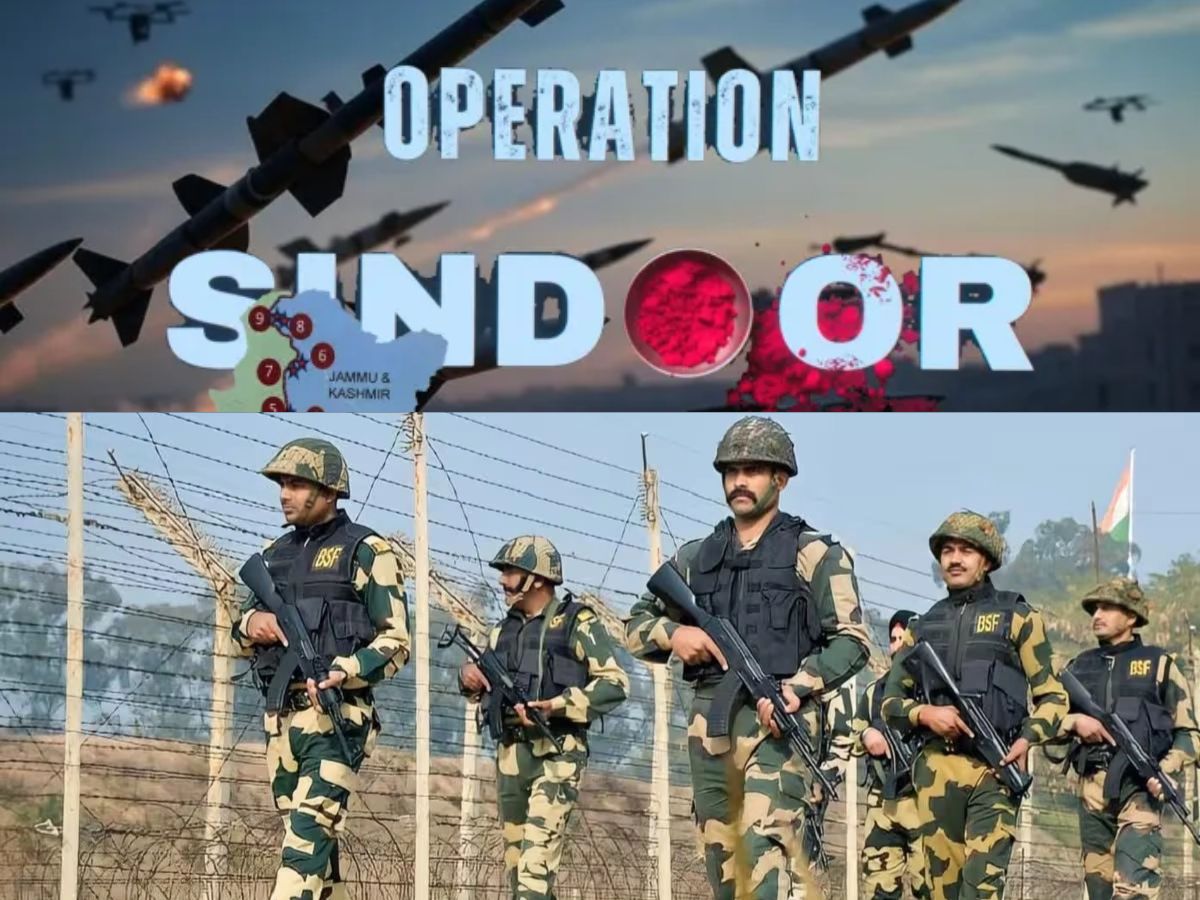
New Delhi: Indian intelligence agencies have flagged renewed organisational and operational activity by Pakistanbased terrorist groups, Lashkar-e-Taiba (LeT) and Jaish-e-Mohammed (JeM), less than seven months following Operation Sindoor, during which terror infrastructure and members linked to both groups were targeted by Indian Air Force.
According to intelligence inputs, both groups have resumed recruitment, training-related activity, rebuilding of the infrastructure that was destroyed by Indian missiles and movement of senior operatives across Pakistan and Pakistan-occupied Kashmir.
Intelligence inputs indicate that senior LeT leaders, Talha Saeed, Saifullah Kasuri, and Abdur Rauf stayed in Bahawalpur recently, which is the headquarters of the Jaish.
Inputs further state that Talha Saeed and Saifullah Kasuri met JeM chief Masood Azhar during their visit.
Third Eye OSINT & Analysis, a Telegram-based platform run by unidentified individuals, which has, in the past, published information assessed as having a high degree of accuracy, has also confirmed these details and found that LeT has resumed activity at its Markaz Taiba facility in Muridke. Video inputs state that structures damaged during Operation Sindoor have been reconstructed.
As per details gathered by them, a graduation ceremony for under-training LeT cadres was organised at the Muridke facility in January, in which scores of terrorists “graduated”, including a few who are a part of the close circle of Lashkar-e-Taiba chief, Hafeez Saeed.
According to inputs, senior LeT commander Nasr Javed has visited multiple locations in Pakistan-occupied Kashmir, including Mirpur, Kotli, and Poonch, to mobilise recruitment for upcoming training camps.
Independent intelligence shared with this newspaper by members of other Pakistan-based groups, similar recruitment-related activities have happened in Sindh and Khyber Pakhtunkhwa in the last two months.
These inputs also state that LeT and JeM cadres have received exposure to drone usage through training networks operating in Pakistan’s northwestern regions. Indian security agencies have also recorded multiple drone sightings near the Line of Control in recent months.
Security officials said the renewed and visible activity is being assessed not only for its operational implications but also for the messages it conveys.
According to officials, the activity signals to India that while Operation Sindoor caused damage to infrastructure, these two groups have now restored and resumed organisational functions.
Officials also noted that the recent activities serve as internal messaging within Pakistan-based terror networks, aimed at cadres and potential recruits, demonstrating continuity of leadership, training pipelines, and organisational presence which had taken a hit after Operation Sindoor.
At the institutional level, officials said the open nature of the activity indicates that the groups are operating within an environment where such actions are tolerated and welcomed.
Officials further said that the timing and visibility of these developments should also be viewed in the context of the international environment, including regional and global dynamics.




