
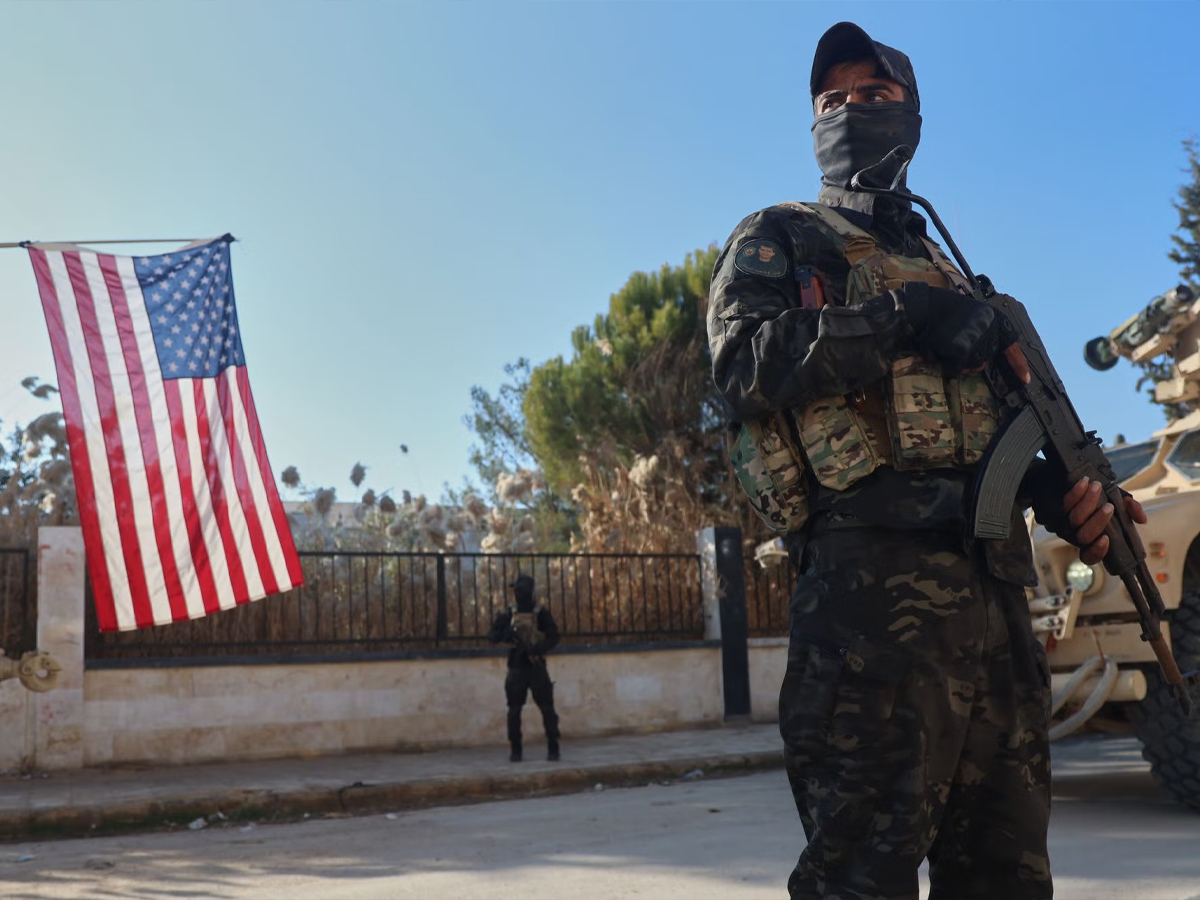
The US forces have killed Bilal Hasan al‑Jasim, a militant leader affiliated with Al‑Qaeda who was directly connected to an Islamic State (ISIS) ambush attack that killed American personnel in Syria last month, the United States Central Command (CENTCOM) said.
The strike on Friday in northwest Syria forms part of a wider counter‑terror campaign following the deadly incident near Palmyra.
What Happened in the US Strike?
In the January 16 operation, U.S. forces targeted and killed Bilal Hasan al‑Jasim, whom CENTCOM described as an “experienced terrorist leader” with direct ties to the ISIS gunman responsible for the December 13 ambush. The strike was conducted as part of ongoing operations to prevent future attacks on American and allied forces in the region.
— U.S. Central Command (@CENTCOM) January 17, 2026
CENTCOM commander Admiral Brad Cooper stressed the significance of the action. “The death of a terrorist operative linked to the deaths of three Americans demonstrates our resolve in pursuing terrorists who attack our forces,” he said. “There is no safe place for those who conduct, plot, or inspire attacks on American citizens and our warfighters. We will find you.”
Who was Bilal Hasan al‑Jasim?
Bilal Hasan al‑Jasim was a militant with direct affiliations to Al‑Qaeda and operational links to ISIS fighters, according to U.S. military statements. CENTCOM described him as a seasoned leader who planned and plotted attacks against American and partner forces in Syria.
While detailed biographical information about al‑Jasim remains limited, officials emphasized his operational role in coordinating violent actions that threatened U.S. personnel and regional stability.
2025 Palmyra Ambush that Triggered Retaliation
The strike that killed al‑Jasim was justified by U.S. authorities as a direct response to the December 13 attack in Palmyra, Syria, where an ISIS‑linked gunman launched an assault on American and Syrian forces. Two U.S. service members — Sgt. William Nathaniel Howard and Sgt. Edgar Brian Torres‑Tovar and their American interpreter, Ayad Mansoor Sakat. Several other U.S. and Syrian personnel were wounded in the ambush.
The attack marked one of the deadliest incidents involving U.S. troops in Syria in recent years and prompted a forceful operational response.
Operation Hawkeye Strike: The US Counter‑Terror Campaign
In the aftermath of the ambush, the United States launched a series of retaliatory strikes across Syria under an operation dubbed Operation Hawkeye Strike. CENTCOM reports that the campaign has targeted more than 100 ISIS infrastructure and weapons sites using precision munitions, as part of an effort to degrade militant capabilities and prevent further attacks.
This broader military effort reflects a sustained commitment by the U.S. and partner forces to disrupt extremist networks and remove key leaders connected to deadly actions against American and allied personnel.
International and Regional Context
The operation against al‑Jasim comes amid continued instability in Syria, where U.S. forces and allied troops maintain counter‑terrorism missions. The U.S. has also worked alongside local and regional partners to pursue militants beyond ISIS and Al‑Qaeda, aiming to reduce the risk of future violent strikes.
President Donald Trump and senior defense officials have consistently vowed that those responsible for attacks on U.S. personnel will be held accountable, emphasizing that American forces remain committed to protecting their troops and citizens abroad.
What This Means for US Forces in Syria
The killing of Bilal Hasan al‑Jasim signifies a targeted effort to dismantle militant leadership connected to direct threats against American military members.
CENTCOM’s statements reaffirm that the United States will aggressively pursue extremist operatives wherever they may be present, reinforcing the message that attacks on U.S. forces will lead to decisive responses.




