
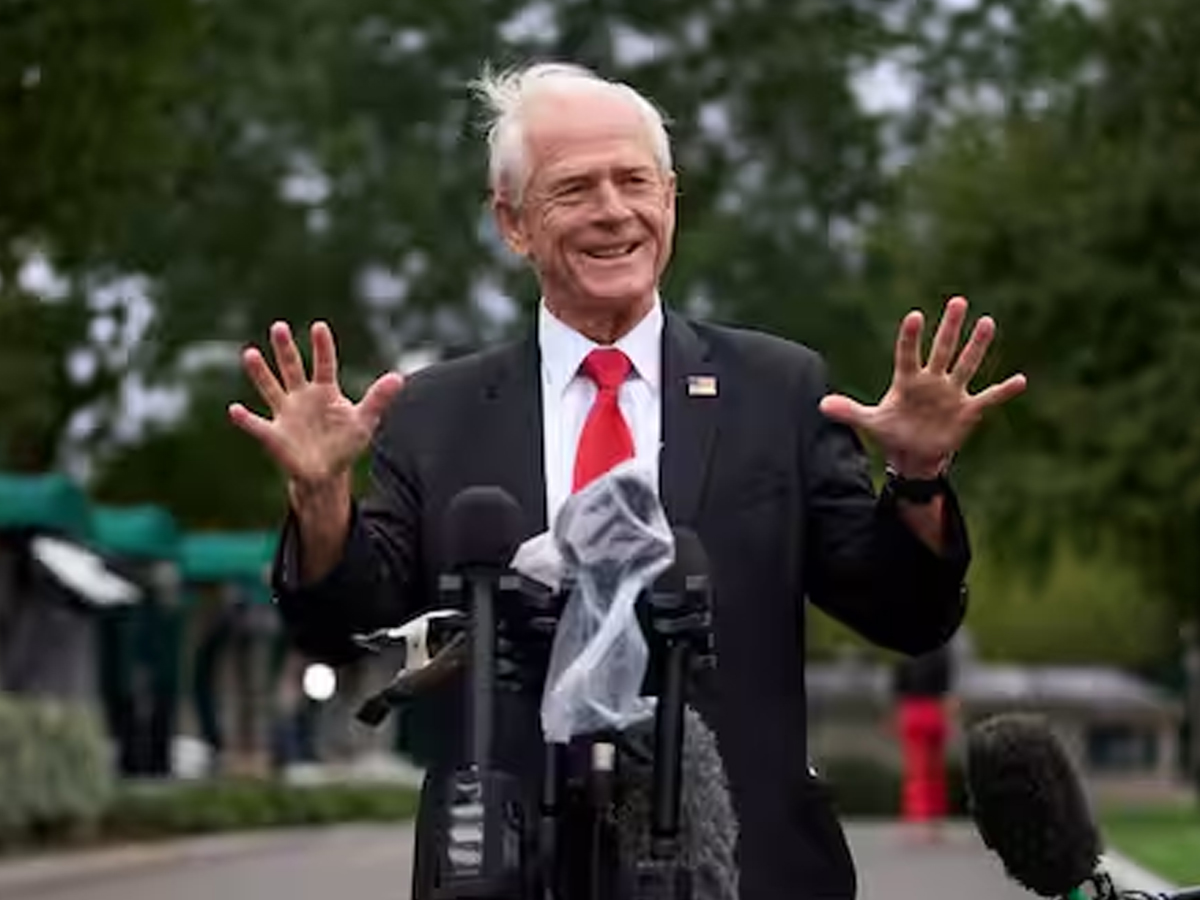
White House senior trade adviser Peter Navarro has once again drawn global attention with a sharp critique aimed at India, this time focusing on how American resources are used to support artificial intelligence (AI) services accessed by users abroad.
Navarro’s remarks come amid ongoing disagreements between Washington and New Delhi over trade policies and tariffs.
What Peter Navarro Said About AI and India
In a recent interview on Real America’s Voice with former White House strategist Steve Bannon, Navarro raised a question that has since gone viral, “Why are Americans paying for AI in India?”
He argued that platforms such as OpenAI’s ChatGPT operate on US soil and use American electricity, yet they serve millions of users in countries like India and China. Navarro described this situation as a problem that needs to “be dealt with”, suggesting that the use of American energy to power global AI demand could have economic consequences for US consumers.
Why This Issue Matters for US Tech and Power Costs
Navarro didn’t just question AI usage; he tied it to rising electricity costs at home. He said the rapid expansion of AI data centres—many based in the United States—is driving up power demand and affecting local consumers. According to Navarro, a significant portion of that electricity is being used to serve international users, including those in India.
He hinted that the Trump administration could consider policy action to address these concerns, although no specifics have yet been outlined.
Ongoing US-India Trade Frictions
Navarro’s comments come against a backdrop of strained trade relations between the United States and India. The Trump administration imposed steep 50 percent tariffs on Indian imports as a response to New Delhi’s continued purchase of Russian oil, arguing that such purchases indirectly support Moscow’s war efforts. India, however, has defended its actions as based on energy security and global market conditions.
The trade impasse has stalled broader negotiations and widened disagreements over tariffs, manufacturing policies, and market access. Navarro has been a particularly vocal critic, describing India as having high tariff barriers and accusing it of being a difficult negotiating partner.
Navarro’s Past Controversial Remarks on India
This is not the first time Navarro’s comments have sparked diplomatic tensions with India. In previous interactions, he has criticised New Delhi’s trade policies and energy decisions, at times using sharp language that drew official rebukes from Indian authorities.
In 2025, Navarro faced widespread pushback after describing India’s Russian oil purchases in terms that Indian officials called “inaccurate and misleading.” New Delhi’s Ministry of External Affairs dismissed the remarks as unhelpful to the bilateral relationship.
India’s Response to Navarro’s Statements
In response to Navarro’s history of critical commentary, India has repeatedly rejected such assertions, stating that they undermine mutual respect and ignore the strategic and economic imperatives guiding New Delhi’s decisions. Officials stressed that trade and energy policies are shaped by global realities rather than unilateral preferences.
Indian diplomats have also highlighted that platforms like AI services are global by design, serving users worldwide in a digitally interconnected economy, making debates over geographic usage and cost more complex than simple bilateral issues.
What This Debate Means Going Forward
Navarro’s latest remarks intensify an ongoing debate about the balance between domestic resource use and international digital service provision. As AI platforms expand globally, questions about infrastructure costs, energy demands, and how nations benefit from shared technology stacks are likely to continue.
For US-India relations, the controversy underscores broader tensions over trade, technology, and geopolitical alignment—issues set to remain at the centre of diplomatic and economic discussions in the months ahead.




