
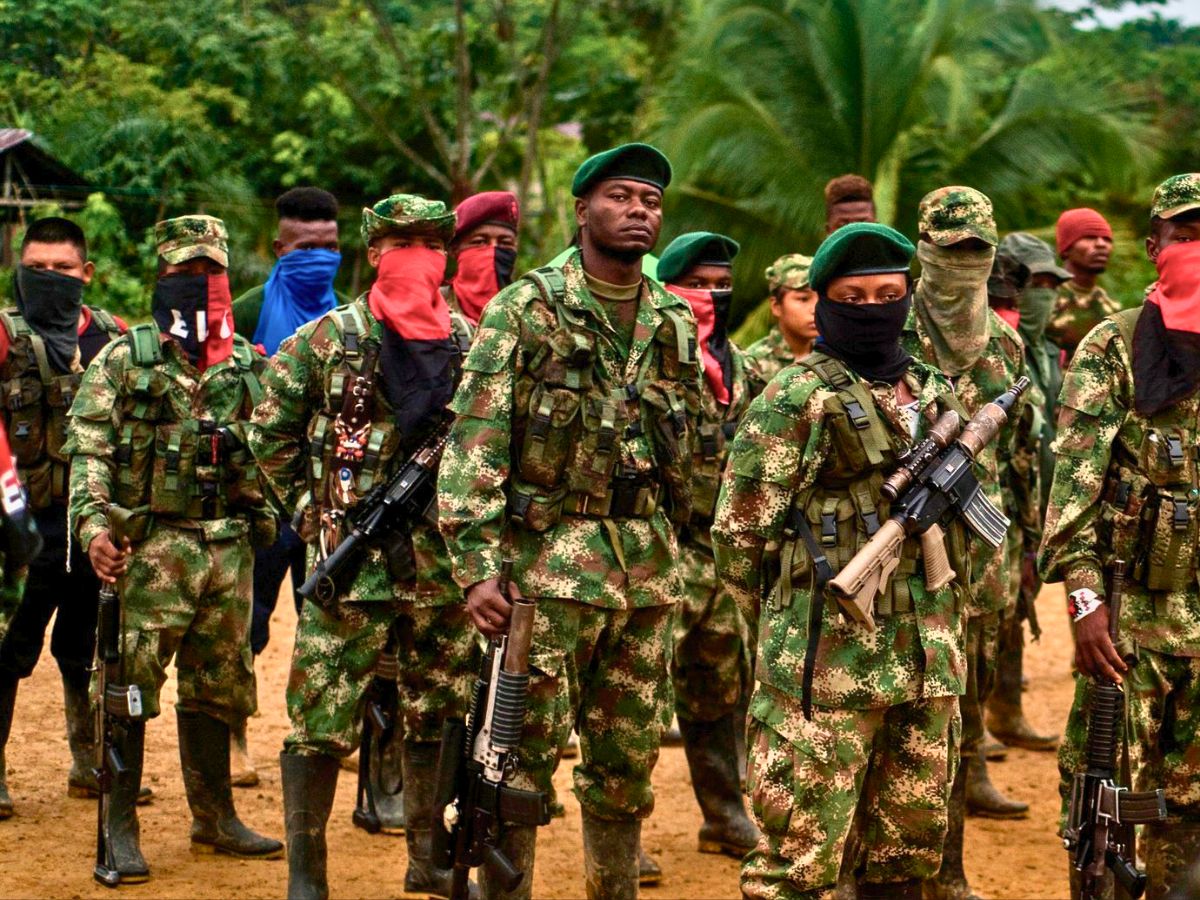
At least 27 members of a guerrilla group were killed in fierce clashes with a rival faction in southwestern Colombia, military officials reported on Sunday. The violence broke out in the remote Guaviare department, a dense jungle area that remains a stronghold for illegal armed groups and drug traffickers.
The rival factions stem from the Revolutionary Armed Forces of Colombia (FARC) and have increasingly turned on each other in recent months. The clashes mark one of the deadliest internal confrontations among dissident forces in recent years.
Colombia: Where the Violence Took Place?
The violence occurred in the rural municipality of El Retorno, about 300 kilometres southwest of Bogota. The area is dense jungle and a strategic transit route for cocaine production and trafficking, making it highly valued by armed groups involved in the drug economy.
Guaviare’s isolated terrain makes government oversight difficult, and dissident factions have long battled for territory and influence in the region.
Colombia: Why the Conflict Happened Between Guerrilla Groups?
The clashes erupted due to internal divisions within what used to be a unified dissident guerrilla force. Both sides were once part of the Central General Staff, a faction formed by former FARC fighters who rejected the 2016 peace deal. However, disagreements over leadership and control of territory split the group in April 2024.
One faction is led by Nestor Gregorio Vera, alias Ivan Mordisco, and the other by Alexander Díaz Mendoza, alias Calarca Cordoba. Both groups now vie for control of the lucrative jungle territory, which is linked to coca cultivation and trafficking.
The fight reflects deeper strains among dissidents who have rejected formal peace processes and continue to operate outside state control.
Colombia: Cocaine Trafficking Routes at the Centre of the Deadly Violence
The clashes in Guaviare were driven by a fight for control over key cocaine production and trafficking routes. The jungle region serves as a crucial corridor for moving coca paste and processed cocaine from remote areas to larger trafficking networks.
Armed groups operating in the region depend heavily on these routes for funding. Control over them means access to money, weapons, recruits, and influence. This has made Guaviare a long-standing flashpoint for rival guerrilla factions.
Military sources say both groups were attempting to dominate territory used for drug movement and the protection of illegal operations. The breakdown of unity within the former FARC dissident structure intensified the rivalry, turning internal disputes into violent confrontations.
Despite ongoing peace talks with one faction, the competition for drug routes has continued to fuel bloodshed. The violence highlights how Colombia’s drug economy remains a major obstacle to lasting peace, even years after the original FARC peace deal.
Colombia: Who the Factions Are & Their Goals?
- Ivan Mordisco’s faction: Maintains a hardline stance and continues armed activities despite government ceasefires.
- Calarca Cordoba’s faction: Is currently in peace talks with President Gustavo Petro’s government, seeking a negotiated settlement to end years of violence.
Both factions broke from the main dissident group that rejected the 2016 peace deal, which allowed roughly 13,000 former FARC fighters to disarm and reintegrate into society.
Colombia: How the Violence Unfolded?
Military sources said the clashes were intense and among the most violent in recent months. All of the reported fatalities belonged to Vera’s faction, according to anonymous military officials. A leader from Mendoza’s group confirmed the number of dead.
The fighting underscores the ongoing instability in parts of Colombia where armed groups continue to operate and resist state presence.
Colombia: Impact on Local Communities
While exact displacement figures are not yet available, tensions between dissident factions have previously forced thousands of residents in parts of Guaviare to flee or remain confined to their villages. These skirmishes also disrupt local access to food, education, and medical services.
Human rights groups have warned that civilian safety remains at risk in regions where armed groups fight over territory, and few preventive measures have been taken despite early warnings of possible clashes.
Colombia: Peace Efforts & Government Response
The conflict highlights the fragile state of Colombia’s peace process. While some dissident groups are in dialogue with the government, others reject negotiations and continue hostilities. This dual approach has complicated efforts by President Gustavo Petro to achieve “total peace,” a policy aimed at ending decades of internal conflict.
Despite the peace talks, sporadic violence has persisted, and clashes like this one underline the challenges the government faces in extending security and governance to remote rural areas.
Colombia: What Ongoing Rebel Violence Means for Civilians?
Security forces are likely to investigate the clash further and monitor dissident activity in Guaviare. The deaths of dozens of guerrilla fighters may fuel further tensions among armed groups, particularly over control of territory tied to coca routes and illegal mining.
As Colombia continues its long struggle with internal conflict rooted in drug trafficking, illegal mining, and political fragmentation, the situation in regions like Guaviare shows that sustainable peace remains elusive.




