
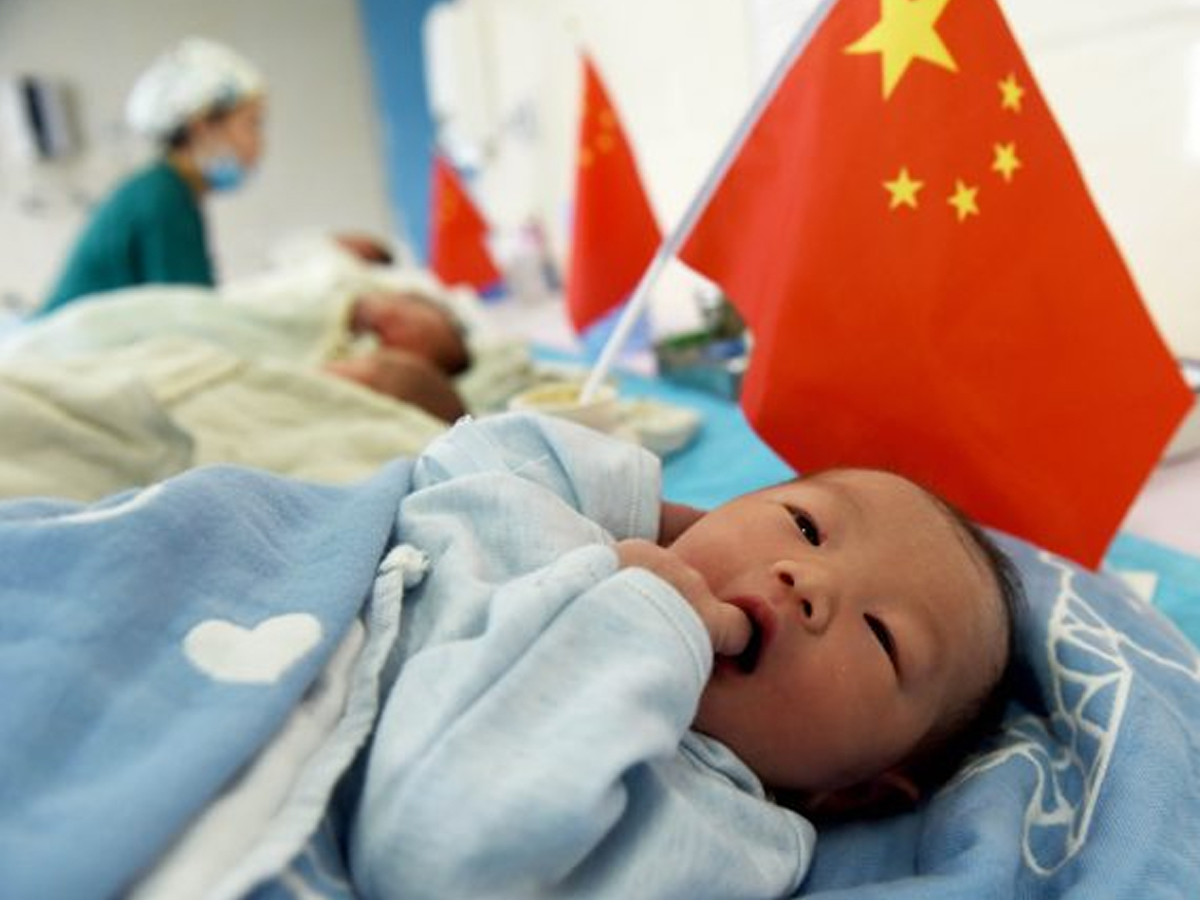
China’s demographic crisis has entered a more serious phase, as new official data shows that China’s birthrate fell to its lowest level since 1949, underlining the scale of the challenge facing Beijing despite aggressive efforts to persuade couples to have more children. The numbers highlight a growing disconnect between government policy and social reality in the world’s second-largest economy.
According to the latest figures released by the National Statistics Bureau, China recorded just 5.6 births per 1,000 people last year. This is the lowest level since the founding of the People’s Republic. Around 7.9 million babies were born nationwide, a sharp decline compared to the previous year and far below what demographers say is needed to stabilise the population.
China’s Birth Rate Hits Historic Low
The new data paints a stark picture of China’s population trajectory. The country’s total population shrank by 3.4 million in a single year, the largest annual drop in decades, bringing the population down to 1.405 billion.
This decline marks a turning point. For decades, China relied on a massive workforce to drive economic growth. Now, fewer births mean fewer workers in the future, increasing pressure on productivity, public finances, and long-term growth prospects.
CHINA’S BIRTHRATE HITS RECORD LOW
China’s birthrate fell in 2025 to its lowest level since 1949, underscoring deepening demographic pressures despite new government incentives to boost fertility.
Births dropped to 5.6 per 1,000 people, with newborns falling by 1.6 million to… pic.twitter.com/LYrFwsULnc
— *Walter Bloomberg (@DeItaone) January 19, 2026
Demographers warn that once fertility falls this low, reversing the trend becomes extremely difficult, even with strong government intervention.
Why China’s Population Is Shrinking So Fast
Several factors are driving the decline. Rising living costs, expensive housing, long working hours, and job insecurity have made young people reluctant to marry or start families. Many couples cite the high cost of education and childcare as major deterrents.
Social attitudes have also shifted. Younger generations increasingly prioritise personal freedom, career stability, and financial security over traditional expectations of marriage and parenthood.
The lingering effects of past population control policies have further compounded the issue. Decades of strict birth limits reshaped family structures and attitudes, leaving a long-lasting impact that policy reversals have struggled to undo.
Xi Jinping’s Push for a ‘Fertility-Friendly’ Society
President Xi Jinping has made population revival a national priority. His administration has rolled out a series of pro-natalist policies aimed at encouraging families to have more children.
These measures include extended maternity and paternity leave, simplified marriage registration, and direct financial incentives for parents. Couples now receive about $500 a year for each child under the age of three born on or after January 1, 2025.
In a controversial move, the government has also imposed a 13% value-added tax on contraceptive drugs and devices, including condoms and morning-after pills, for the first time. Officials argue that the policy aligns with broader efforts to promote childbirth.
Why Financial Incentives Are Not Working?
Despite these initiatives, birth numbers continue to fall. Experts say cash incentives alone are unlikely to offset the deep structural issues discouraging childbearing.
Many families argue that modest subsidies do little to ease the long-term financial burden of raising children in urban China, where housing, education, and healthcare costs remain high.
Workplace culture also plays a role. Long hours and limited job security make it difficult for parents—especially women—to balance careers and family life, even with expanded leave policies.
Economic Risks of an Ageing China
China’s demographic shift carries serious economic consequences. As the population ages, the worker-to-retiree ratio continues to shrink, putting strain on the country’s already underfunded pension system.
A smaller workforce could slow economic growth, weaken consumer demand, and reduce China’s competitiveness in global markets. The government may face difficult choices, including higher taxes, later retirement ages, or increased public spending on elderly care.
What Comes Next for China’s Demographic Crisis
The record-low birthrate signals that China’s population decline is no longer a distant threat—it is already underway. While Beijing continues to refine its policies, analysts warn that reversing the trend will require deeper reforms, including affordable housing, childcare support, and changes to workplace culture.
Without structural change, China may struggle to persuade younger generations that starting a family is compatible with economic security and personal freedom. The latest figures suggest that time is running out.




