
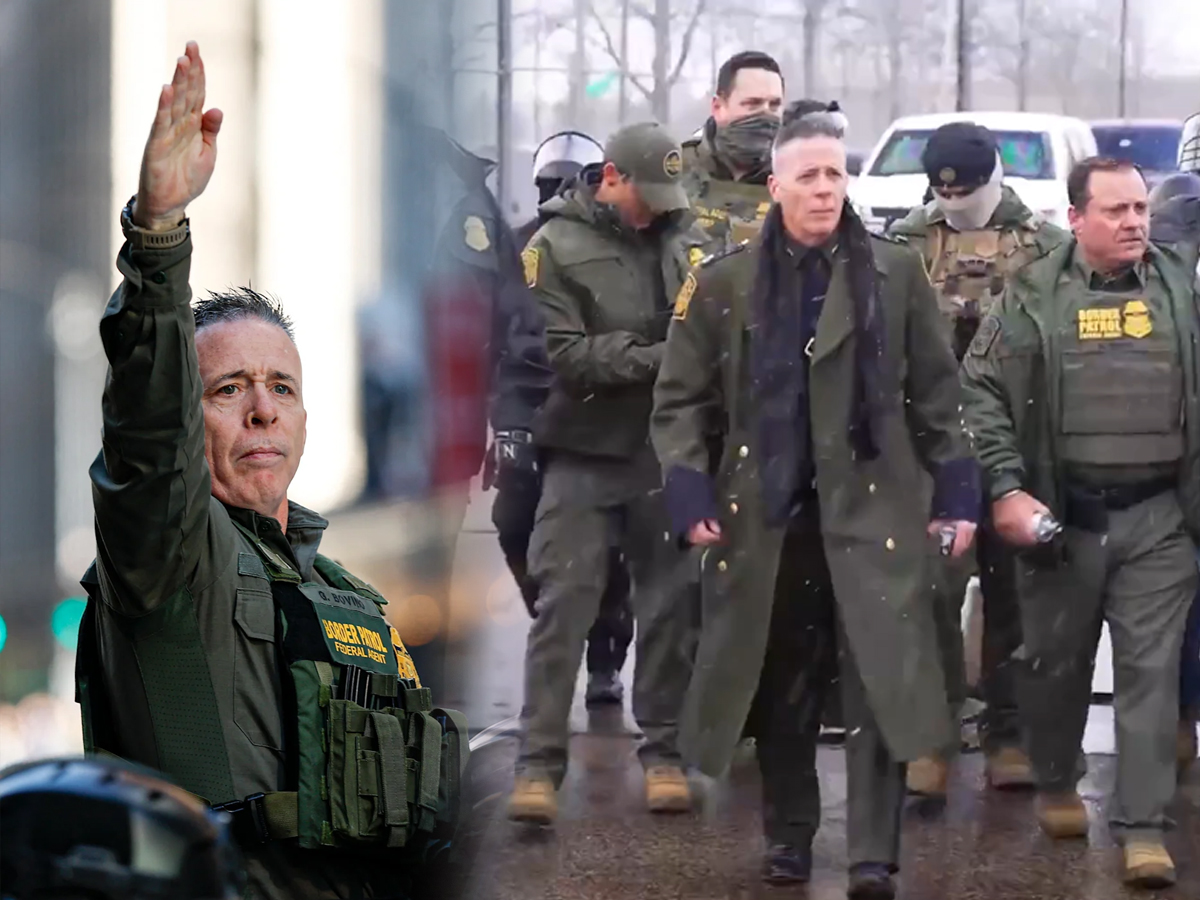
A dramatic video released by the US Department of Homeland Security (DHS) has triggered fierce backlash after critics accused it of echoing fascist imagery at a time when federal immigration enforcement is under intense legal and political scrutiny. The video, featuring Border Patrol commander Gregory Bovino, appeared online just as a federal judge tightened oversight of his operations in Chicago.
The slick montage shows Bovino stepping out of Chicago’s federal courthouse in a long black trench coat, paired with a stark black-and-white portrait and bold text declaring “WE WILL NOT BE STOPPED.” Set to a high-energy remix of Coldplay’s Viva La Vida, the video immediately drew comparisons to Nazi-era propaganda, igniting outrage across social media and among Democratic leaders.
Gregory Bovino, Trump’s Border Patrol Chief, appeared at the Minneapolis protests with officers.pic.twitter.com/3UikXFCrfv
— Clash Report (@clashreport) January 17, 2026
Why the DHS Video Sparked Nazi Imagery Accusations
Critics said the video’s visual style—dark uniforms, rigid posture, and dramatic music—mirrored authoritarian aesthetics. Online users flooded platforms with memes likening Bovino to Nazi officers, with some calling it “Munchkin Himmler” and others referencing “Schindler’s List vibes.”
California Governor Gavin Newsom amplified the criticism, reposting the video and writing, “If you think the calls of fascism… are hyperbole, pause and watch this video. They aren’t even trying to hide who they are.”
DHS rejected claims that the video intentionally referenced Nazi symbolism, saying Bovino wore a standard uniform. However, an old social media post attributed to him—“Serve your country! Defend your culture!”—added fuel to the controversy.
LITERALLY cosplaying a SS officer.
History will not be kind to this regime. pic.twitter.com/s54XNkB7Pl
— Earth Hippy 🌎🕊️💚 (@hippyygoat) January 17, 2026
One widely shared post quoted Auschwitz survivor Karl Stojka, drawing parallels between ordinary men in uniform and historical atrocities:
“It was not Hitler or Himmler who abducted me, beat me, shot my family. It was the shoemaker, the milkman, the neighbor, who received a uniform and then believed they were the master race.”
Who Is Gregory Bovino?
Bovino, 55, has served in the Border Patrol since 1996, with postings in El Paso, Yuma, Blythe, New Orleans, and El Centro. A graduate of Western Carolina University, he rose through the ranks and now holds a high-profile national command role.
Supporters praise his tough approach, while critics argue that his public persona and DHS messaging reflect a broader shift toward aggressive, polarising enforcement optics.
Court Orders Oversight After Chicago Raid Injuries
The video emerged the same day US District Judge Sara Ellis ordered Bovino to make daily 6 p.m. court appearances. The judge demanded detailed force reports after agents used chemical rounds and pepper balls near a family parade, injuring a 67-year-old US citizen who suffered broken ribs.
Ellis sharply questioned why officers treated children attending a Halloween-themed parade as potential threats. She ordered body-camera footage and operational records to be submitted, intensifying scrutiny of Operation Midway Blitz, the DHS-led enforcement campaign in Chicago.
Protests, Politics, and Trump’s Immigration Push
Protests erupted across Chicago after the weekend raids, with residents accusing federal agents of creating panic in residential neighborhoods. Illinois Governor J.B. Pritzker condemned the tactics, saying enforcement should not terrorize families or children.
An appeals court later paused the judge’s requirement for daily briefings, citing concerns of “irreparable harm” to enforcement operations. Still, public pressure continues to mount.
The crackdown aligns with President Donald Trump’s renewed immigration push, overseen by DHS Secretary Kristi Noem, which aims to expand raids in major cities following similar operations in Los Angeles.
Why the Backlash Matters
The controversy highlights growing unease over how immigration enforcement presents itself to the public. As images of tear gas-filled streets and injured civilians circulate, critics argue that style and symbolism now matter as much as policy.
With court scrutiny intensifying and political tensions rising, the fallout from the DHS video suggests that Gregory Bovino’s enforcement tactics—and the imagery used to defend them—will remain under a harsh spotlight in the weeks ahead.




