
The Supreme Court of India has resumed hearings today on a critical environmental and legal battle over how the Aravalli range should be defined, a case that has stirred widespread public protest and ecological concern.
A bench led by Chief Justice of India Surya Kant took up the matter after putting its own controversial November order in abeyance, and has now asked for fresh expert inputs before issuing fresh directions.
The court’s decision to revisit its earlier definition follows extensive criticism that the 100-metre height criterion accepted last year could undermine protections for vast stretches of the ancient mountain system that serves as a key environmental buffer in North India.
What Triggered Today’s Supreme Court Hearing on Aravalli?
The Supreme Court is hearing the case today after public outrage and petitions against a height-based definition of the Aravalli range triggered judicial scrutiny. Last year, the court had accepted a definition, used by a government-constituted committee, that considered only landforms of at least 100 metres above local ground as part of the Aravalli Hills.
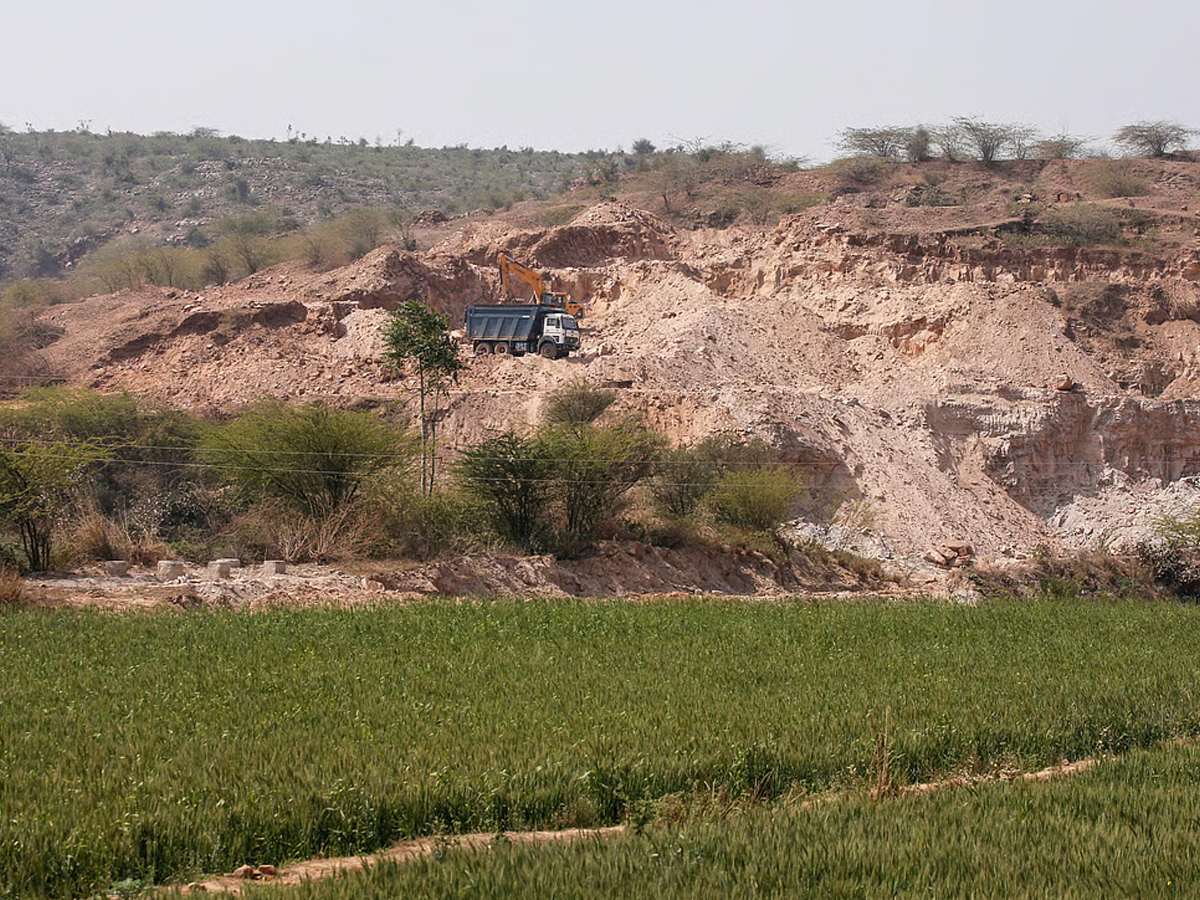
Environmental groups and activists argued this threshold overlooked many lower but ecologically vital hills, hillocks, and ridges that historically formed the heart of the Aravalli ecosystem. Critics caution that excluding these parts could open them up to mining and development.
In response, the Supreme Court in December put its own ruling on hold and articulated the need for a clearer, scientifically sound definition. That order was set aside “until the expert committee is formed.”
Supreme Court Hearing on Aravalli Hills Case: What Did the Court Do at the Last Hearing?
At its last hearing on December 29, the Supreme Court stayed its earlier decision and called for a high-powered expert panel to study the issue in depth, especially the ambiguities in how the Aravalli range should be defined.
The bench also made clear that administrative actions or environmental decisions based on the contested definition should not proceed until the case is finally decided. The matter is now being listed for further hearings once the expert panel and amicus curiae submissions are ready.
What Is the Court Asking the Expert Panel to Do?
The Supreme Court has tasked the expert committee with:
- Reviewing the earlier report and recommendations.
- Clearly defining what counts as the Aravalli Hills and Ranges.
- Identifying which areas should be protected and which are excluded.
- Assessing ecological risks of mining and development.
- Studying broader environmental impacts to ensure protection of the region’s ecological balance.
The court also gave four weeks to amicus curiae K Parameshwar to file a detailed note on the definition issue.
Supreme Court Hearing on Aravalli Hills Case: Why Did This Case Gain National Attention?
The original definition raised serious concerns because it used 100 metres over local relief as the sole criterion, a technical measure that, according to some scientific reviews, could exclude more than 90% of the hills traditionally considered part of the Aravallis.
This definition differs from conventional metrics used in hill classification, such as measurements above mean sea level, and critics argue it may weaken conservation safeguards in ecologically sensitive areas.
Activists and environmental organisations fear that the narrow definition would inadvertently facilitate mining and development in regions that previously enjoyed protection.
How Did the Government Respond Earlier?
The Centre defended the 100-metre criterion when the proposal first emerged, asserting that around 90% of the Aravalli landscape would remain protected under the Supreme Court-approved framework, and that mining would be allowed only in a small fraction of the area with strict safeguards.
The government also emphasised that the definition includes slopes and adjacent land within the lowest contour, not just hilltops, but critics say this still leaves many ecologically important structures vulnerable.
Supreme Court Hearing on Aravalli Hills Case: What’s Next After Today’s Hearing?
The Supreme Court will take up the matter again after receiving the amicus curiae’s detailed note and the expert committee’s inputs. The bench has expressed that it intends to examine forest definitions and Aravalli definitions as separate issues, reflecting the complexity of the ecological and legal questions at stake.
With environmentalists, local communities, and governments all invested in the outcome, the next phase of hearings could be pivotal in shaping long-term protection for one of India’s oldest mountain systems.




