
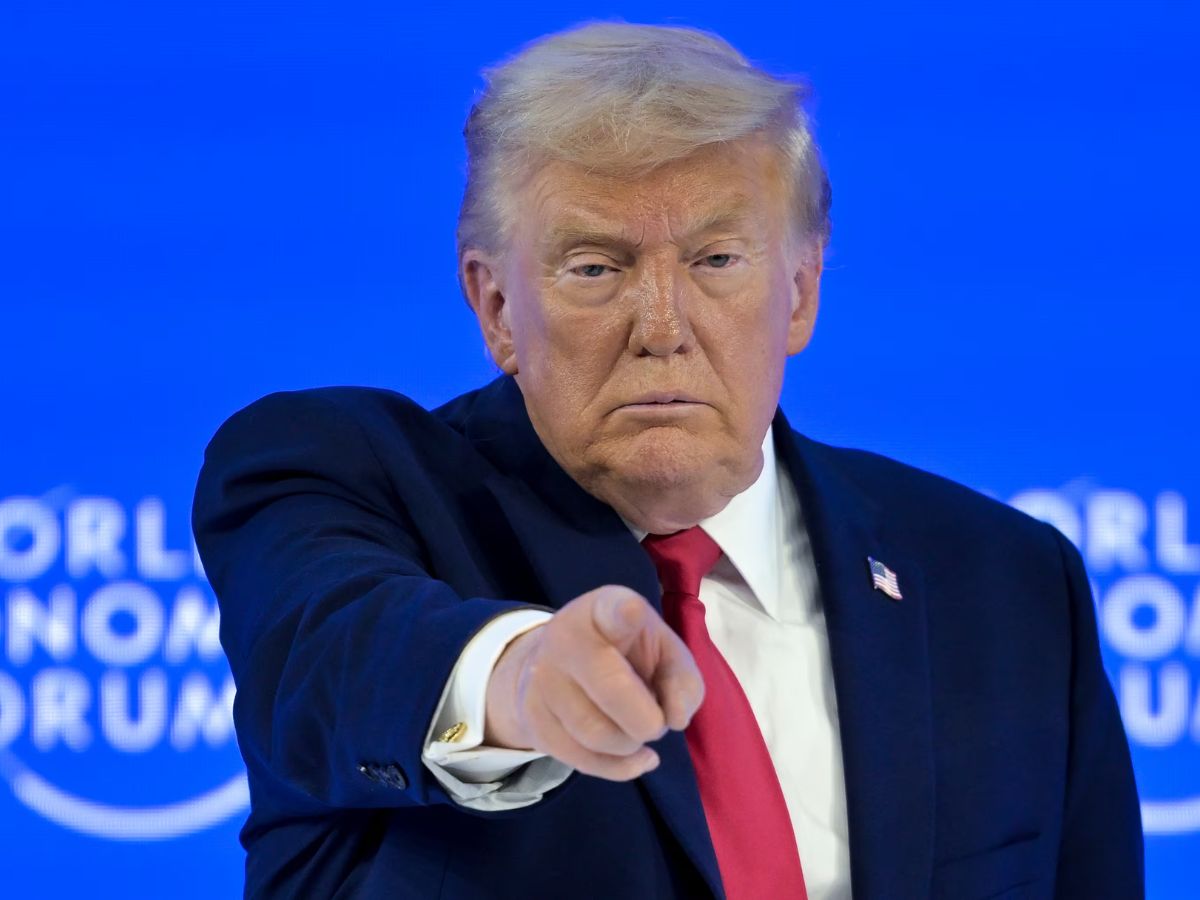
US President Donald Trump is set to formally unveil his controversial Board of Peace at the World Economic Forum in Davos. The initiative aims to position Trump as a global peace broker while reshaping how international conflicts are addressed.
Originally focused on Gaza, the board has expanded into a wider platform covering global security, reconstruction, and diplomacy. The launch comes amid geopolitical tensions, trade disputes, and Trump’s renewed push to redefine US leadership on the world stage.
Trump to Unveil ‘Board of Peace’ at Davos
Trump will introduce the Board of Peace with a signing ceremony for its charter during the World Economic Forum in Davos. The event will bring together world leaders, diplomats, and business figures.
Trump has described the body as a new mechanism to resolve conflicts faster than traditional institutions. The unveiling follows his recent decision to backtrack on Greenland-related threats, allowing him to refocus attention on peace diplomacy.
Countries That Have Agreed to Join Trump’s Board of Peace
The following nations have formally accepted the invitation to become part of the Board of Peace:
- Argentina
- Armenia
- Azerbaijan
- Bahrain
- Belarus
- Egypt
- Hungary
- Indonesia
- Jordan
- Kazakhstan
- Kosovo
- Morocco
- Pakistan
- Qatar
- Saudi Arabia
- Turkey
- United Arab Emirates
- Uzbekistan
- Vietnam
Countries That Have Declined to Join the Board of Peace
Several European nations have rejected the proposal outright, citing concerns over structure, legitimacy, and overlap with existing global institutions:
- France
- Norway
- Slovenia
- Sweden
Countries Invited but Yet to Decide
Several major global powers and institutions have received invitations but have not confirmed participation so far:
- India
- Britain
- China
- Croatia
- Germany
- Italy
- European Union’s executive arm
- Paraguay
- Russia
- Singapore
- Ukraine
What is the Board of Peace & Its Purpose?
The Board of Peace started as an idea to help mediate a ceasefire and oversee reconstruction efforts in Gaza. However, the Trump administration quickly expanded its mission to cover a wider range of global conflicts, positioning the board as a new platform for international peace and stability. Trump has framed the body as a complement, or even an alternative, to existing institutions like the United Nations, saying it could achieve what traditional diplomacy has not.
The board’s structure includes a lead tier chaired by Trump, an executive board, and a broader membership base. Permanent membership is linked to a $1 billion contribution, while a three-year term is possible without payment.
Trump’s Vision and Critics’ Concerns
In Davos, Trump described the Board of Peace as potentially “the most prestigious board ever” that could accomplish what long-standing institutions have not. He said the board would work with, but not be bound by, traditional diplomatic bodies and stressed it would give nations direct influence in shaping peace outcomes.
Critics have raised concerns that the board could undermine the role of the United Nations and centralise decision-making power in a small group led by Trump. Some European officials and diplomats have urged caution, arguing that the initiative’s structure and membership rules risk replicating power imbalances rather than fostering inclusive peace processes.
The Putin Factor and Global Tensions
One of the highest-profile invitations is to Vladimir Putin. Trump has publicly said that Putin accepted the Board of Peace invitation, but the Kremlin later clarified that Russia’s foreign ministry is still reviewing the proposal and has yet to issue a formal response. This mix of signals underscores the uncertainty and diplomatic tightrope the initiative faces, especially as the Ukraine war continues.
The inclusion of Russia, a nation still engaged in major conflict, and other controversial players has drawn criticism from some Western officials. They argue that membership should align with proven commitment to peace principles.
What to Expect at Davos?
Trump plans a formal signing ceremony of the Board’s charter on Thursday at the WEF. In addition, he is expected to hold talks with Volodymyr Zelensky, even as peace negotiations for the Ukraine war remain difficult and unresolved.
Diplomats will watch closely to see whether the board can transform from a bold idea into a functional institution with real influence. Observers say its success will depend on how it navigates geopolitical tension, balances interests, and delivers on its ambitious peace goals.




