
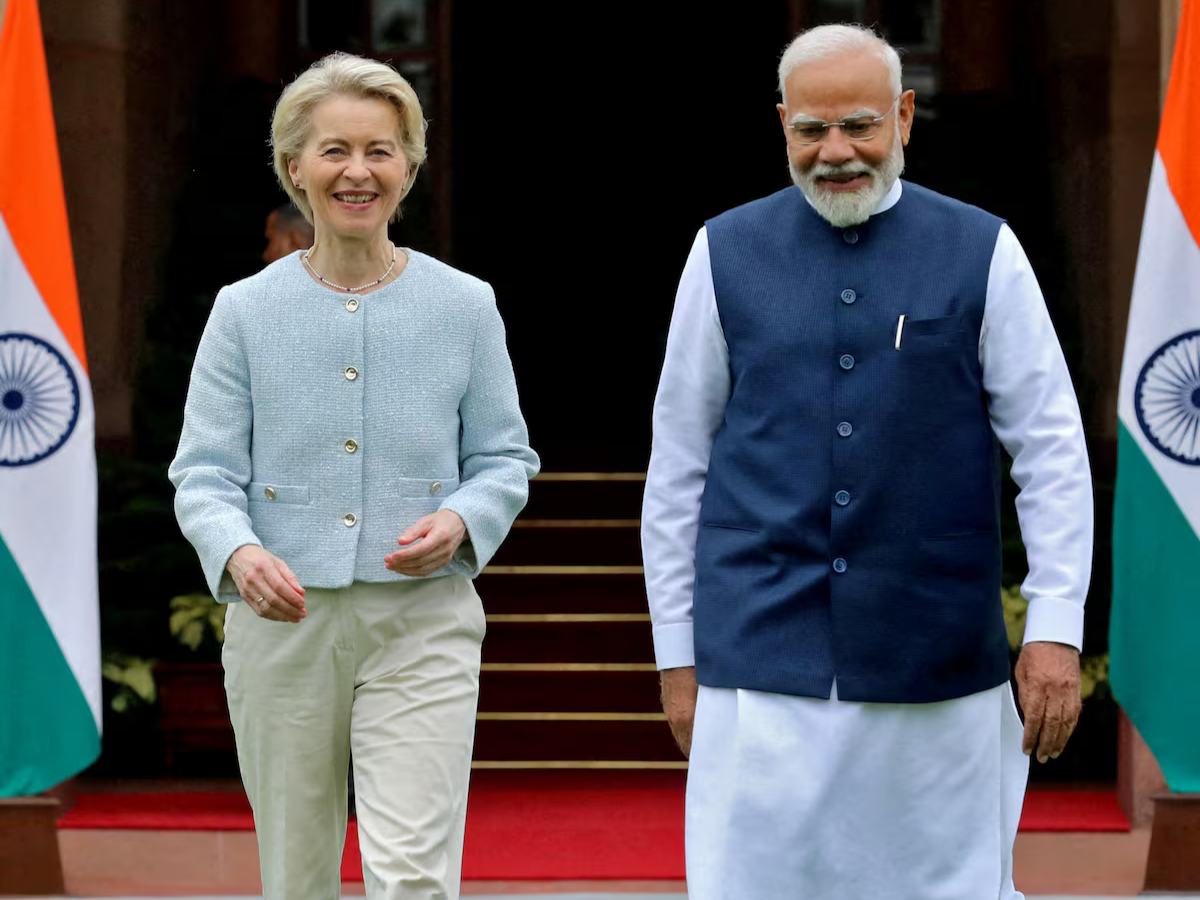
India-US Trade Agreement: As international trade is again threatened by turbulence in the form of tariffs, broken supply chains and geopolitical shifts, India and the European Union are on the cusp of finalizing one of the most significant trade deals of the current decade. Dubbed by both sides as the “mother of all deals,” the proposed trade agreement between India and the European Union has the potential to redefine the economic relationship between two regions that account for nearly two billion people and about 25% of global GDP.
Why Leaders are Calling This Trade Pact the ‘Mother of All Deals’
It is the magnitude of the agreement that makes it unique and the EU is India’s biggest trading partner and India is one of the EU’s biggest international partners. The value of bilateral trade in goods reached USD 135 billion in FY 2023-24 and the services trade is steadily increasing. Unlike other trade deals, this agreement covers goods, services, investment, digital trade, sustainability rules and supply chain collaboration. The quote by Ursula von der Leyen, the President of the European Commission, about the agreement captures not only its magnitude but also its timeliness in the context of global economic fragmentation.
India–EU Trade Agreement Poised for Historic Signing
Addressing the World Economic Forum in Davos, von der Leyen indicated that the negotiations are in the final stretch, as she described the agreement as historic and emphasized that Europe wants to secure early access to one of the world’s fastest-growing markets. Both von der Leyen and European Council President Antonio Costa are scheduled to attend the Republic Day celebrations in India and co-chair the 16th India-EU Summit on January 27, which emphasizes the political importance of the negotiations. Indian Commerce Minister Piyush Goyal has also expressed similar optimism, saying that the agreement seeks to strike a balance on both sides.
Why the India–EU Trade Pact Gains Urgency as US Tariffs Disrupt Global Markets
The recent rise in protectionist trade policies in the US has added an element of urgency to the trade negotiations between India and the EU. With the US imposing high levels of duty on certain imports and threatening to impose further tariffs on European goods, countries that follow rules-based trade are looking for alternative trade partners. Recently, German Chancellor Friedrich Merz said that this is a moment of truth for economies that believe in free markets.
What the India–EU Trade Agreement Signals for India’s Tariffs, Textiles & Manufacturing
The agreement provides relief to India in the labour-intensive sectors of textiles, garments, footwear, leather and gems and jewelry, which currently attract EU duties ranging from around 2% to 12%. Improved market access could significantly enhance India’s export competitiveness. India also seeks to play a bigger role in pharmaceuticals, chemicals, engineering goods and electrical equipment with all segments that already comprise a bulk of exports to Europe. Meanwhile, New Delhi remains staunch on safeguarding sensitive agricultural and dairy sectors against excessive liberalization.
Why the India–EU Deal Advanced After Nearly a Decade on Hold
Negotiations had begun as far back as 2007 with the plan for a Broad-based Trade and Investment Agreement. However, by 2013, the talks had stalled with the major areas of disagreement including tariffs, intangible rights, labor standards and data governance. At last, a major step forward has been seen in 2022 as the negotiations recommence with supply chain pain and geopolitical tensions. Official briefings indicate that the negotiations have concluded 20 of the 24 negotiating chapters, suggesting a level of convergence that had not been apparent until the latest round.
Why the Deal Is Strategically Important for the EU
The agreement provides a fast-expanding market in Europe, along with a reduced dependence on Chinese manufacturing. European exports including automobiles, wines, spirits, medicine, machines and equipment are expected to gain from these lower tariffs. An important aspect being negotiated is the issue of customs duty on imports of European wines and spirits, wherein the duty can touch 150-200%. In addition, the agreement aims to increase the overall European investment portfolio in India, where EU investment is already over USD 117 billion since 2000.
Why the Agreement Matters for India’s Growth Strategy
Beyond tariff relief, India is looking at the easing of the rules of the game in the pharmaceuticals, chemical products and advanced manufacturing industries. Similarly, easy mobility rules can help India’s Information Technology or Serve Industry, though the politics surrounding this are somewhat dicey in some European nations. A major hurdle remains the Carbon Border Adjustment Mechanism (CBAM) that the European Union is planning that can mean an additional 20-35% costs on some Indian products. India is demanding some mitigative measures on that count.
How This Agreement Could Change India’s Trade Game
If implemented, the proposed trade agreement between India and the European Union will ensconce India even more securely into the global value chain just as new global trading blocs are being realigned. This agreement will open new markets with assured access, attract high-quality investments and reinforce India’s position as a reliable provider of manufacturing and services destinations. This is a time of unprecedented uncertainty, but this agreement can become the foundation that underwrites India’s position in the future.




