
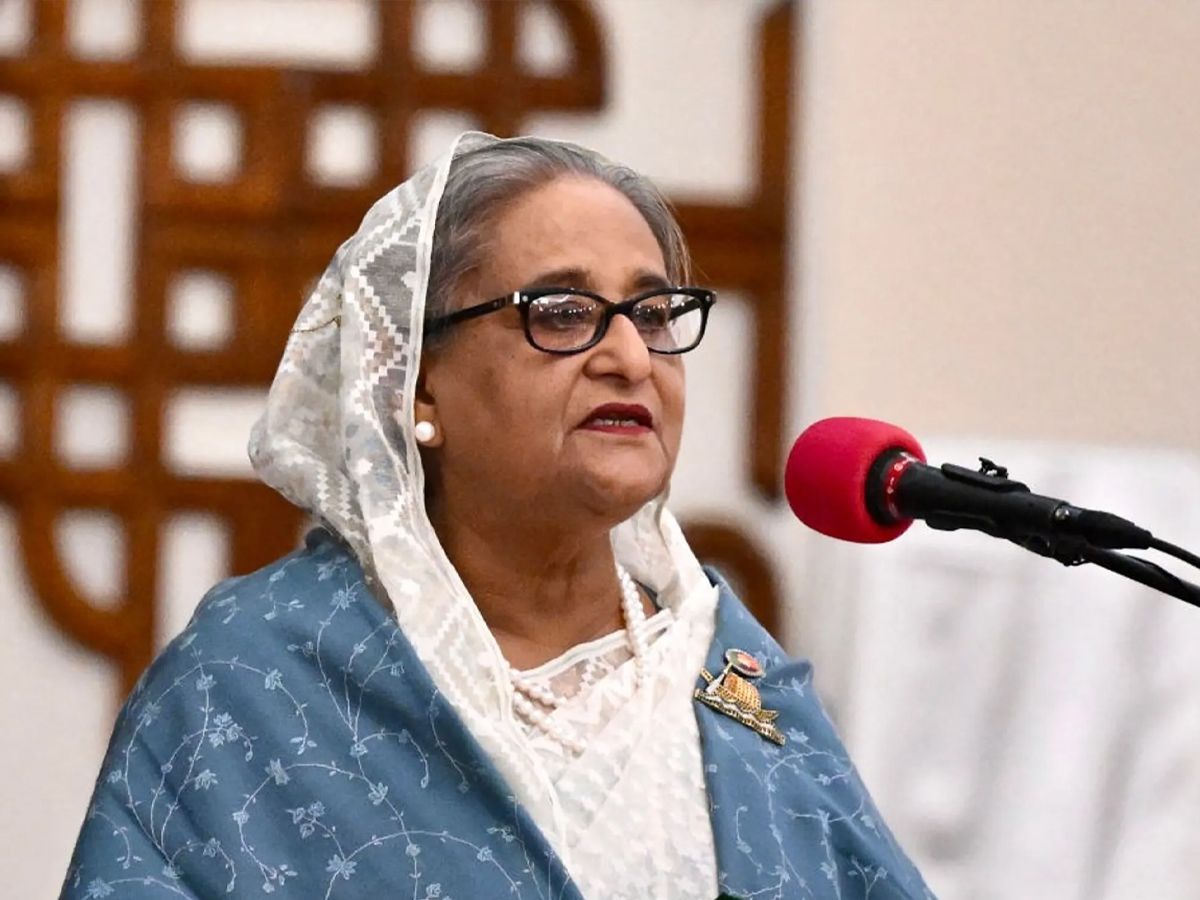
In a powerful and emotionally charged address delivered from India, former Bangladesh Prime Minister Sheikh Hasina urged Bangladeshis to unite and rise against the interim government led by Nobel laureate Muhammad Yunus, whom she described as unable to deliver free and fair elections ahead of the country’s February 12 general poll.
This was Hasina’s first public speech from India since she fled Bangladesh in August 2024 amid widespread protests that toppled her government. The message was broadcast at a New Delhi gathering titled “Save democracy in Bangladesh.” With election campaigning underway in Dhaka, and her party, the Awami League, barred from participating, Hasina’s remarks took on a confrontational tone, accusing the current administration of undermining democratic values and political freedoms.
Why Sheikh Hasina Is Condemning the Interim Government
Hasina sharply criticised the leadership of Muhammad Yunus, calling the interim administration “illegal” and asserting that Bangladesh cannot have legitimate elections under its rule. She branded Yunus and his allies as a “foreign-serving puppet regime” manipulating power.
Her address highlighted what she called a breakdown of law and order, and she outlined five key demands on behalf of the Awami League, including the removal of the Yunus government and restoration of democratic rights.
VIDEO | Delhi: In an audio message played by panellists during an interactive session organised by the Foreign Correspondents’ Club of South Asia, former Bangladesh Prime Minister Sheikh Hasina says, “Bangladesh, once a peaceful and fertile nation, is now facing extreme violence,… pic.twitter.com/bqeTy5cW82
— Press Trust of India (@PTI_News) January 23, 2026
What Sheikh Hasina Said?
Hasina delivered several powerful lines in her address, many echoing past statements but carrying heightened urgency as the election date nears. These include:
- “In this grave hour, the entire nation must rise united and galvanised by the spirit of our great Liberation War.”
- “To overthrow the foreign-serving puppet regime … the brave sons and daughters of Bangladesh must defend and restore the Constitution … and revive our democracy.”
- “Democracy is now in exile. Human rights have been trampled into the dust. Freedom of the press has been extinguished. Violence, torture, and sexual assault against women and girls remain unchecked.”
- She also demanded an end to political violence and called for an “ironclad guarantee” to protect religious minorities, women, girls, and vulnerable communities.
Hasina stressed that politically motivated restrictions on journalists and opposition members must be halted, and she urged measures to restore confidence in the judicial system.
Hasina Asked for International Support
Alongside her appeal to Bangladeshi citizens, Hasina asked for international intervention, insisting that the United Nations should carry out a “new and truly impartial investigation” into the events that have shaken Bangladesh since the collapse of her government.
Her push for global scrutiny highlights deep concerns about political freedoms and human rights conditions in Bangladesh amid widespread unrest.
Election Environment in Bangladesh and Political Backdrop
Bangladesh is preparing for its general election on February 12, the first since the mass uprising a year ago that forced Hasina out of office. With the Awami League banned from competing, the election landscape has shifted dramatically, giving rise to new alliances and bolstering parties such as the Bangladesh Nationalist Party (BNP) and Jamaat-e-Islami.
Senior leaders and observers — including former diplomats — have echoed Hasina’s view that elections without the Awami League might lack credibility and broad participation.
Political tensions have also spilled into regional concerns, with diplomatic moves like India withdrawing some diplomatic families from Bangladesh over security worries.
Can Bangladesh Have Free and Fair Elections?
Hasina’s address raises one of the core questions facing Bangladesh: Can the February polls be considered free and fair when one of the country’s largest parties is barred from participation?
Her supporters argue that excluding the Awami League disenfranchises millions of voters and undermines democratic norms. Yunus and his interim government, however, maintain that the election framework will lead to a legitimate transition of power — a claim Hasina and her allies reject.
What This Means for Bangladesh’s Future?
Hasina’s speech, coming at a highly sensitive moment, reflects not just a political campaign but a broader struggle over the soul of Bangladesh’s democracy. Her urgent call for unity, protection of rights, and international involvement underscores longstanding concerns about how the nation’s future leadership and democratic practices will evolve.
As the election draws closer, the political temperature in Bangladesh is unlikely to cool, with Hasina’s allies continuing to press for change and many citizens watching how the interim government responds to these explosive demands.




