
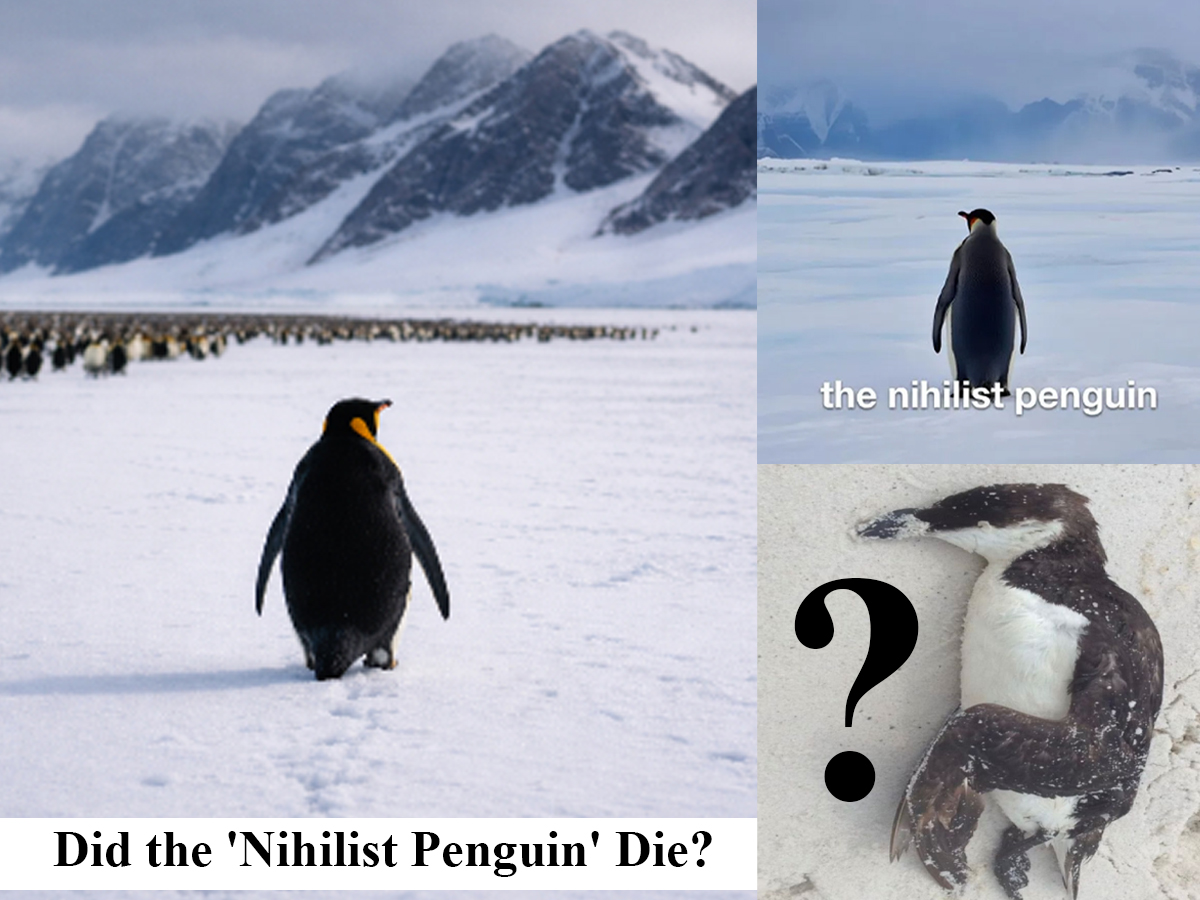
A short clip showing a lone penguin waddling away from its colony into the Antarctic mountains has taken the internet by storm in 2026. Social media users have named it the “Nihilist Penguin”, turning the footage into a symbol of quiet rebellion, burnout, and emotional exhaustion. But beyond the memes, a pressing question arises: did the penguin survive?
‘Nihilist Penguin’ Dies During the 70km Walk?
The footage comes from Werner Herzog’s 2007 documentary Encounters at the End of the World. The Adélie penguin in the video walks alone roughly 70 kilometres inland, moving away from the ocean and its colony, with no visible food sources. Scientists say this type of behaviour is unusual but not unheard of. Possible explanations include:
- Disorientation: Penguins rely on environmental cues, which can sometimes fail.
- Neurological issues or illness: Health problems may prompt solitary wandering.
- Breeding season stress or confusion: Changes in routine can trigger unexpected movements.
- Instinctual error: Animals don’t always make survival-friendly decisions.
Werner Herzog described the behaviour as a “death march,” suggesting the penguin may not have survived the journey. While viewers assume the penguin eventually perished, its fate is unconfirmed.
The lonely deranged penguin is a penguin from Werner Herzog’s 2007 documentary “Encounters at the end of the world”, who left his colony and headed towards certain death.
According to experts, he journeyed out towards the mountain knowing death is certain, simply to feel if he… pic.twitter.com/VCgl876XiR
— moon, the Creator (@alilmoonn) January 18, 2026
In the wild, penguins rely on navigational skills and social cues to travel between colonies and feeding grounds, but sometimes even the most experienced animals wander off course.
Nihilist Penguin: Why the Video Became the Meme?
The viral clip isn’t recent; it comes from Werner Herzog’s 2007 documentary Encounters at the End of the World. In the footage, an Adélie penguin abruptly leaves its colony in Antarctica and starts heading inland toward a mountain range nearly 70 kilometres away from the sea.
But why?
The “Nihilist Penguin” refers to a famous scene from Werner Herzog’s documentary Encounters at the End of the World, featuring a disoriented penguin that abandons its colony and heads inland towards the mountains, away from food and safety, seemingly without purpose,… pic.twitter.com/UZajrqTG5e— unplugged memer (@unpluggedmemer) January 22, 2026
This trek is significant because penguins depend on the ocean for food and safety. Venturing so far inland provides no sustenance, no shelter, and drastically reduces their chances of survival. It’s this stark contrast that makes the scene both haunting and unforgettable.
Nihilist Penguin: Science vs. Symbolism
While memes project human emotions onto the penguin, science offers simpler explanations. Penguins typically navigate efficiently using visual and social cues, following paths optimized over thousands of years. When a penguin wanders, it’s usually due to disorientation, stress, or health issues — not existential contemplation.
The penguin is not “rebelling” or reflecting philosophically. It is simply an animal following instincts, yet the internet has turned it into a relatable figure representing:
- Feeling lost in life
- Quiet rebellion against expectations
- Walking away from routine
- Existential exhaustion
- Penguin Behavior Explained
Adélie penguins usually remain close to the sea for food and safety. Solo journeys inland are rare and risky. Researchers note that when penguins stray, the outcomes are often fatal due to exposure, lack of food, or environmental hazards. However, some penguins have been known to return from unusual excursions, showing resilience.
Herzog’s footage captured the dramatic visual of the penguin walking into the icy interior, a moment that is simultaneously fascinating, unsettling, and symbolic.
Nihilist Penguin: Meme Culture Amplifies Emotional Connection
The viral spread of the clip shows the power of human interpretation. Social media users project their modern anxieties, burnout, and life challenges onto the penguin, making it more than just an animal; it becomes a symbol of shared emotional experience.
From TikTok to Twitter, captions and remixes have cemented the penguin as a cultural icon, blending humor, existentialism, and digital art. Its popularity underscores how people use online platforms to find meaning and connection even in random wildlife footage.
Nihilist Penguin: Why this walk Resonates Today
The penguin’s lone walk into the mountains mirrors modern life: routines, pressures, and moments where people feel “lost” or overwhelmed. Unlike humans, penguins act on instinct rather than reflection, yet the meme allows audiences to explore their own emotions, frustrations, and quiet rebellions safely online.
The video reminds viewers: sometimes, life doesn’t make sense, and sometimes, a penguin walking into the mountains is simply a penguin. And sometimes, it’s a mood we all recognize.




