
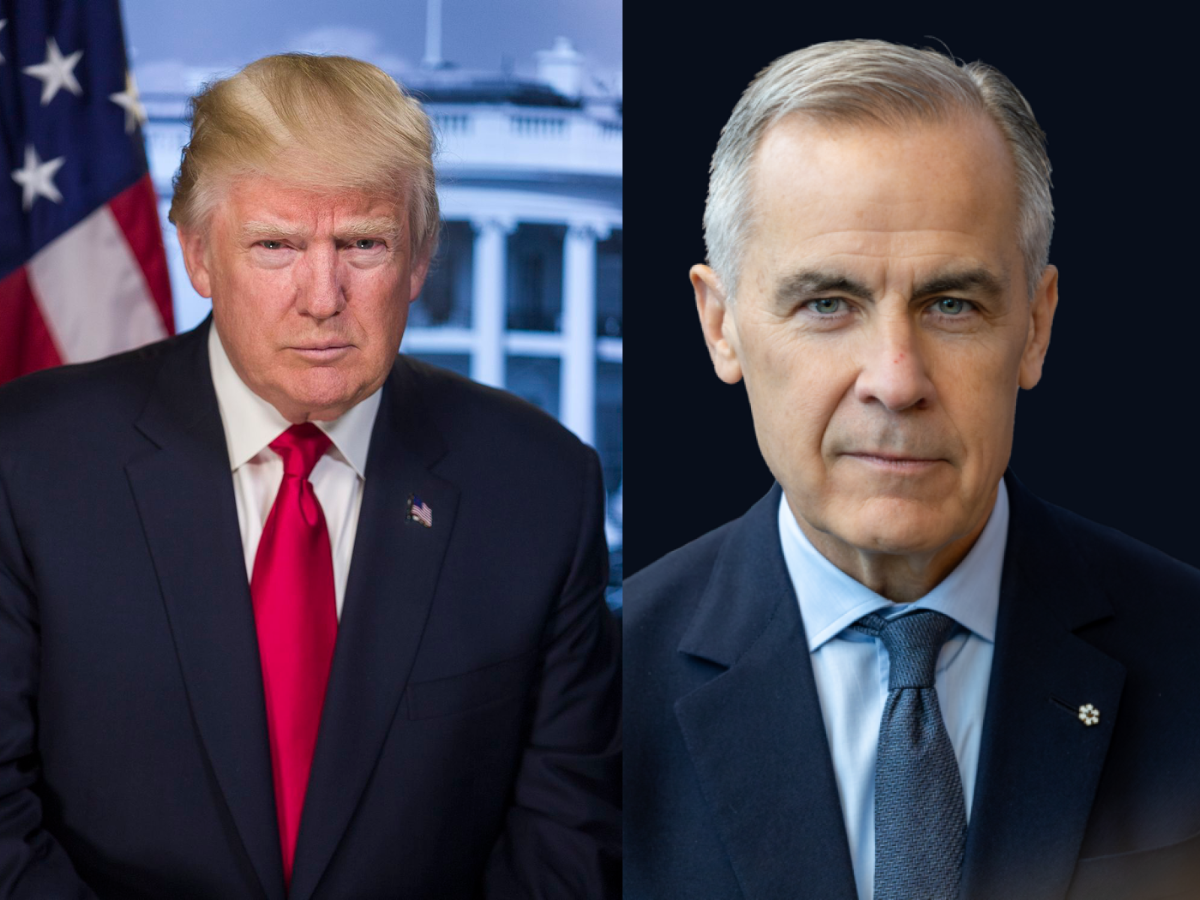
US-Canada Trade: Tensions between Washington and Ottawa have risen sharply following Donald Trump’s blunt warning to Canada regarding its growing level of economic relations with China. The idea of a 100% tariff was put forward by Donald Trump in this regard, which adds another level of uncertainty to trade relations in North America and raises concerns regarding protectionism in the region.
Trump’s Tariff Threat Explained
In a post over the weekend on the social media platform Truth Social, Trump indicated that any such formal agreement between Canada and China will lead to an across the board tariff placed immediately on all goods coming from Canada into the United States. There has never been a tariff like the one Trump threatens to impose. Currently, the United States accounts for three-fourths of Canada’s total exports, which amount to more than $550 billion annually. An entire tariff barrier will threaten the very heart of Canada’s manufacturing, energy, and agricultural industries.
US President Donald Trump:
If Governor Carney thinks he is going to make Canada a “Drop Off Port” for China to send goods and products into the United States, he is sorely mistaken.
China will eat Canada alive, completely devour it, including the destruction of their… pic.twitter.com/3bjnWOHS5F
— Aditya Raj Kaul (@AdityaRajKaul) January 24, 2026
Why China is at the Center of the Dispute
Trump described China as an existential threat to the US in economic matters; he argued that the Chinese will strangle Canada’s businesses and eliminate homegrown industries. This statement followed Prime Minister Mark Carney’s visit to China to negotiate trade opportunities worth more than $7 billion, including lowered tariffs for Canada’s agricultural products as well as updating Chinese electric vehicle trade opportunities. This development in economic matters indicates a strategic shift to grant Chinese goods backdoor entry to Americans.
Canada’s Push for Trade Diversification
As far as Canada’s Ottawa is concerned, engaging the Chinese is an exercise in hard-nosed economics. Canada has always sought to move beyond relying on a single major customer, more so in recent times in the aftermath of constant trade wars over issues such as the price of steel, lumber, and dairy products with its traditional biggest customer, the United States. China is already Canada’s second-largest trade partner after the US, with a bilateral trade exceeding a hundred billion U.S. dollars every year, argues Carney.
Security, Sovereignty & Sharp Rhetoric
Trade is only one side of the conflict. On the other side, Trump accused the Canadians of compromising North American security through opposition to the US-brokered “Golden Dome” plan to build a US missile defense shield in Greenland. Once again, in making these claims and referring to Ms. Carney as “governor,” Mr. Trump revived past assertions that Canada’s very existence was due to US largesse and protection. Ms. Carney countered Mr. Trump’s attack with a sharp rebuff and repudiation of any suggestion of dependency and instead highlighting US and Canada’s foreign policy differences as based on national sovereignty concerns.
Diplomatic Fallout & Political Signals
The fight escalated after Trump withdrew an invitation to Canada to join his proposed “Board of Peace,” a fancied first-class club of world leaders. The move had a largely symbolic tone, but underscored the personal and partisan tenor driving the dispute and analysts say such rhetoric appeals to American voters, but complicates formal diplomacy at a moment when cooperation on defense, climate and economic stability is sorely needed.
What This Means for North America
If rhetoric is realized as policy, the consequences for the economy will likely have significant repercussions indeed. A 100 percent tariff will certainly unsettle cross-border chains on which many millions depend, both north and south of the border altogether. In another context, this incident presents us with an important turning point in North America as to whether regional integration should be strengthened or broken due to other geopolitics forces. Time will tell if pragmatism or posturing will carry the day.




