
Republic Day 2026: Today, India is celebrating Republic Day with great enthusiasm. It is a very important day for the nation, as India adopted its own Constitution and became a sovereign republic. Its history is also closely connected with India–Pakistan relations, as both nations share a difficult and mostly hostile relationship these days.
This tension goes back to the Partition of British India in August 1947. Since then, the two countries have experienced deep mistrust, wars, disputes over Kashmir, and repeated instances of cross-border terrorism.
Relations worsened further after the 2019 Pulwama attack and India’s decision to remove the special status of Jammu and Kashmir. Trade between the two nations is largely suspended, and diplomatic ties remain strained. However, a 2021 ceasefire along the Line of Control (LoC) is still holding.
There may be few questions in people’s mind that India ever invited Pakistan as guest on its Republic day or India ever had good relation with Pakistan.
Did India Ever Invite Pakistan to Its Republic Day Parade?
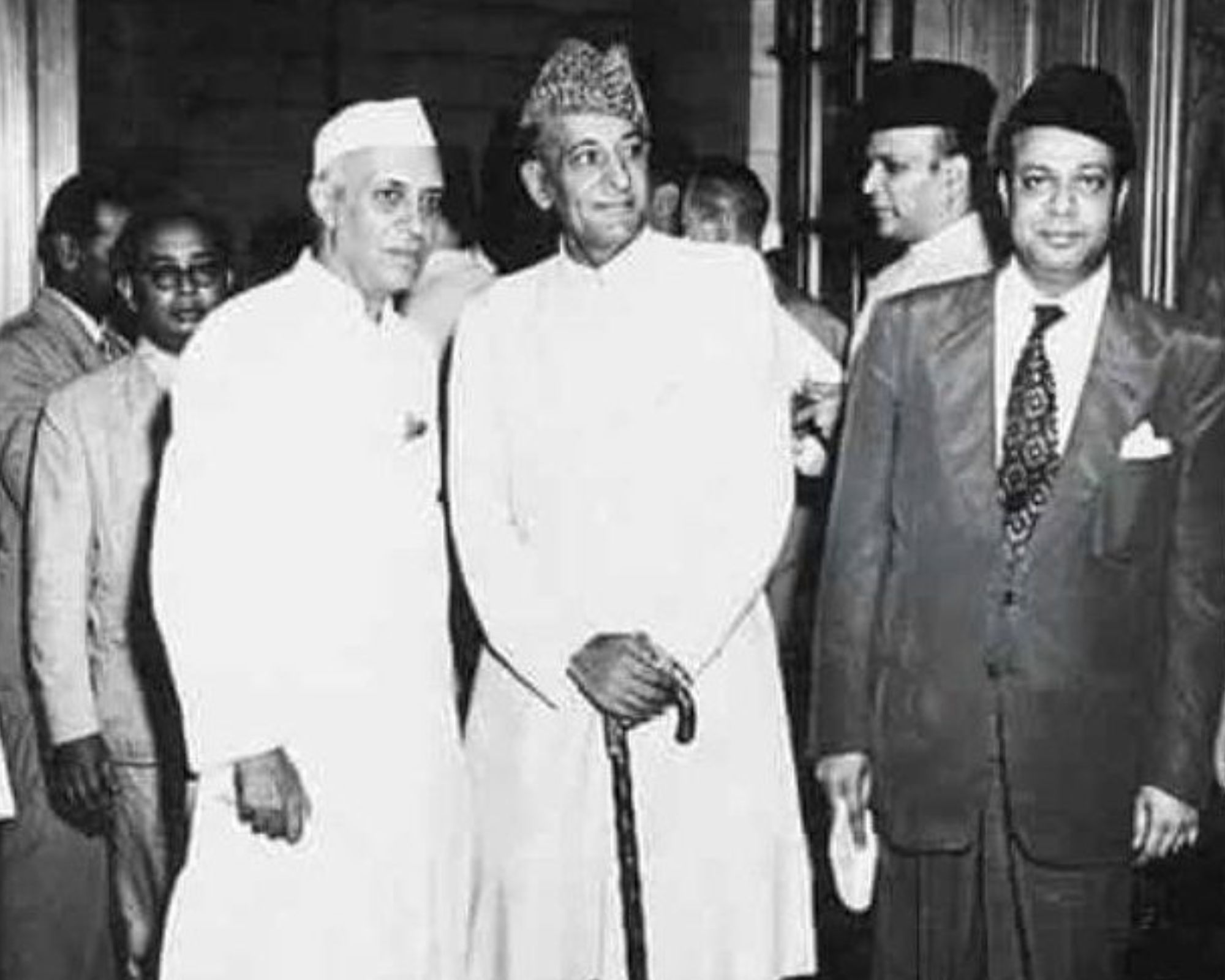
Surprisingly, India once invited Pakistani leaders as chief guests at its Republic Day parade and this happened twice, in 1955 and 1965.
These invitations came at a time when Partition wounds and the first Kashmir war (1947–48) were still fresh. Yet, India’s then Prime Ministers Jawaharlal Nehru and later then Lal Bahadur Shastri chose symbolic diplomacy, hoping public gestures could help improve relations.
Pakistan Former Governor Malik Ghulam Muhammad Visited In January 1955
In January 1955, Sir Malik Ghulam Muhammad, Pakistan’s then Governor-General, attended Republic Day celebrations. That year, the parade shifted to Rajpath (now Kartavya Path).
He was an important early leader of Pakistan. A former ICS officer, he had been knighted by the British in 1946. After independence, he served as Pakistan’s Finance Minister and later as Governor-General.
However, his rule remains controversial. He dismissed Pakistan’s then Prime Minister in 1953 and dissolved the Constituent Assembly. Historians say these actions weakened democracy and strengthened executive and military control in Pakistan.
At the time, his presence on the dais carried symbolic value. Indian leaders believed such gestures could help “soften hardened attitudes.” Pakistan’s acceptance of the invitation also suggested a willingness to talk despite tensions.
Pakistan Former Minister Rana Abdul Hamid Visited in January 1965
Ten years later, in January 1965, Rana Abdul Hamid, Pakistan’s then Minister for Food and Agriculture, was the chief guest. He came from a powerful Punjabi landowning family with roots linked to Sindh and Rajasthan.
His visit was seen as an effort to stabilize ties through diplomacy. Both countries were quietly reassessing each other’s military strength.
But peace efforts collapsed quickly. By April 1965, Pakistan launched Operation Desert Hawk in the Rann of Kutch, leading to fighting. Soon after, Operation Gibraltar in August 1965 aimed to infiltrate Kashmir and start an uprising. This failed and triggered the 1965 India–Pakistan war.
Debate in India Over These Invitations
These diplomatic gestures were debated inside India. Some leaders supported them. B.G. Kher believed ceremonial diplomacy could serve as a “soft bridge” for dialogue.
Others were cautious. C. Rajagopalachari warned India should not appear weak or compromise sovereignty. Diplomat K.R. Narayanan stressed that “ceremonial hospitality” should not lead to policy concessions.
The Times of India described such invitations as “measured gestures of civility,” but also noted public concern over border tensions.
PM Narendra Modi’s Later Diplomatic Outreach to Pakistan
Decades later, Prime Minister Narendra Modi also made bold gestures. In 2014, he invited Pakistan PM Nawaz Sharif to his swearing-in. In 2015, Modi made a surprise visit to Lahore and attended Sharif’s granddaughter’s wedding. These moves were symbolic but short-lived, as terrorism and tensions soon returned.
India’s Recognition of Pakistan
Some in Pakistan claim India never accepted Pakistan as a sovereign state. However, the Republic Day invitations of 1955 and 1965 show otherwise. These were public acts of diplomatic recognition.
India also granted Pakistan Most Favoured Nation (MFN) trade status in 1996, though Pakistan never returned the gesture. India withdrew MFN status in 2019 after Pulwama.
India’s Operation Sindoor Targeted Pakistan-based terror groups
Recently terror attack in May 2026 follwed by Operation Sindoor was a major Indian military response launched in May 2025 after a deadly terror attack in Pahalgam that targeted tourists. India linked the attack to Pakistan-based terror groups and carried out precision strikes on infrastructure associated with Lashkar-e-Taiba (LeT) and Jaish-e-Mohammed (JeM). The operation reportedly targeted launchpads and camps across the Line of Control (LoC) and at select locations deeper inside Pakistan-linked territory.
Using advanced platforms such as Rafale fighter jets and SCALP cruise missiles, India followed what officials described as a calibrated and technology-driven approach. The action reflected a shift toward a “non-contact” warfare model, aiming to hit terror networks without large-scale troop mobilization. Indian authorities presented the operation as a message of strategic resolve signaling that cross-border terror attacks would invite direct and precise retaliation while trying to limit broader military escalation between the two nuclear-armed neighbours.
Why These Gestures Failed between India and Pakistan?
Despite symbolic efforts, Pakistan’s security policies and support for cross-border terrorism repeatedly damaged peace efforts. The two nuclear-armed neighbours have often come close to serious conflict.
Today, those Republic Day invitations belong to a different time when leaders hoped ceremony and symbolism could reduce hostility, even though mistrust remained strong.
India invited Pakistani leaders to Republic Day in the past as peace gestures. But history shows that symbolic diplomacy alone could not overcome deep political, military, and ideological conflicts and the continuous terrorism activity across border streched the hostility between two nations.




