
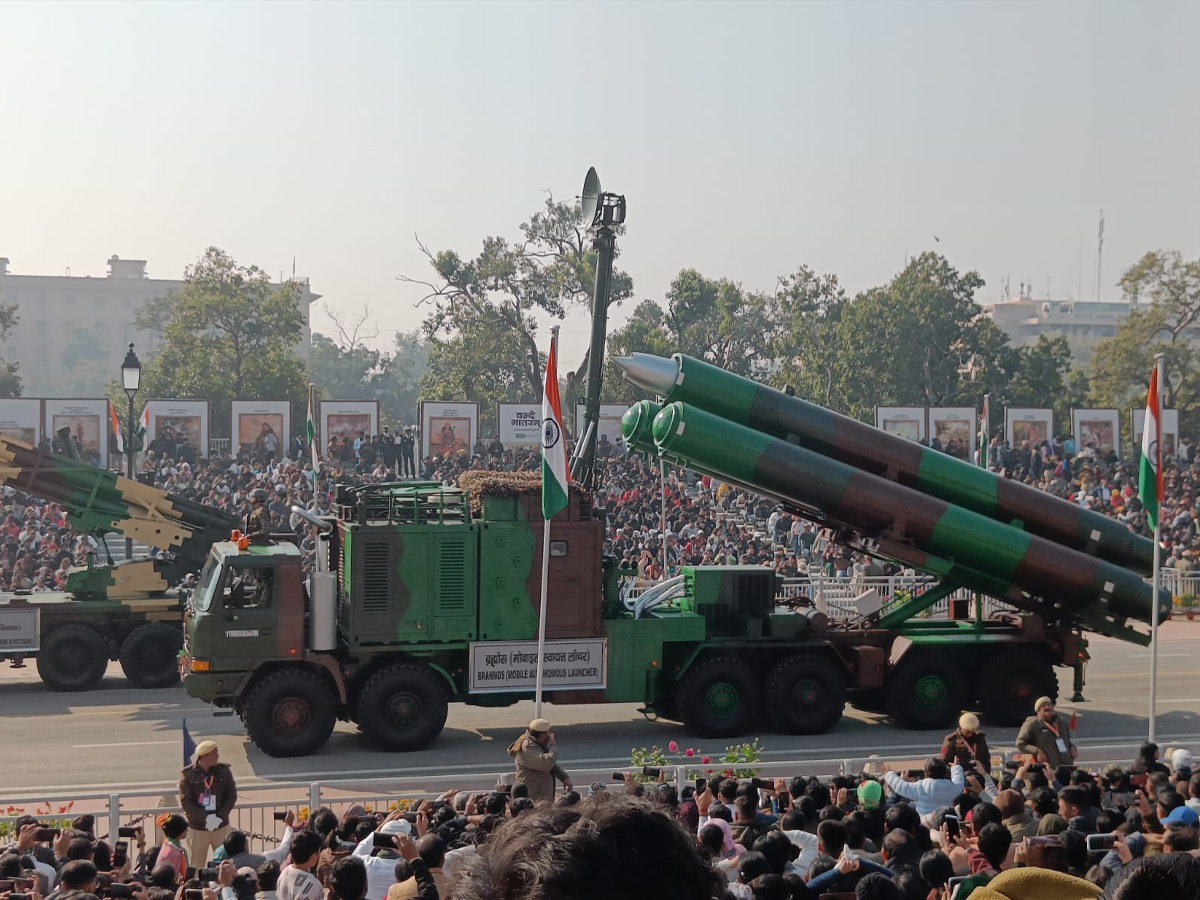
India’s 77th Republic Day parade drew global attention this year with a powerful emphasis on defence readiness, modern weapons, and joint operational strength. While the celebration remained rooted in tradition and national pride, security and battlefield capability took prominence as never before at Kartavya Path, replacing some of the usual ceremonial pageantry with combat-ready displays.
Chief guests from Europe, foreign delegations, dignitaries, and thousands of spectators witnessed an extraordinary parade that underscored both India’s heritage and its strategic defence evolution.
Operation Sindoor Displayed in Tri-Services Showcase
At the heart of this year’s military showcase was a striking Operation Sindoor tableau, which presented India’s joint forces coordination during the successful 2025 counter-terror action. The display included a glass-encased Integrated Operational Centre (IOC) that visually outlined how the Army, Navy, and Air Force worked together to achieve rapid and decisive outcomes.
The IOC’s presence at the parade symbolised seamless inter-service cooperation, combining precision strikes, layered defence and real-time battlefield intelligence, a modern warfighting concept that India’s military continues to prioritise.
Ground Displays Highlight Modern Combat Systems
The parade featured an impressive lineup of ground combat platforms and weapon systems used or developed in recent years:
- BrahMos supersonic cruise missile systems displayed deep-strike capability.
- S-400 air defence system highlighted India’s multi-layered protective network.
- Akash air defence system and medium-range missile (MRSAM) demonstrated aerial shielding capacity.
- Arjun main battle tanks and T-90 Bhishma tanks reflected armoured strength.
Drone and loitering munitions units, including advanced swarm and autonomous systems, showcased future battlefield technologies.
These systems rolled past the saluting dais in a formation that blended combat realism with strategic intent, signalling a shift from traditional parade displays to action-oriented battle array formats.
Aerial Displays Reinforce India’s Air Power
Above Kartavya Path, the Indian Air Force (IAF) led dramatic flypasts and formations that stunned onlookers. Fighter jets, including Rafale, Su-30 MKI, and MiG-29, performed coordinated passes, underlining India’s robust aerial capability.
The “Sindoor Formation”, a combination of air power assets including multiple combat aircraft, added a dramatic visual accent to the parade, reinforcing the theme of integrated combat readiness.
Additionally, transport aircraft and helicopters supported the aerial component, demonstrating mobility and operational reach that reflect real-world combat scenarios.
Indigenisation and Future Warfare Tech on Display
For the first time, the parade highlighted technology-driven warfare platforms designed for modern battlefields:
- Swarm drones, tethered UAVs, and hybrid systems offered real-time surveillance and target acquisition.
- Loitering munitions such as Harop, Mini Harpy, and Peacekeeper provided autonomous strike options.
- High Mobility Vehicles such as Shaktibaan and Divyastra showcased precision strike potential from ground to air.
Officials noted that these systems embody India’s push toward indigenisation, technological edge, and battlefield mobility, linking operational success with strategic autonomy.
Cultural and Diplomatic Overtones Complement Military Display
While the parade placed a strong emphasis on defence, elements of cultural heritage and international cooperation were also visible. The Republic Day theme “Virasat, Vividhta aur Vikas” (heritage, diversity, and development) was reflected in diverse tableaux and performances.
Foreign chief guests, including top leaders from the European Union, witnessed India’s defence showcase alongside displays of its artistic and cultural legacy, signalling both global respect and diplomatic engagement.
Public Reaction and Strategic Message
The combination of combat equipment, advanced weapons, and joint force tableau sent a clear message: India is investing in multi-domain operational capability that addresses airborne, land, and technological threats. The parade demonstrated not just patriotic pride, but also a strategic doctrine rooted in deterrence, readiness, and modern warfare integration.
Spectators and defence analysts alike noted that this edition of the Republic Day parade marked a shift from ceremonial pageantry toward operational realism, reflecting evolving defence priorities in a changing global security landscape.
As India moves forward with defence modernisation, Republic Day 2026 is likely to be remembered as a milestone where battlefield capability, technological innovation, and national spirit converged in a public forum. The parade reinforced India’s commitment to safeguarding sovereignty and projecting military strength with cutting-edge systems that speak to tomorrow’s strategic environment.




