
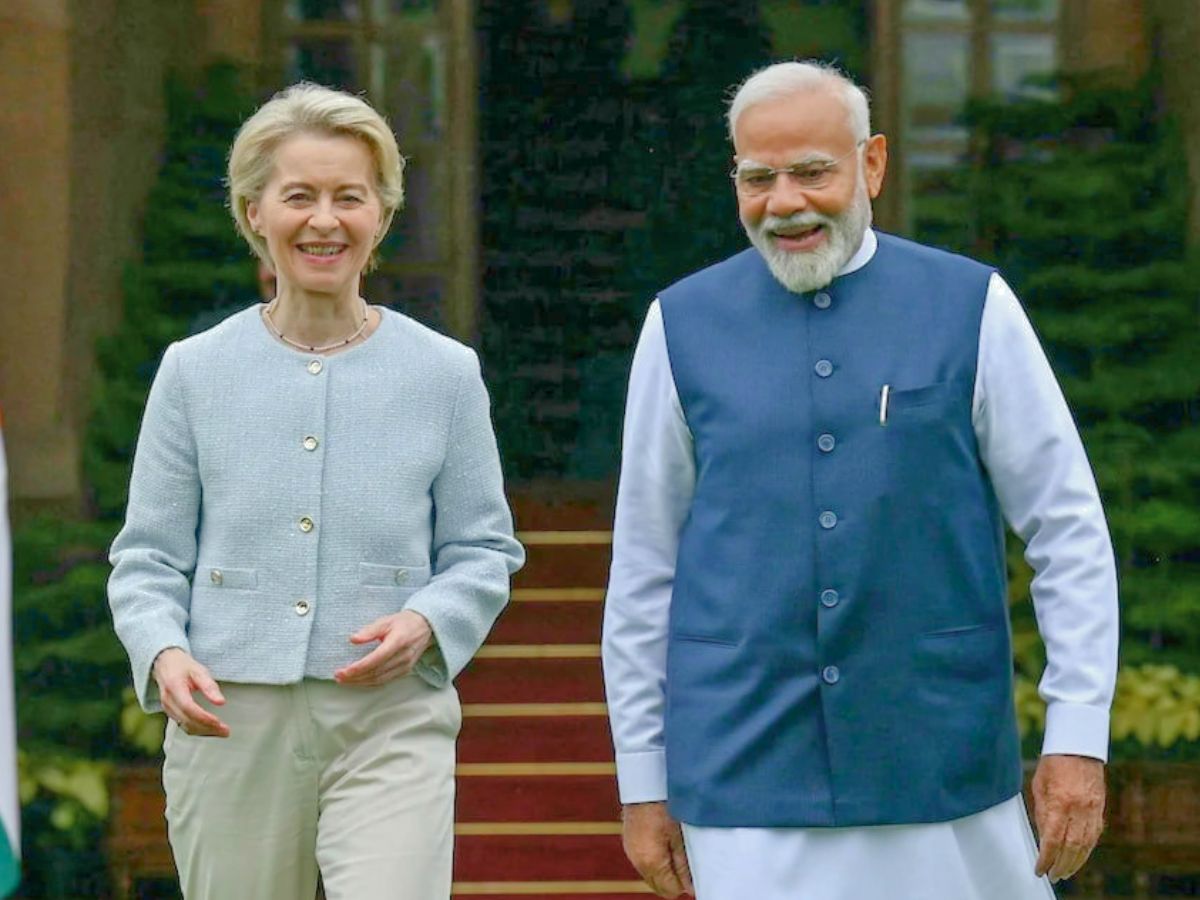
India and the European Union have successfully concluded negotiations on a long‑pending Free Trade Agreement (FTA), marking a key milestone in ties between the two economies. The announcement came as leaders and officials met in India during the 77th Republic Day 2026 celebrations, underscoring the growing strategic and economic partnership between India and the EU.
According to Indian commerce officials, the final text of the agreement has been finalised and is currently undergoing legal review. The goal now is to complete all formal procedures and sign the pact at an early date, with both sides aiming for the deal to take effect in early 2027.
India‑EU Trade Deal: What Does This Mean?
The agreement, often described as the “mother of all deals,” is expected to significantly deepen economic integration between India and the European Union. Leaders from both sides have highlighted its potential to boost trade, investments, and market access across a wide range of sectors.
Under the pact, European industries would gain greater access to the vast Indian market, while Indian goods exporters would benefit from reduced tariffs and streamlined trade rules across the 27‑member EU bloc — a market of nearly 2 billion consumers.
India‑EU Trade Deal: Key Progress & Negotiation Highlights
The India‑EU FTA negotiation has been a long‑drawn process, spanning several years and multiple rounds of discussions. Both sides have worked to bridge differences over sensitive sectors such as automobiles, textiles, and tariffs to achieve a balanced outcome.
EU Trade Commissioner Marcos Sefcovic described the agreement as a major step in opening markets and reducing barriers that previously saw Indian tariffs reach up to 150% in certain sectors. He said reducing such high duties would be a “big benefit” for European exporters and consumers.
Negotiators from India and the EU have also reportedly made progress on market access proposals and other core elements of the pact. As discussions wrapped up, officials noted that resolving the complex technical and regulatory issues was key to bringing the agreement to its current stage.
India‑EU Trade Deal Next Steps: Legal Scrubbing & Signing Timeline
With the substantive negotiations concluded, the focus now shifts to legal scrubbing, a detailed review of treaty text to ensure accuracy and compliance with domestic laws. Once this phase is complete, both sides are expected to finalise formal signing arrangements, possibly in the coming weeks or months.
While the signing at the January 27, 2026, India‑EU summit was widely anticipated, sources indicate that formal ratification could follow after the Republic Day events and additional procedural steps. After signing, the deal would then go through the necessary approval processes in India and the EU before coming into effect in early 2027.
India‑EU Trade Deal Republic Day 2026 – Symbolism & Strategic Momentum
The timing of the deal’s conclusion, which coincides with India’s Republic Day 2026, when European leaders attended as chief guests, adds diplomatic symbolism to the economic breakthrough. The Republic Day platform offered a high‑visibility moment to showcase shared commitment towards deeper cooperation across trade, security, and technology.
European Commission President Ursula von der Leyen highlighted the mutual benefits of a strong India as central to global stability and prosperity during her visit. Such remarks reflect the strategic dimension of the trade pact, beyond pure economics.
India‑EU Trade Deal: Potential Impact on Trade and Businesses
Once operational, the FTA could deliver far‑reaching benefits for industries and consumers in both India and the EU:
- Lower tariffs on key goods such as cars, textiles, and industrial products
- Improved market access for Indian exporters across European markets
- Greater investor confidence thanks to clearer trade rules and reduced barriers
- Enhanced cooperation in services, tech, and strategic sectors
- Business leaders, including industry councils, have urged negotiators to secure duty‑free access for specific sectors like jewellery and metals to maximise the agreement’s benefits.
India‑EU Trade Deal: Broader Strategic Implications
For the EU, the deal is part of a broader effort to diversify trade ties beyond traditional partners and reduce reliance on volatile global markets. For India, it represents a major step in global economic integration, enhancing its competitiveness and export potential.
The successful conclusion of the Talks signals not only a trade breakthrough but also a strategic partnership that could influence global supply chains and economic alignments in the years ahead.




