
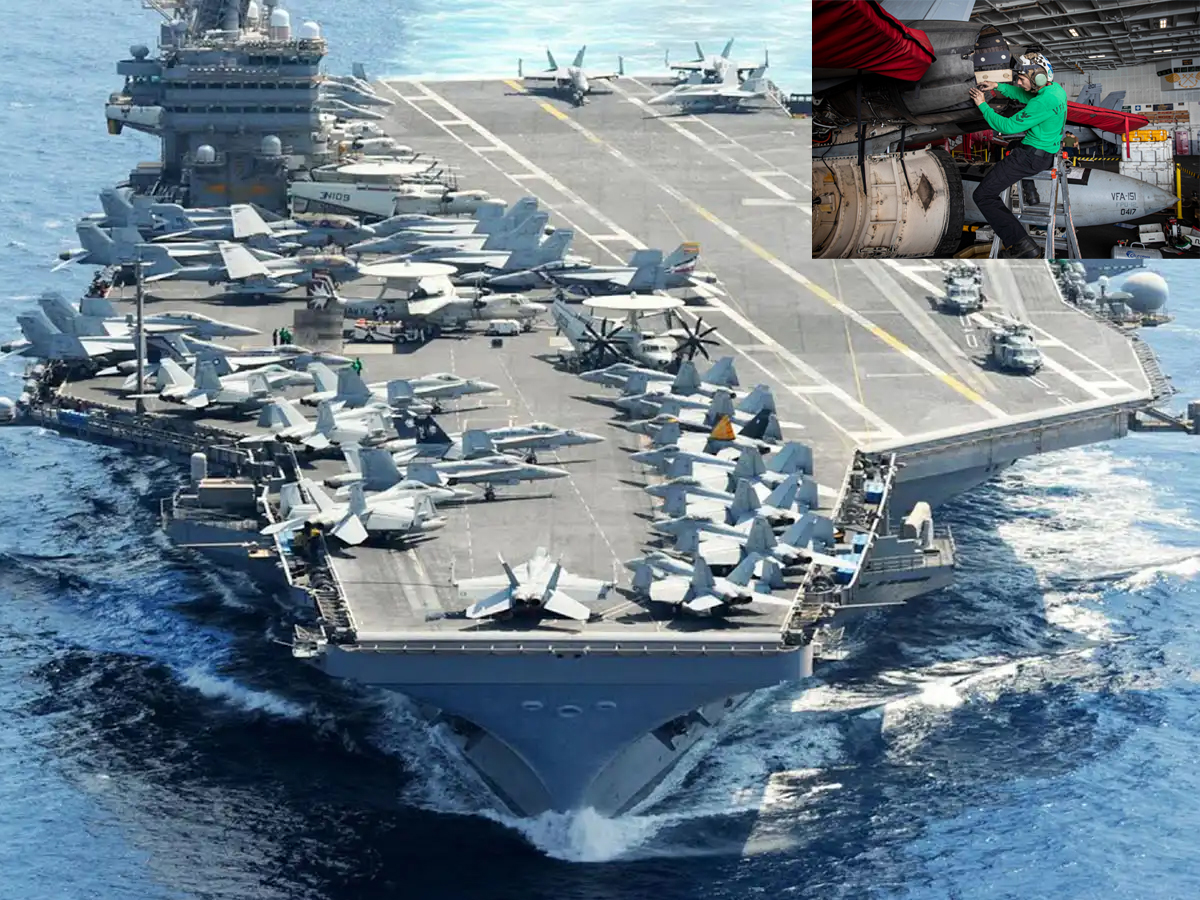
The United States has moved the USS Abraham Lincoln aircraft carrier strike group into the Middle East region, raising global questions about whether Washington is preparing for military action against Iran. The deployment comes at a time of heightened tension between the two nations, with Tehran warning of strong retaliation and regional militias signalling readiness to act.
The US Central Command confirmed the carrier strike group’s deployment on Monday, highlighting that the fleet is in the Indian Ocean and advancing into the Middle East to promote regional security and stability, and is not yet positioned for any specific strike.
Iran-US Conflict: What the US Central Command Says About the Deployment?
In a statement on social media, Central Command said the Abraham Lincoln Carrier Strike Group is currently deployed to the Middle East to support regional security and stability. It noted that the force includes the large nuclear-powered aircraft carrier accompanied by guided-missile destroyers.
Sailors aboard USS Abraham Lincoln (CVN 72) perform routine maintenance as the aircraft carrier sails in the Indian Ocean, Jan. 26. The Abraham Lincoln Carrier Strike Group is currently deployed to the Middle East to promote regional security and stability. pic.twitter.com/dkuN946hce
— U.S. Central Command (@CENTCOM) January 26, 2026
The presence of these warships, and potentially supporting aircraft, gives the US a range of military options should President Donald Trump decide to act against Iran amid warnings issued over Iran’s crackdown on domestic protests.
Iran-US Conflict: Hezbollah Warns the US; ‘We Are Not Neutral’
In Beirut, the leader of the Iran-aligned Hezbollah movement, Naim Qassem, expressed serious concern over Washington’s threats against Iran. Qassem said his group is watching the situation closely and insists it will defend itself if it or its allies are targeted.
“We are concerned with what is happening and targeted by potential aggression. We are determined to defend ourselves,” Qassem said in a televised address, adding that Hezbollah has not decided its specific course of action but is certainly not neutral.
Hezbollah’s position is significant because the group has historical ties to Iran and may act in solidarity if conflict breaks out, further widening regional instability.
Iran-US Conflict: Iran Prepares and Responds to Threats From the US
Amid these developments, Iranian leadership appears to be bracing for possible conflict. Reports indicate that Supreme Leader Ayatollah Ali Khamenei has moved to a secure underground shelter, alongside senior military officials assessing escalation risks.
Iranian officials have repeatedly warned that any US military strike would be met with force. The rhetoric reflects a government determined to push back strongly, citing national defence and sovereignty.
Iran-US Conflict: Protests, Human Rights, and International Pressure
This military buildup overlaps with ongoing domestic unrest within Iran. Human rights organisations have accused Iranian security forces of violent crackdowns on protests that began late last year, leading to thousands of deaths and mass detentions. A UN expert reported that protesters were reportedly taken from hospitals and detained, highlighting serious concerns over violations of the right to medical care and basic human rights.
These human rights concerns contribute to international pressure on the Iranian government and influence broader diplomatic discussions with the US and its allies.
Amid these tensions, Israeli Prime Minister Benjamin Netanyahu issued a stark warning to Iran, stating that any attempt by Tehran to attack Israel would provoke a forceful response. This exchange heightens fears of a broader Middle Eastern conflict, drawing in multiple nations with overlapping security interests.
Iran-US Conflict: Iran-Backed Militias Signal Supportive Escalations
Beyond Hezbollah, other Iran-aligned militias in the region—such as those in Iraq and Yemen—have hinted at potential military action in support of Tehran should hostilities break out. These groups’ statements suggest a possibility of coordinated or opportunistic escalation across borders, potentially dragging more actors into conflict.
Their readiness, even if still conditional or rhetorical, underscores the risk that a US-Iran military confrontation could rapidly broaden into a regional crisis involving multiple proxy forces.




